How to Disinfect Shared Workspaces Properly
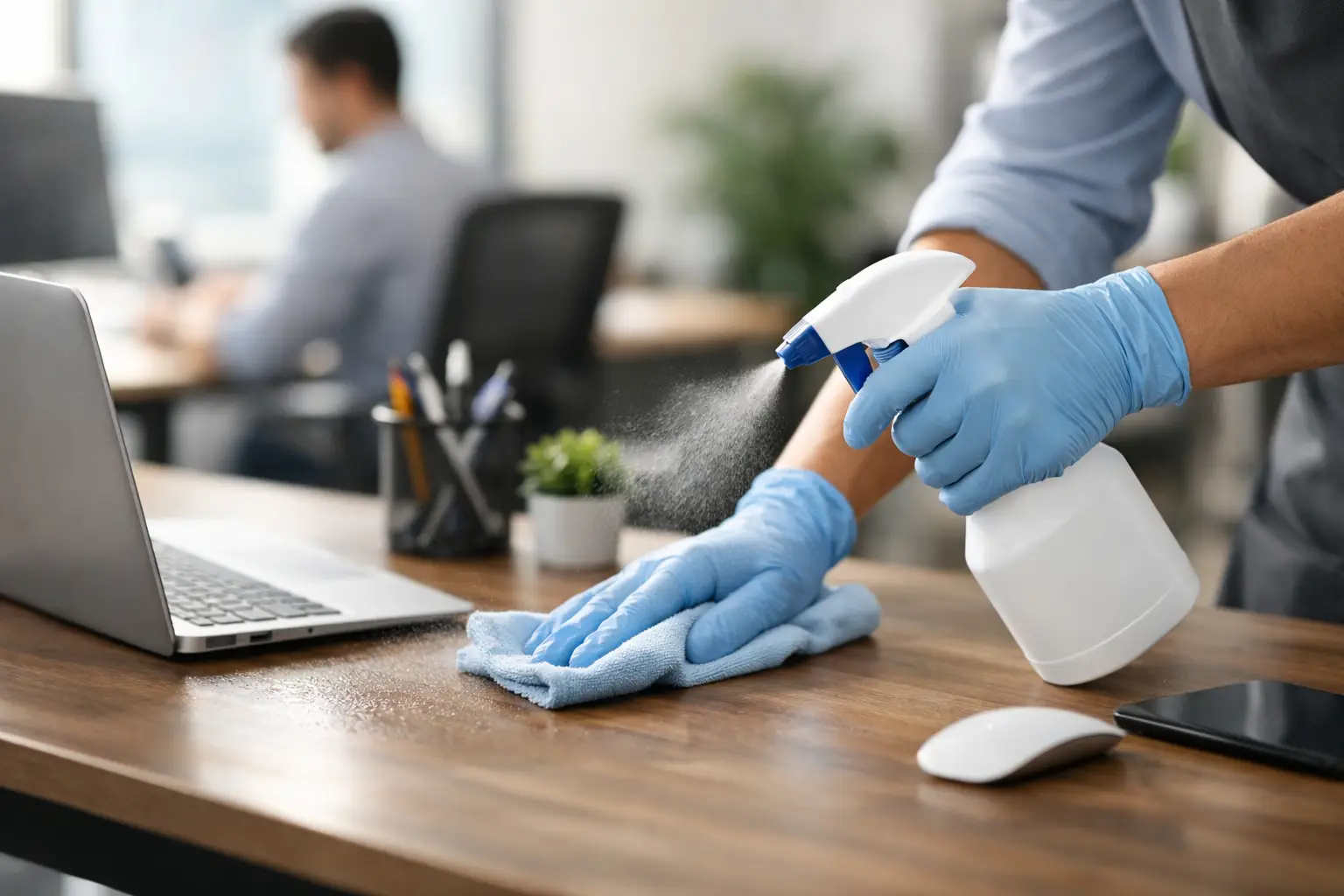
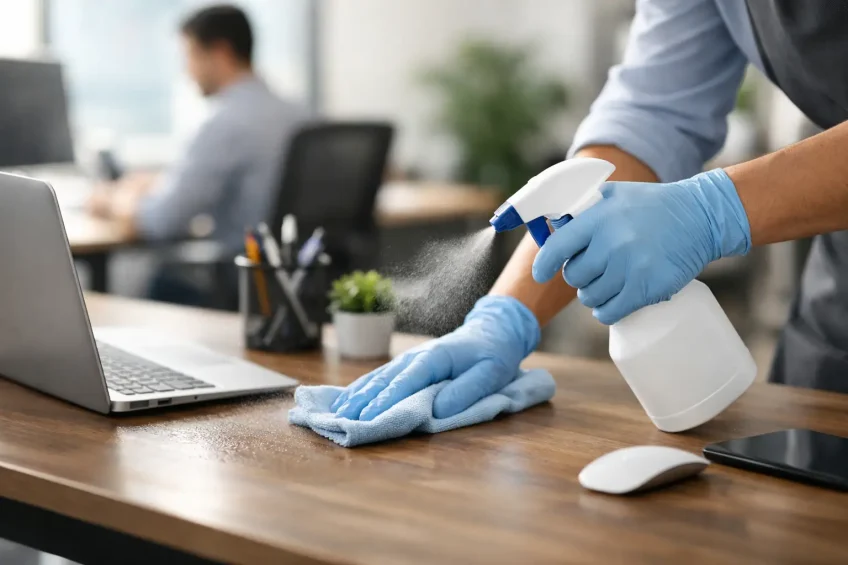
A shared desk can be used by several people in one day. The same is true of meeting-room tables, kitchen taps, lift buttons and printer touchscreens. Knowing how to disinfect shared workspaces is therefore less about making every surface smell clean and more about putting a reliable, risk-based routine in place that keeps the workplace ready for staff and visitors.
For facilities and office managers, the priority is consistency. A well-intended wipe-down between busy periods is not the same as a planned cleaning and disinfection programme with clear responsibilities, suitable products and quality checks. The right approach protects presentation, supports employee confidence and reduces avoidable disruption to the working day.
Start by separating cleaning from disinfection
Cleaning removes visible dirt, dust, spills and a proportion of germs from a surface. Disinfection uses an appropriate product to reduce microorganisms on a cleaned surface. They are related tasks, but they are not interchangeable.
If a desk, kitchenette worktop or door plate is visibly soiled, it should be cleaned first. Dirt and residue can prevent a disinfectant from making proper contact with the surface. The operative should then apply the disinfectant at the dilution, coverage rate and contact time stated by the manufacturer. Wiping a product away immediately may mean it has not had sufficient time to work.
This distinction matters in high-use office environments. It also prevents excessive chemical use, which can leave residues, affect delicate finishes and create unnecessary exposure for employees and cleaning teams.
Identify where disinfection delivers the most value
Not every surface needs the same frequency of disinfection. A proportionate plan focuses attention on high-touch points, shared equipment and areas where food is prepared or consumed. The level of activity in the building, visitor footfall, hot-desking arrangements and the needs of occupants should all shape the schedule.
Common priority areas include:
- Shared desks, chair arms, desk dividers and docking stations
- Meeting-room tables, presentation controls, remote controls and light switches
- Door handles, push plates, lift buttons, handrails and access-control readers
- Kitchenettes, including taps, appliance handles, cupboard pulls and dining tables
- Printers, photocopiers, shared telephones and touchscreen devices
- Washroom touchpoints, particularly flush plates, taps, dispensers and door furniture
A touchpoint survey is a useful starting point. Walk the site at different times of day and observe how people move through it. A reception desk may be a high-contact surface during visitor hours but far less so outside them. A boardroom used for back-to-back meetings may need attention between bookings, whereas a lightly used breakout area may be managed through daily service.
Give hot-desking its own routine
Hot-desking creates a particular challenge because use changes quickly and often without a formal handover. Daily cleaning alone may not be enough for heavily shared workstations. Facilities teams can support the main cleaning programme by providing approved surface wipes for employees to use before and after a desk session.
However, employee wipes should complement rather than replace professional service. They are unlikely to cover chair arms, monitor stands, docking stations and adjacent touchpoints consistently. They may also be unsuitable for screens and sensitive equipment if the wrong product is selected.
Choose products for the surface and the task
The most effective product is not always the strongest-smelling or most aggressive one. It must be suitable for the material being treated, compatible with the workplace environment and used in accordance with its instructions.
For general hard, non-porous surfaces, use a disinfectant that is appropriate for the hygiene risk identified and follow the stated contact time. Product efficacy claims should be supported by the relevant test standards where required. In periods of heightened infection-control concern, a virucidal product may be necessary, but this should be selected according to site risk assessment and current public-health guidance.
Sensitive surfaces require greater care. Computer screens, keyboards, telephones, AV controls and server-room equipment should be cleaned using methods approved for electronic equipment. Liquid should never be sprayed directly onto devices or allowed to enter ports, ventilation openings or electrical connections. Apply a suitable product to a cloth where permitted, use minimal moisture and ensure equipment is powered down where necessary.
Natural stone, specialist flooring, polished surfaces and coated furniture can also be damaged by unsuitable chemicals. A facilities plan should record surface types and approved products rather than relying on a single solution across the building.
Build a routine people can follow
A disinfection programme works when it fits the operation of the building. The aim is not to interrupt people unnecessarily, but to ensure priority surfaces are dealt with at the right time and to a verifiable standard.
For many offices, this means combining a daily out-of-hours clean with daytime attention to high-contact areas. Morning service may prepare kitchens, washrooms, reception and meeting rooms for the day. During busy hours, a trained operative can replenish washroom consumables, respond to spills and disinfect high-touch points. A final service can reset shared spaces for the next working day.
Meeting rooms deserve a clear process. If rooms are frequently booked, agree whether they will be disinfected after every meeting, at set intervals or on request. It depends on occupancy, room turnover and the nature of meetings. A client-facing boardroom, for example, may justify a more frequent service than an internal project room used by the same small team.
Clear ownership is essential. The cleaning provider should understand the scope, frequency and product requirements, while building users should know how to report a spill, request support or use the approved wipes provided. Vague instructions such as “clean regularly” create gaps. A site-specific schedule creates accountability.
Protect cleaning operatives and building users
Disinfection is a health-and-safety task, not simply an additional cleaning step. Products must be stored securely, correctly labelled and used in line with COSHH assessments. Operatives need training on dilution, contact times, colour-coded equipment, personal protective equipment and safe handling procedures.
Ventilation should also be considered, particularly when cleaning enclosed meeting rooms, washrooms or areas with limited fresh air. Products should not be mixed, even when staff believe combining them will improve results. Mixing chemicals can create harmful fumes or reduce effectiveness.
Good practice also avoids cross-contamination. Separate cloths and mop equipment should be used for washrooms, kitchens and general office areas, with a controlled laundering process for reusable textiles. Disposable wipes should be discarded appropriately after use, rather than carried from one workspace to another.
Use electrostatic disinfection in the right circumstances
Electrostatic disinfection can be a valuable addition for large areas, complex furniture layouts and spaces with many difficult-to-reach touchpoints. The charged mist is designed to help disinfectant reach and cling to suitable surfaces more evenly than conventional spray application.
It is not a substitute for cleaning visible soil, nor should it be treated as a blanket answer for every office. The method needs trained operatives, appropriate products, controlled application and a clear understanding of what equipment and materials can be treated safely. It can be particularly useful following a confirmed illness concern, after high-footfall events, during deep-clean programmes or where a rapid, thorough response is required.
Any specialist treatment should form part of a broader hygiene plan that includes routine cleaning, hand hygiene facilities, waste management and ventilation. Disinfection addresses surfaces. It does not solve every route by which illness can spread.
Check standards instead of relying on appearances
A freshly cleaned workspace should look professional, but appearance alone cannot confirm that the agreed routine has been completed. Quality control turns a cleaning schedule into a managed service.
Use service checklists that identify priority touchpoints, frequencies and any areas requiring special treatment. Supervisory inspections can confirm standards, spot recurring issues and adjust the plan where office use changes. For larger or more sensitive premises, reporting can provide facilities managers with a clear record of completed work, corrective actions and recurring maintenance requirements.
Feedback from reception teams, office managers and building users is equally useful. If a particular meeting room is constantly busy, a new department has adopted hot-desking, or a kitchenette becomes crowded at lunchtime, the cleaning plan should adapt. Flexibility is part of reliable service delivery, not an exception to it.
Make hygiene part of workplace readiness
The best disinfection programme is visible in the way a workplace functions: washrooms are supplied, shared desks are ready to use, visitor areas remain presentable and cleaning activity supports rather than disrupts the business. It gives employees confidence that the practical details of the office are being managed with care.
For Central London workplaces with complex occupancy patterns, EDM Cleaning can develop site-specific cleaning and disinfection arrangements supported by trained operatives, appropriate equipment and documented quality control. The most useful next step is to review how people actually use your building, then set standards that can be delivered consistently every day.