Stone Cleaning for London Commercial Buildings
A stone floor in a busy reception can change the impression of an entire building before a visitor reaches the desk. Scuffing, ingrained dirt, dull patches and residue around entrances quickly make even a well-managed workplace appear neglected. Professional stone cleaning addresses these issues with a planned approach that protects the surface as well as its appearance.
For facilities and property managers, this is not simply a cosmetic task. Stone is a significant building finish, often installed in high-traffic areas where it must withstand footfall, wet weather, cleaning activity and frequent contact with trolleys, furniture and equipment. The wrong method can leave permanent marks, reduce slip resistance or damage a finish that is costly and disruptive to replace.
Why commercial stone needs a specialist approach
Natural and engineered stone can look similar from a distance, but the cleaning requirements can be very different. Marble, limestone, travertine, granite, slate, terrazzo and porcelain all respond differently to moisture, acidic products, abrasion and mechanical cleaning. A process that is appropriate for durable granite may etch polished marble. A product that removes mineral deposits from one surface may damage the protective finish on another.
Commercial sites also create a more demanding cleaning environment than domestic spaces. Entrances in Central London are exposed to rainwater, road grit and pollutants. Lift lobbies and circulation routes receive constant footfall. Washrooms, kitchens and external terraces present their own risks, from soap residue and limescale to food spills, algae and staining.
A specialist team begins by identifying the stone, its existing condition and the surrounding environment. This allows the cleaning plan to account for porosity, finish, traffic levels, drainage, previous treatments and the site’s operating hours. The objective is to restore a clean, consistent appearance without introducing unnecessary risk to the material or building users.
Stone cleaning starts with condition assessment
Before any intensive work begins, the surface should be inspected closely. What appears to be general dullness may be a build-up of incompatible cleaning chemicals. Darkened grout lines may indicate embedded soil rather than a defect in the stone itself. A hazy polished floor may need controlled honing or polishing rather than stronger detergent.
Assessment also helps separate cleaning from restoration. Routine cleaning removes day-to-day soil and helps preserve the surface. Restoration may involve removing stains, treating etching, repairing chips, regrouting, honing or resealing. These services can work together, but they should not be treated as interchangeable.
For a commercial building, documenting the condition of prominent stone areas is valuable. It creates a clear baseline, supports quality checks and helps facilities teams plan maintenance before small issues become more visible or harder to resolve.
Common issues in commercial premises
Stone deterioration rarely has one cause. In many workplaces, it results from a combination of traffic, moisture and unsuitable maintenance practices. The most common concerns include loss of shine in walkways, blackened entrance edges, staining around planters, etching from acidic spills, grout discolouration and residue left by products not designed for stone.
Slip risk is another consideration. A surface can appear clean yet become unsafe if cleaning products leave a film or if excess water is not removed effectively. In reception areas, staircases and washrooms, cleaning methods need to support both presentation and safe use.
The right process depends on the stone and the site
There is no single method for every floor, wall or façade. A tailored programme may combine low-moisture cleaning, neutral stone-safe solutions, mechanical agitation, extraction and controlled drying. For polished surfaces, the team may use appropriate pads and equipment to lift soil while avoiding scratches. More intensive work may require specialist stain treatment or refinishing techniques, following testing in a discreet area.
Sealing can also be part of the maintenance plan, particularly for porous stone. A suitable sealer helps reduce the penetration of water, oils and everyday spills, making routine cleaning more effective. However, sealing is not a cure for poor maintenance or unresolved moisture issues. It must be matched to the material and reapplied at intervals determined by traffic, exposure and the product used.
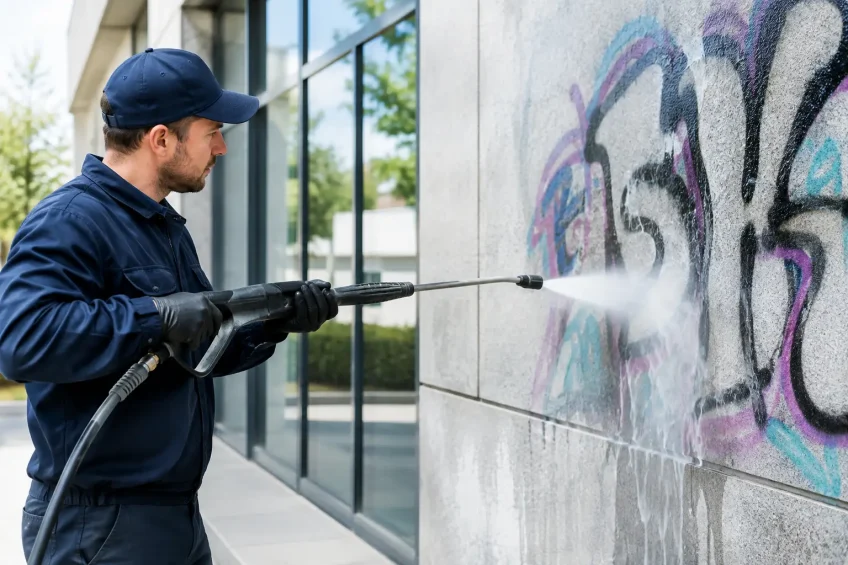
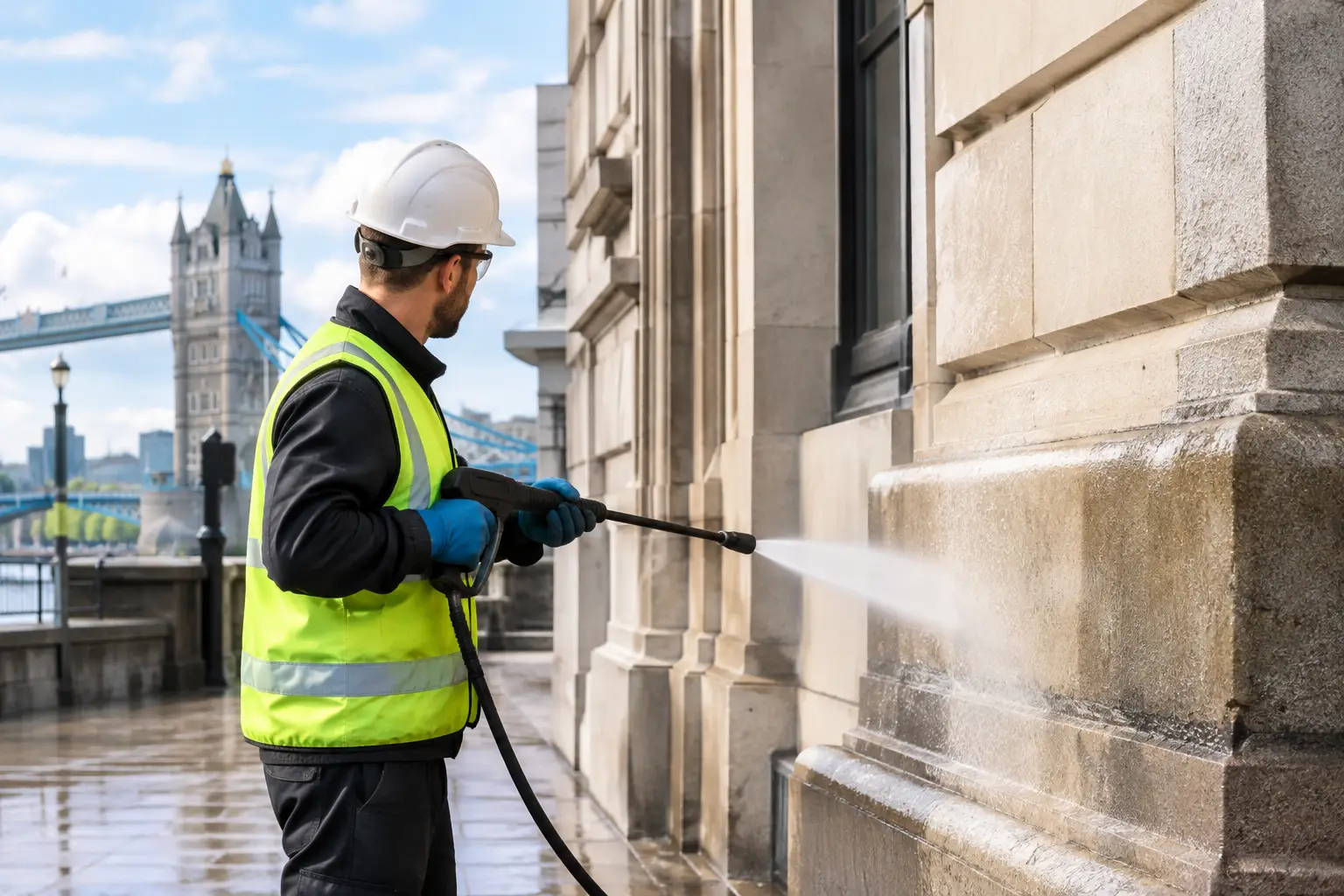
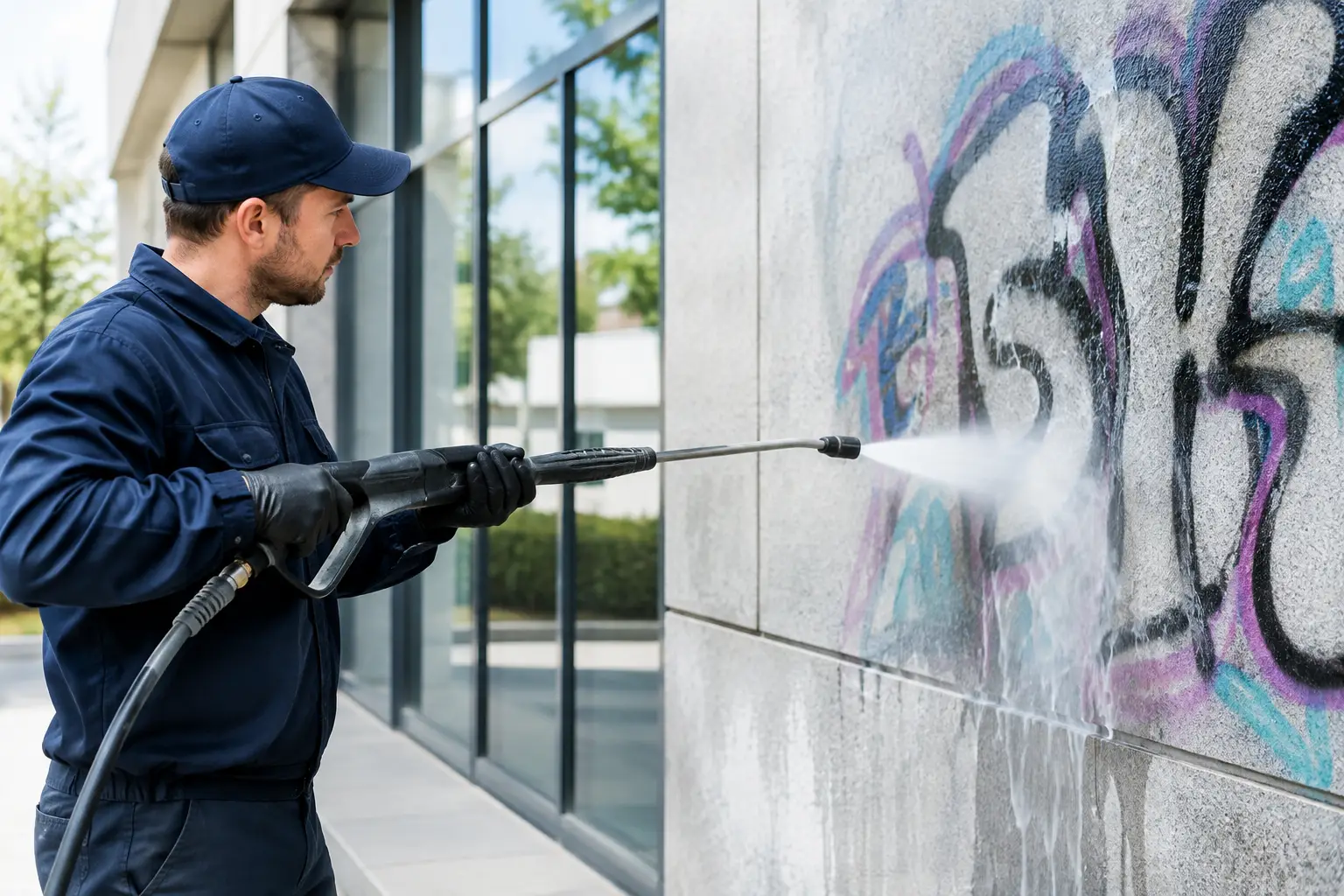
External stone presents further variables. Paving, steps and cladding may require careful removal of organic growth, atmospheric soiling or construction residue. Pressure alone is not an answer. Used incorrectly, it can erode softer stone, disturb pointing and force water into joints. The method must be selected for the substrate, the condition of the area and the need to protect nearby glazing, landscaping and pedestrian routes.
Building stone care into planned maintenance
The most effective approach is to combine specialist periodic care with daily cleaning practices that do not undermine it. A restored reception floor can lose its appearance quickly if it is subsequently cleaned with harsh chemicals, saturated with water or exposed to gritty entrance traffic without sufficient matting.
Daily operatives should understand which products and tools are approved for each stone surface. Neutral cleaning solutions, clean mop heads, controlled dilution and prompt attention to spills all make a practical difference. Entrance matting should be maintained as part of the strategy, not treated as a separate issue, because it captures the grit that can scratch and dull floors over time.
Periodic stone cleaning can then be scheduled around the building’s needs. High-profile receptions and busy circulation areas may require more frequent attention than meeting-room thresholds or lightly used upper floors. Out-of-hours delivery can minimise disruption, particularly in occupied offices, corporate headquarters and shared commercial buildings.
Quality control and site communication matter
A technically correct process still needs disciplined service delivery. Facilities managers need confidence that work will be completed as agreed, areas will be left ready for use, and any emerging concerns will be reported promptly.
Clear site instructions are particularly important where stone sits alongside carpets, timber, metal trims or glass. Cleaning teams need to protect adjoining finishes, manage access safely and use appropriate signage while floors are being treated or dried. For larger projects, agreed work zones and phased scheduling help maintain business continuity.
Formal quality-control processes provide an additional safeguard. Regular inspections, documented checks and responsive communication make it easier to identify recurring problems, such as a particular entrance becoming soiled after wet weather or a washroom area requiring a different maintenance frequency.
Environmental and compliance considerations
Stone cleaning should support wider workplace responsibilities, including health and safety, chemical control and environmental management. Products should be selected with the surface, users and drainage arrangements in mind. COSHH procedures, safe storage, correct dilution and trained application are essential, particularly where work is carried out in occupied areas.
Reduced chemical use does not mean reduced standards. In many cases, accurate product selection, effective equipment and well-trained operatives achieve better results than aggressive chemicals used without control. Water use should also be managed carefully, especially in internal areas where excess moisture can create slip hazards or affect surrounding materials.
For buildings with formal environmental, quality and health-and-safety requirements, a cleaning partner should be able to work within established site procedures and provide accountable service support. EDM Cleaning applies this same focus on training, quality control and safe working practices across specialist cleaning programmes.
When to arrange specialist stone cleaning
Visible dullness is an obvious prompt, but waiting until the floor looks poor can limit the available options. It is sensible to review stone surfaces after refurbishment works, following winter weather, when a new occupier moves in, or before an important client event. A condition review is also useful where daily cleaning no longer achieves an even finish or where staff have reported recurring slips, staining or residue.
Stone is intended to convey permanence and quality. With appropriate maintenance, it can continue to do so while supporting a cleaner, safer and more dependable workplace environment. A planned inspection is often the simplest first step towards protecting that investment before routine wear becomes a larger facilities issue.