Cleaning Technology Trends for Smarter Workplaces
A missed clean in a busy office is rarely just a missed clean. It can become a complaint from a tenant, an unwelcome first impression for a visitor, a hygiene concern for staff, or another task for an already stretched facilities team to investigate. The most useful cleaning technology trends are therefore not simply about introducing new machinery. They are about giving facilities managers better visibility, greater consistency and stronger evidence that a workplace is ready for use.
For commercial premises, technology should support a well-managed cleaning operation rather than replace the judgement of trained operatives. The right approach depends on the building, occupancy levels, working hours, floor finishes and risk profile. A high-traffic City office, for example, may benefit from different tools and reporting routines than a specialist server room or a newly completed development.
Cleaning technology trends that improve control
The direction of travel is clear: cleaning is becoming more measurable, targeted and responsive. Facilities teams increasingly need to demonstrate standards, manage environmental responsibilities and react quickly when building use changes. Technology can make this easier, but only when it is supported by clear procedures, trained people and regular supervision.
Digital quality control and live reporting
Paper checklists still have a place in some environments, but digital task management is changing how commercial cleaning quality is monitored. Mobile systems can record completed tasks, inspections, issues raised on site and follow-up actions. This creates an auditable record that is far more useful than relying on verbal updates at the end of a shift.
For a facilities manager, the value is not technology for its own sake. It is the ability to see whether agreed standards are being achieved, identify recurring issues and hold constructive service reviews based on evidence. Digital reporting can also make handovers clearer where buildings operate across extended hours or have more than one cleaning team.
There is a practical consideration, however. Reporting only improves service if the information is reviewed and acted upon. A platform full of completed forms is not a quality-control system unless a supervisor is checking outcomes, addressing exceptions and feeding learning back to the team.
Data-led cleaning frequencies
Traditional cleaning schedules often work to fixed daily, weekly and monthly patterns. That remains appropriate for many core activities, particularly washroom servicing, touchpoint cleaning and presentation-led tasks. Yet occupancy data, access patterns and meeting-room use can help teams adjust resources where demand is highest.
In a hybrid workplace, one floor may be busy on Tuesdays and Thursdays but lightly used on other days. A more informed cleaning plan can focus attention on entrances, washrooms, kitchens, shared desks and high-use collaboration spaces when they need it most. This helps maintain standards without treating every area as if it receives the same level of footfall.
The objective is not to reduce cleaning to a spreadsheet. Buildings still require a reliable baseline service, and areas may need attention for reasons that data cannot predict. Instead, usage information should help managers make sensible decisions about patrols, consumables, deep cleans and periodic maintenance.
Sensors that support washroom and consumables management
Washrooms are one of the most visible measures of workplace care. Sensors can help indicate traffic levels, soap or paper-product usage, bin capacity and, in some cases, air-quality conditions. Used well, this information allows cleaning teams to service washrooms according to actual demand rather than relying solely on fixed visit times.
This can be particularly valuable in larger corporate premises where washroom use varies considerably throughout the day. It supports a more responsive service and reduces the likelihood of empty dispensers, overflowing bins or avoidable complaints.
Sensors should be selected with care. Facilities managers need to consider installation requirements, data ownership, battery maintenance and whether the information will genuinely change how the service is delivered. A straightforward inspection routine may remain the most effective option in a smaller site.
Automation has a role, but not every role
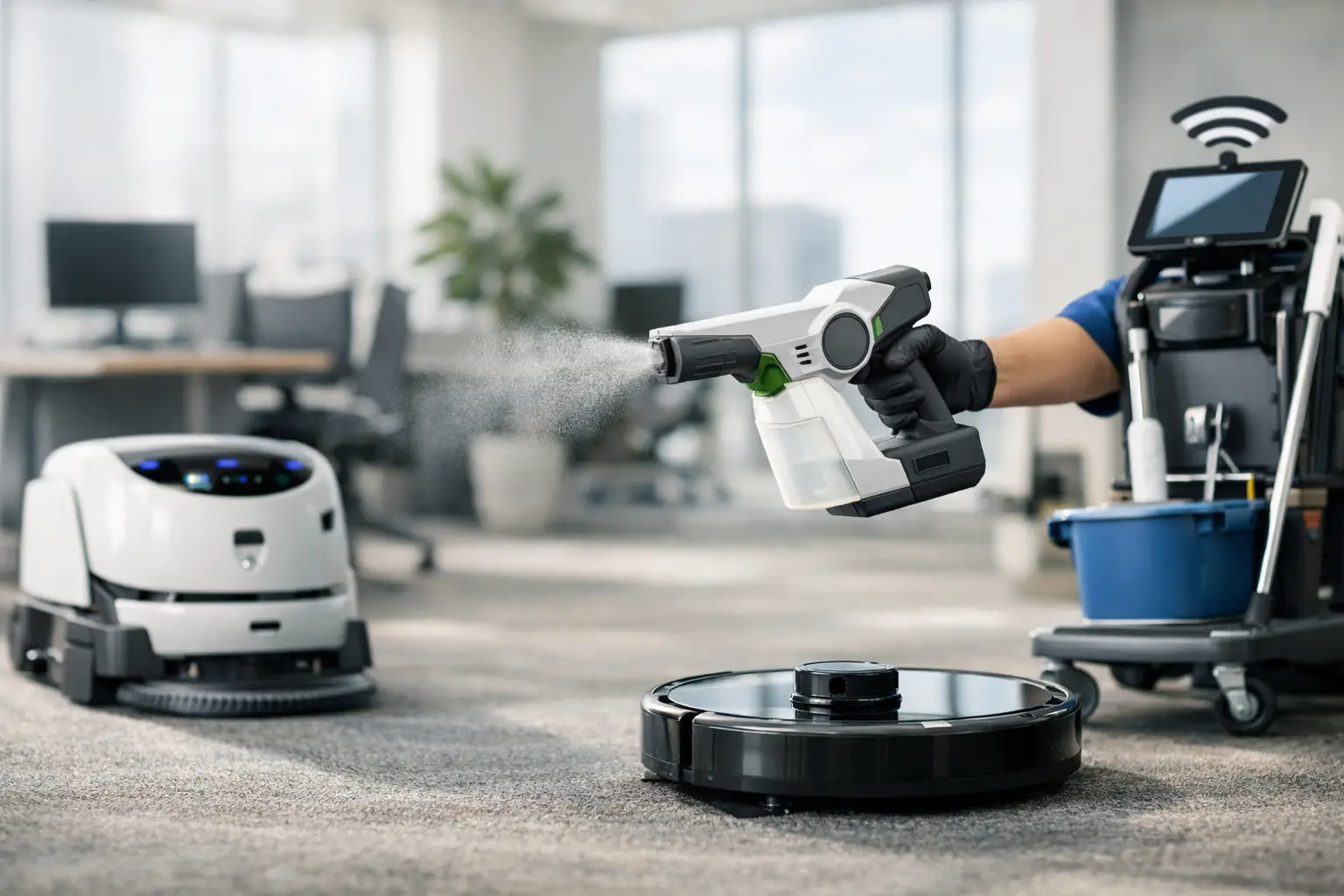
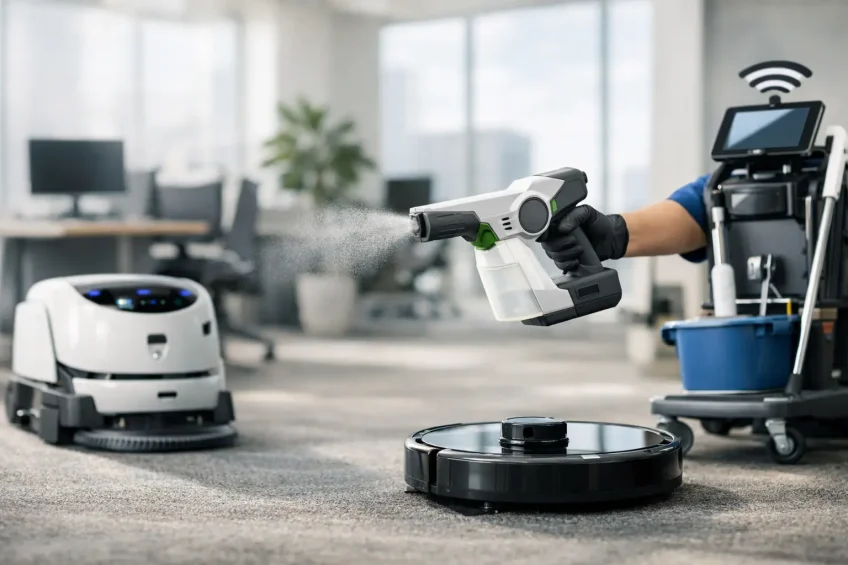
Robotic floor-cleaning machines are among the most visible developments in commercial cleaning. They can be useful on large, open and predictable floor areas, such as expansive reception spaces, corridors, retail-style environments or hard-floor zones with repeated layouts. They can provide consistent coverage and free operatives to focus on detailed, high-value work.
That does not mean autonomous equipment is a complete answer for complex office environments. Desks, cables, changing furniture layouts, uneven surfaces, stairs and busy pedestrian routes all create operational limitations. Machines also need programming, charging, cleaning, maintenance and oversight. They are a tool within a wider service model, not a substitute for an accountable team on site.
For many workplaces, the strongest result comes from combining mechanised equipment for suitable repetitive tasks with experienced operatives who can respond to spills, presentation issues, delicate finishes and changing priorities. This balance is especially important in buildings where customer-facing areas must look consistently well maintained.
Smarter equipment for floors and specialist surfaces
Advances in scrubber dryers, vacuum systems and floor-maintenance equipment are helping teams work more efficiently while improving consistency. Equipment with adjustable water flow, dosing controls and battery monitoring can help reduce unnecessary water and chemical use. For hard floors, this supports a more controlled maintenance programme and can help protect the appearance and lifespan of the surface.
Specialist cleaning still requires careful judgement. Natural stone, polished floors, carpets and sensitive finishes can be damaged by unsuitable products or aggressive methods. Technology may improve delivery, but it cannot replace knowledge of the surface, manufacturer guidance and appropriate cleaning chemistry.
The same principle applies to computer and IT-equipment cleaning. Static-sensitive environments, keyboards, screens and server-room infrastructure need methods designed to minimise risk. Any equipment used in these areas must be appropriate for the environment and operated by personnel who understand the required precautions.
Electrostatic disinfection and targeted hygiene measures
Electrostatic disinfection has become a recognised option for applying disinfectant evenly across certain surfaces. The process charges droplets so they are attracted to surfaces, including difficult-to-reach areas. It can be useful as part of a targeted response following an illness concern, during a deep-clean programme or where a client has identified heightened hygiene requirements.
It is not, however, a replacement for routine cleaning. Dirt and organic matter can reduce the effectiveness of disinfectants, so surfaces must first be cleaned correctly. Product selection, contact time, ventilation, personal protective equipment and COSHH assessment all remain essential.
The best hygiene strategy is usually layered: effective routine cleaning, focused attention to touchpoints, well-stocked washrooms, sensible cleaning frequencies and an agreed response plan when circumstances change. Technology can strengthen that approach, but safe practice and documented procedures remain the foundation.
Sustainability is becoming more measurable
Environmental responsibility is increasingly assessed through practical operational measures rather than broad statements. Facilities teams are looking more closely at water use, chemical consumption, packaging, waste streams and equipment efficiency. Cleaning technology can support this through dilution-control systems, lower-water machinery, refillable dispensing solutions and better monitoring of consumable use.
The trade-off is that a product or process should never be chosen solely because it appears environmentally preferable. It must also be suitable for the task, safe for operatives and occupants, and capable of delivering the required hygiene and presentation standard. A well-managed supplier will assess the full operational picture, including product instructions, site conditions and waste arrangements.
For organisations working to environmental-management objectives, documented processes matter. Clear records of products, training, waste handling and service activity can support wider facilities reporting while giving managers confidence that cleaning arrangements align with site requirements.
The human factor remains the differentiator
The most valuable technology in a cleaning contract is often the technology that makes communication and accountability easier. It gives managers confidence that tasks have been checked, defects have been resolved and changing requirements have been recorded. But it does not create pride in standards, attention to detail or the ability to spot a problem before it becomes a complaint.
That comes from well-supported operatives, effective training, competent supervision and a cleaning plan tailored to the premises. Technology should reduce administrative friction so those people can spend more time protecting the condition, hygiene and readiness of the workplace.
When reviewing cleaning technology trends, facilities managers should begin with the operational outcome they need: clearer assurance, quicker response, better washroom experience, improved floor care or more reliable hygiene control. The most useful investment is the one that strengthens daily service delivery and makes the building easier to manage.