Office Hygiene That Keeps Workplaces Ready
A meeting room can look presentable at 8.30am and still fall short on hygiene by lunchtime. Shared desks, touchpoints, washrooms, kitchens and IT equipment all carry the marks of a busy working day. Effective office hygiene is therefore not a cosmetic finishing task. It is an operational control that helps keep people well, protects your workplace presentation and ensures the premises are ready for employees, clients and visitors.
For facilities and office managers, the challenge is rarely recognising that cleaning matters. It is creating a consistent standard across a changing workplace, without adding another complex task to an already full facilities schedule. The answer is a site-specific hygiene plan, delivered by trained people and supported by clear quality controls.
Office hygiene is more than a clean-looking office
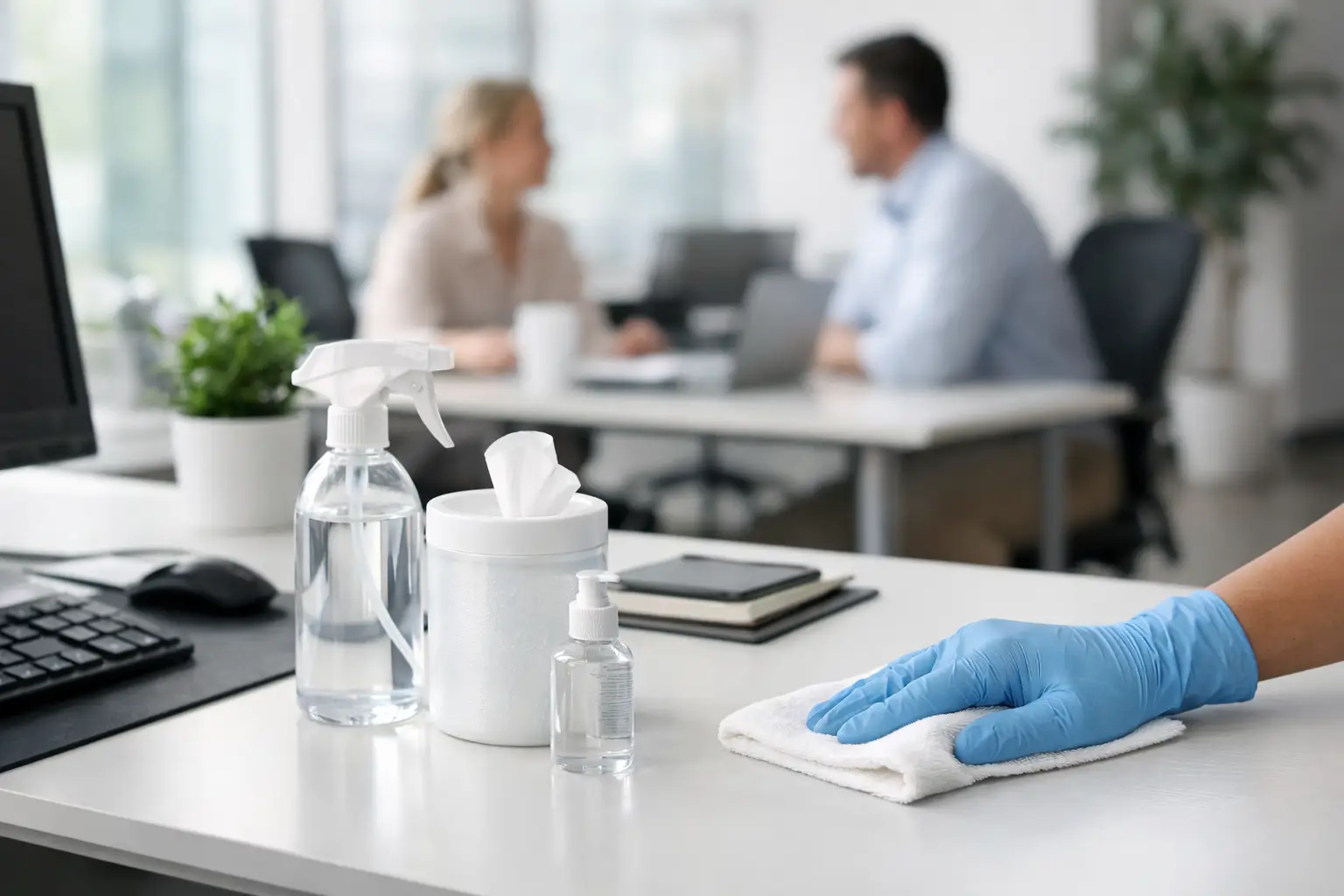
A tidy reception, polished floor and emptied bins matter, but visible cleanliness is only one part of the picture. Hygiene concerns the areas people touch, share and rely on throughout the day. That includes door handles, lift buttons, kitchen surfaces, washroom fittings, meeting-room tables, shared printers and desk equipment.
These areas need a different approach from routine dusting or vacuuming. Cleaning removes visible soil and debris. Disinfection is designed to reduce microorganisms on appropriate surfaces. Both have a role, but neither should be applied indiscriminately. The correct method depends on the surface, how often it is used, the products specified for the site and whether there is an elevated hygiene requirement.
This distinction is particularly relevant in high-occupancy offices, flexible workspaces and buildings with frequent visitors. A cleaning programme that focuses only on what is immediately visible may leave the highest-contact areas without the attention they require.
Start with how the building is actually used
The most reliable hygiene plans reflect the reality of the workplace rather than following a generic checklist. A corporate headquarters with a staffed reception, client meeting spaces and a large canteen will have different priorities from a smaller office with hybrid attendance. Equally, an office with banked desks may need greater attention to shared workstations and booking panels than one where each employee has an assigned desk.
A proper site assessment should consider occupancy patterns, peak periods, visitor traffic, the number and condition of washrooms, food preparation areas, floor finishes and specialist rooms. It should also identify where cleaning can take place without interrupting operations. Some tasks are best completed outside working hours; others, such as washroom checks and spill response, need daytime support.
This is where flexibility matters. A static schedule may work well for predictable spaces, but it can be inefficient when office attendance fluctuates. The objective is not simply to increase cleaning frequency everywhere. It is to put time, resources and specialist methods where they make the greatest difference.
Prioritise high-touch and shared surfaces
High-touch points deserve clear ownership within the cleaning schedule. They are often missed because they are spread across the building rather than concentrated in one room. Door furniture, handrails, access-control panels, appliance handles, taps, flush plates, shared screens and communal phones should be identified during mobilisation and checked routinely.
The required frequency will depend on building use. A client-facing office in the City of London with busy meeting suites may need repeated daytime attention to reception and common areas. A quieter office may benefit more from a thorough daily clean alongside targeted checks after meetings or events. Good office hygiene is responsive, not excessive for its own sake.
Do not overlook desks and IT equipment
Workstations are personal spaces, but they are also working tools. Keyboards, mice, desk phones and monitor surrounds can quickly collect dust, skin oils and debris, particularly where equipment is shared. Standard cleaning products are not always appropriate for sensitive electronics, and over-wetting can create avoidable risks.
A specialist approach to computer and IT-equipment cleaning protects both hygiene and asset condition. Cleaning teams should use suitable materials and methods, follow site rules for equipment and work around data security requirements. For server rooms and other critical environments, cleaning must be carefully planned to control dust without compromising equipment or business continuity.
Washrooms and kitchens shape perceptions quickly
Employees and visitors form strong opinions about a workplace from its washrooms and kitchen areas. These spaces see heavy use, require regular replenishment and can deteriorate quickly when checks are inconsistent. A washroom that runs out of soap, paper or sanitary provisions is not just inconvenient. It undermines confidence in the wider standard of the building.
Washroom servicing should combine cleaning, disinfection where appropriate, consumable monitoring and clear reporting of faults. Persistent odours, leaking fittings and damaged dispensers should be flagged promptly, because cleaning alone cannot resolve maintenance issues.
Kitchen areas need similarly defined responsibilities. Food debris, overflowing recycling, stained worktops and neglected appliances can create hygiene concerns and friction between colleagues. The cleaning plan should set expectations for daily care, periodic deep cleaning and the division of responsibility between cleaning operatives and office users. Clear boundaries prevent the common problem of everyone assuming someone else will deal with it.
Build quality control into the service
Office hygiene cannot rely on good intentions or occasional inspection. It needs a system that makes standards visible and keeps issues from becoming recurring problems. For facilities managers, this means agreeing the scope of work, the service times, the priorities for each zone and the method for reporting exceptions.
Regular audits are valuable because they assess more than whether a task has been completed. They can identify patterns: a washroom that needs additional daytime checks, a meeting floor with unusually high traffic, a carpeted area that is becoming marked, or a kitchen where waste collections need adjusting. The findings should lead to practical changes, not simply paperwork.
A dependable cleaning partner will also provide clear supervision and trained operatives who understand the site. Formal quality-management, health-and-safety and environmental procedures support consistency, but day-to-day communication remains essential. Managers need to know who to contact, how concerns will be addressed and what action has been taken.
Choose methods that support health, safety and the environment
The products and equipment used in an office affect employees, visitors and the cleaning team. Product selection should account for effectiveness, surface compatibility, ventilation and safe use. COSHH assessments, correct dilution and secure storage are fundamental, particularly in multi-tenant properties or sites with restricted service areas.
There can be trade-offs. Stronger chemical products are not automatically the best choice for every task, while environmentally considered products still need to be suitable for the intended hygiene outcome. The right approach is a planned one: use products correctly, avoid unnecessary waste, maintain equipment and select methods appropriate to the surface and risk level.
For some circumstances, such as after a confirmed illness concern or before returning an area to use following a high-traffic event, electrostatic disinfection may be considered as part of a wider response. It should complement thorough cleaning rather than replace it. Soil on a surface can reduce the effectiveness of disinfection, which is why the sequence of work matters.
Make hygiene part of workplace readiness
The strongest office hygiene programmes are not isolated from other facilities services. They work alongside waste management, washroom supplies, floor care, carpet cleaning, window cleaning and maintenance reporting. This joined-up view helps managers maintain standards across the whole employee and visitor experience.
For example, regular vacuuming supports daily presentation, but periodic carpet cleaning helps manage embedded soil and extends the appearance of a busy floor. Likewise, a clean hard floor may still need planned maintenance to preserve slip resistance and finish. Treating each task as a one-off can lead to reactive work; planning them together supports a more reliable building.
Staff engagement also has a place. Employees should not be expected to replace professional cleaning, but simple workplace expectations around clearing food waste, reporting spills and leaving shared spaces ready for the next user can improve results considerably. A visible and well-supported cleaning team reinforces that shared standard.
A practical standard for every working day
Office hygiene should give managers confidence, not create another issue to chase. When the plan reflects the building, operatives are trained for the tasks, specialist areas receive suitable care and quality is checked consistently, cleaning becomes a practical investment in workplace continuity.
Whether your office is in the West End, a busy City location or a quieter corporate setting, the aim is the same: a workplace that feels cared for, functions properly and is ready for the people who rely on it. The right cleaning support makes that standard easier to maintain, day after day.