Central London Cleaning Requirements for Offices
A Central London office can be immaculate at 8am and look very different by midday. High footfall, shared facilities, visitor traffic, compact service areas and demanding building-management rules all place pressure on workplace standards. Central London cleaning requirements therefore need more than a standard out-of-hours clean. They need a service plan that reflects how the building is used, who relies on it and what must be ready for the next working day.
For facilities and operations teams, the objective is straightforward: maintain a clean, safe and professional environment without creating another management task. The right specification brings together routine cleaning, planned periodic work, clear accountability and the flexibility to respond when the building’s needs change.
What shapes Central London cleaning requirements?
There is no single cleaning schedule that suits every commercial building. A legal firm receiving clients throughout the day has different priorities from a creative workspace with hot-desking, while a building with a server room, showers or public-facing reception needs specialist attention in particular areas.
Location can also affect delivery. Premises in the City, Westminster, Mayfair or the West End may have restricted loading access, concierge procedures, timed contractor access and strict rules around waste movement. Cleaning teams need to understand these operational constraints before work begins, not discover them during the first shift.
A useful cleaning plan starts with a site assessment. This should consider occupancy patterns, building layout, surface types, washroom demand, food-preparation areas, security arrangements and any sensitive spaces. It should also identify the work that needs to happen daily, the tasks better completed weekly or monthly, and the services best scheduled outside core working hours.
The result is a practical scope of work rather than a generic checklist. It gives managers a clear standard to measure against and gives cleaning operatives the information they need to deliver consistently.
Daily cleaning must protect workplace readiness
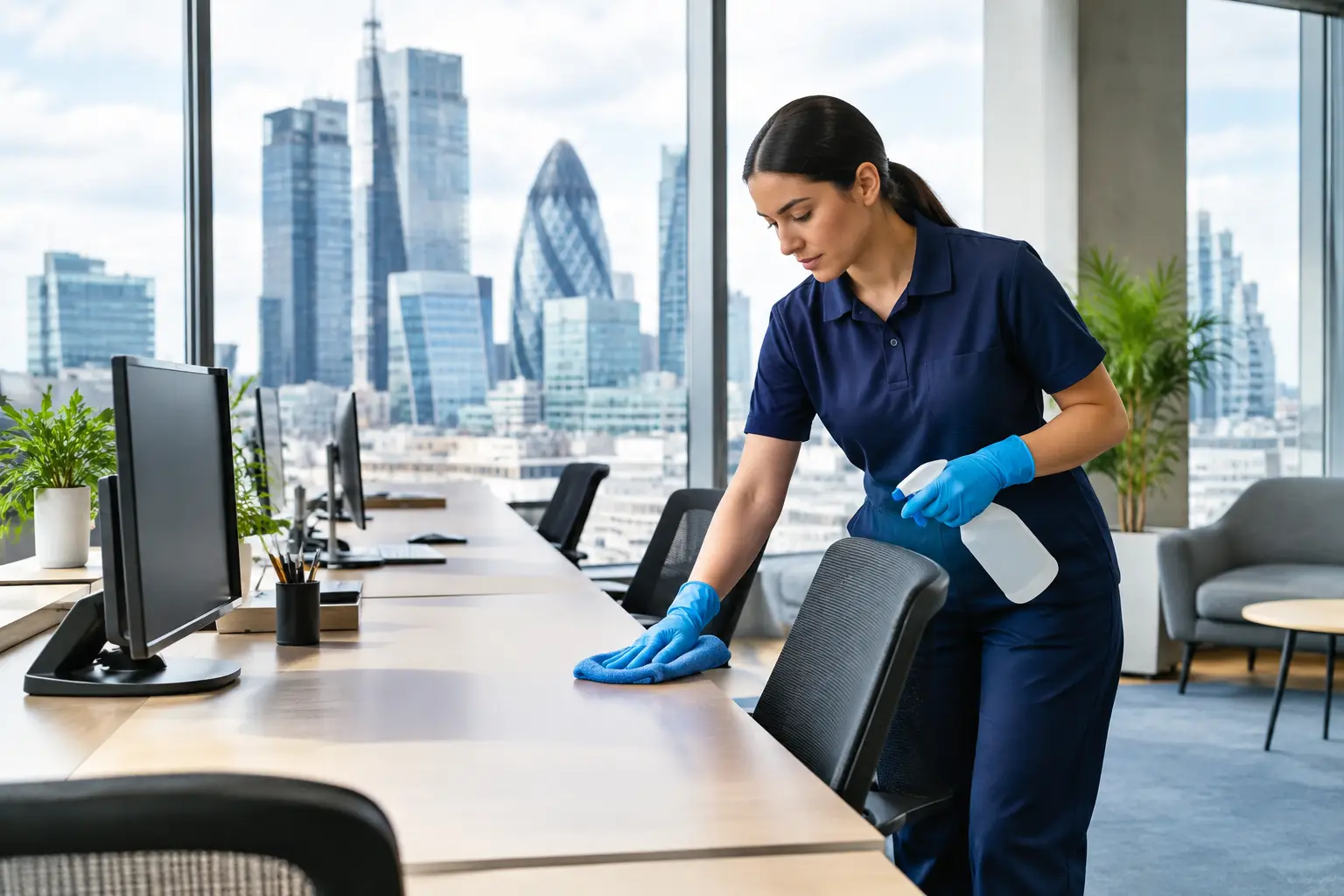
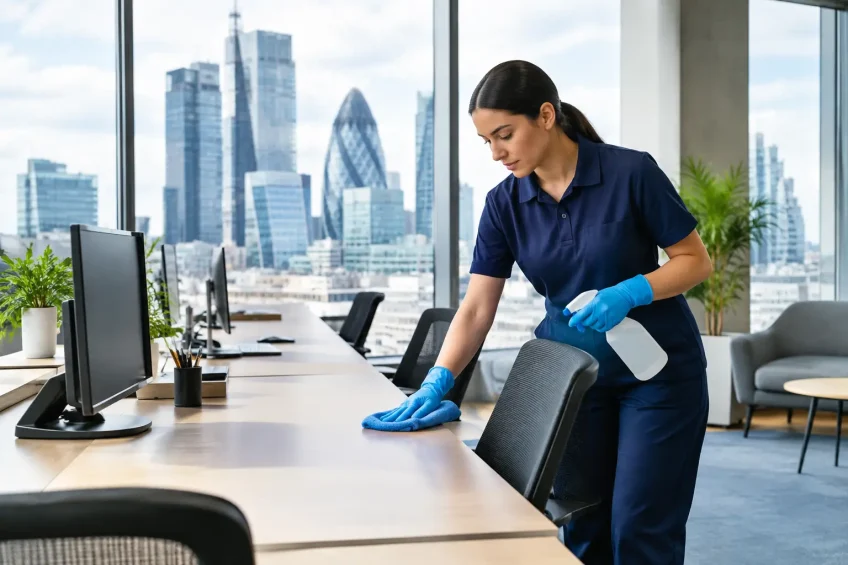
Routine office cleaning is the foundation of a well-managed workplace. Reception areas, meeting rooms, kitchens, washrooms, desks, touchpoints and circulation routes all influence how employees and visitors experience the building.
In busy offices, washrooms and kitchens often require more than one service visit. Consumables must be monitored, waste removed reliably and surfaces cleaned to an appropriate hygiene standard. The right frequency depends on occupancy, building opening hours and whether teams are working fully on site, flexibly or in shifts.
Desk cleaning also needs a considered approach. Clear-desk policies, confidential documents and personal equipment mean operatives need training in working around occupied workstations. A cleaning provider should agree what can be moved, what must remain untouched and how concerns are reported. This is especially relevant in corporate headquarters and professional-services offices where privacy and presentation are equally important.
For high-contact areas, a planned approach to touchpoint cleaning helps support workplace hygiene. Door furniture, lift buttons, shared equipment, handrails and kitchen fixtures can receive additional attention during periods of high use, seasonal illness or increased visitor activity. The correct method and product should always be selected for the surface and task rather than applying a one-size-fits-all approach.
Health, safety and compliance should be built into delivery
Cleaning is an operational activity with real health-and-safety responsibilities. A competent provider will work from documented risk assessments and method statements, use suitable personal protective equipment and ensure that cleaning products are managed in line with COSHH requirements.
This matters in every office, but particularly where there are hard floors, stairs, shared amenities, plant areas or specialist environments. Wet-floor controls, safe storage of materials, manual-handling procedures and secure key or access-card protocols all form part of a properly managed service.
Facilities managers should expect evidence that operatives are trained for their assigned duties and that training is refreshed as requirements evolve. Good practice also includes clear escalation routes for hazards, damage, supply shortages or building issues noticed during a shift. Cleaning teams are often among the first people to spot a leaking tap, damaged flooring or blocked washroom fitting. Reporting these promptly supports wider facilities management and helps prevent small issues becoming disruptive ones.
Environmental responsibility should be considered alongside hygiene and safety. Product selection, dilution control, waste segregation and the reduction of unnecessary consumables can all support a more responsible cleaning operation. However, sustainability claims should not compromise the correct cleaning method for a particular surface or hygiene requirement. The most suitable approach depends on the site, its materials and its environmental objectives.
Specialist work needs separate planning
Routine cleaning alone will not preserve every part of a commercial property. Carpets, hard floors, stone finishes, internal glazing and upholstery all need planned maintenance if they are to retain their appearance and service life.
Carpet cleaning, for example, may be scheduled in lower-occupancy periods to minimise disruption and allow sufficient drying time. Hard-floor maintenance requires an understanding of the floor type, existing finish and traffic level. Using an unsuitable product or machine can cause avoidable damage, particularly on natural stone or specialist flooring.
IT equipment and server rooms require additional care. Standard cleaning practices are not automatically appropriate around computers, communications equipment or sensitive infrastructure. These spaces call for trained operatives, controlled methods and an agreed scope that protects equipment while removing dust and debris that can affect the working environment.
Post-build, refurbishment and end-of-project cleaning should also be treated as distinct services. Fine dust, protective films, adhesives and building residues need a detailed handover clean, often followed by a return visit once trades have fully completed their work. Planning this properly makes it easier for the building to open, re-open or welcome staff back into a finished space.
Quality control turns a specification into consistent service
A cleaning contract is only as effective as its day-to-day delivery. Quality control should be visible, regular and proportionate to the site. That might include scheduled inspections, supervisor checks, communication books or digital reporting, alongside routine conversations with the facilities team.
The purpose is not simply to identify missed tasks. It is to spot patterns, respond early and keep the cleaning plan aligned with changing workplace use. If meeting-room bookings increase, a floor becomes heavily trafficked or a new tenant moves into part of the building, the service should be reviewed accordingly.
Clear ownership is essential. Managers should know who to contact, how requests are logged and when they can expect a response. Equally, operatives should have access to the supplies, equipment and supervision required to do their job well. A well-supported team is more likely to take pride in the premises and recognise the details that matter to the client.
When reviewing a provider, it is sensible to confirm that its management systems and working practices support the standards your organisation requires. Recognised frameworks for quality, environmental management and occupational health and safety can provide additional assurance, but they should sit alongside practical evidence of reliable service on site.
A practical brief for your cleaning provider
Before appointing or reviewing a cleaning partner, establish the information that will allow the service to be tailored properly. The brief should cover:
- building access arrangements, security procedures and permitted working hours;
- occupancy levels, peak periods and the spaces with the highest footfall;
- daily, periodic and specialist cleaning requirements;
- surface types, sensitive equipment and areas requiring restricted access;
- waste, recycling, washroom and consumable arrangements; and
- inspection routines, reporting expectations and escalation contacts.
This information prevents assumptions at the outset. It also creates a stronger basis for reviewing performance, particularly in multi-floor premises or buildings where office, client-facing and back-of-house areas have different standards.
Cleaning support that adapts to the building
The best Central London cleaning requirements are specific enough to set clear expectations but flexible enough to account for real operational change. A fixed routine has value, yet premises are rarely static. Board meetings, events, refurbishments, seasonal illness, increased office attendance and unexpected spillages can all require additional support.
EDM Cleaning approaches commercial cleaning as a managed facilities service, combining tailored plans with trained operatives, specialist capability and formal quality oversight. For busy London workplaces, that partnership approach helps keep cleaning dependable while reducing the administration placed on internal teams.
A clean workplace is not simply a visual standard. It supports employee confidence, visitor impressions, safe working conditions and the everyday readiness of the building. Start with how your site actually operates, then build a cleaning plan that gives every area the right level of attention when it needs it.