Best Commercial Floor Care Methods for Offices
A scuffed entrance floor, stained carpet tiles or a dull reception surface can alter a visitor’s impression before they reach the reception desk. For facilities teams, the best commercial floor care methods are not simply about restoring appearance after a problem occurs. They are a planned way to protect staff safety, preserve flooring assets and keep every part of the workplace ready for use.
The right approach depends on the floor type, footfall, building layout and the activities taking place on site. A busy City office lobby has different demands from a meeting suite, kitchen area, server room corridor or back-of-house workspace. Effective floor care starts with that distinction rather than applying one routine across the whole premises.
Best commercial floor care methods start with a site plan
A floor maintenance plan should identify every surface, its condition, likely sources of soiling and the level of traffic it receives. This provides a practical basis for setting cleaning frequencies, selecting equipment and agreeing the right standard for each area.
Entrance zones usually need the most attention. Moisture, grit and street debris are brought in continuously, particularly during wet London weather. Well-maintained entrance matting reduces the amount of abrasive soil reaching internal floors, while frequent vacuuming, sweeping or mopping prevents that material from being walked further into the building. This is one of the simplest ways to reduce slip risks and limit premature wear.
The plan should also account for timing. Daytime cleaning may be suitable for touchpoint areas and immediate spill response, but machine cleaning, carpet extraction and polish work often require quieter periods. Scheduling work around occupancy protects productivity and gives floors sufficient drying or curing time before people return.
Match the method to the flooring material
Flooring is an asset with its own maintenance requirements. Using an unsuitable chemical, pad or machine can leave permanent marks, remove protective finishes or create a surface that is harder to keep clean. Product selection should be controlled through manufacturer guidance, COSHH assessments and trained operatives who understand the material in front of them.
Vinyl, LVT and safety flooring
Vinyl and luxury vinyl tile are common in offices, kitchens, washrooms and circulation areas because they are durable and practical. Their performance relies on regular removal of dry soil, prompt treatment of spills and routine damp mopping with an appropriate neutral cleaner.
Where dirt has built up in textured safety flooring, a mechanical scrub can lift embedded soil more effectively than repeated mopping. The area should then be recovered with clean water or extracted as appropriate, leaving the surface free from chemical residue. Residue can attract further dirt and may affect slip resistance.
Protective dressings can be useful for certain vinyl surfaces, particularly where a finish improves appearance and makes routine cleaning easier. They are not suitable for every floor, however. In high-traction areas, the priority is maintaining the designed slip-resistant profile rather than achieving a glossy finish. A good maintenance provider will assess this balance before recommending a treatment.
Carpet tiles and broadloom carpet
Carpet stores fine dust, grit and allergens well below the visible surface. Daily or frequent vacuuming, especially in entrances, under desks and along walkways, is the foundation of carpet care. It removes abrasive particles before they cut into fibres and create a flattened, tired appearance.
Spot treatment must be quick and material-specific. Rubbing a stain can spread it or damage the pile, while excessive moisture can lead to wicking, where marks reappear as the carpet dries. For wider soil build-up, periodic hot-water extraction or low-moisture encapsulation cleaning can restore appearance and extend carpet life.
The right choice depends on drying time, soil levels and occupancy. Extraction offers a deeper clean but requires careful planning and full drying before the area is reopened. Low-moisture methods can be valuable in busy workplaces where access needs to be restored quickly.
Natural stone and terrazzo
Stone floors demand particular care because finishes and porosity vary considerably. Acidic products can etch limestone, marble and other calcareous stone, leaving dull patches that ordinary cleaning will not correct. Harsh abrasives can also damage polished surfaces.
Routine care normally centres on dry soil removal, pH-neutral cleaning and controlled moisture. Where restoration is needed, specialist processes such as honing, polishing or sealing may be appropriate, but the method should be based on a test area and a clear understanding of the stone. Stone cleaning is not a generic task: the wrong intervention can be costly to reverse.
Wood and laminate finishes
Wood-effect and timber floors often benefit from regular dry mopping and minimal-moisture cleaning. Standing water can enter joints, cause swelling or affect the finish. In reception and meeting spaces, protective pads beneath furniture and sensible movement procedures also help prevent scratches that cleaning alone cannot remove.
Build prevention into the cleaning routine
The most effective floor-care programmes make prevention part of daily operations. It is more efficient to stop dirt entering the building than to repeatedly remove it from internal floors. Matting should be large enough to allow several steps, maintained regularly and replaced when it no longer captures moisture effectively.
Furniture moves, deliveries and maintenance works should also be considered. Temporary protective coverings can prevent scratches and construction dust from damaging finished floors during projects. Following a refurbishment, post-build cleaning should include detailed dust removal before the building is occupied, as fine particles can quickly abrade new surfaces.
Spill response is equally important. Food, drinks, cleaning chemicals and rainwater can all create immediate slip hazards or leave staining if not addressed promptly. Clear reporting routes, readily available warning signage and trained staff allow issues to be managed without delay. For facilities managers, this creates a more controlled environment and an auditable response to everyday risks.
Plan routine maintenance alongside periodic restoration
Daily cleaning keeps floors presentable, but it cannot replace periodic maintenance. A complete programme normally combines frequent servicing with scheduled deep cleaning and condition-led restorative work.
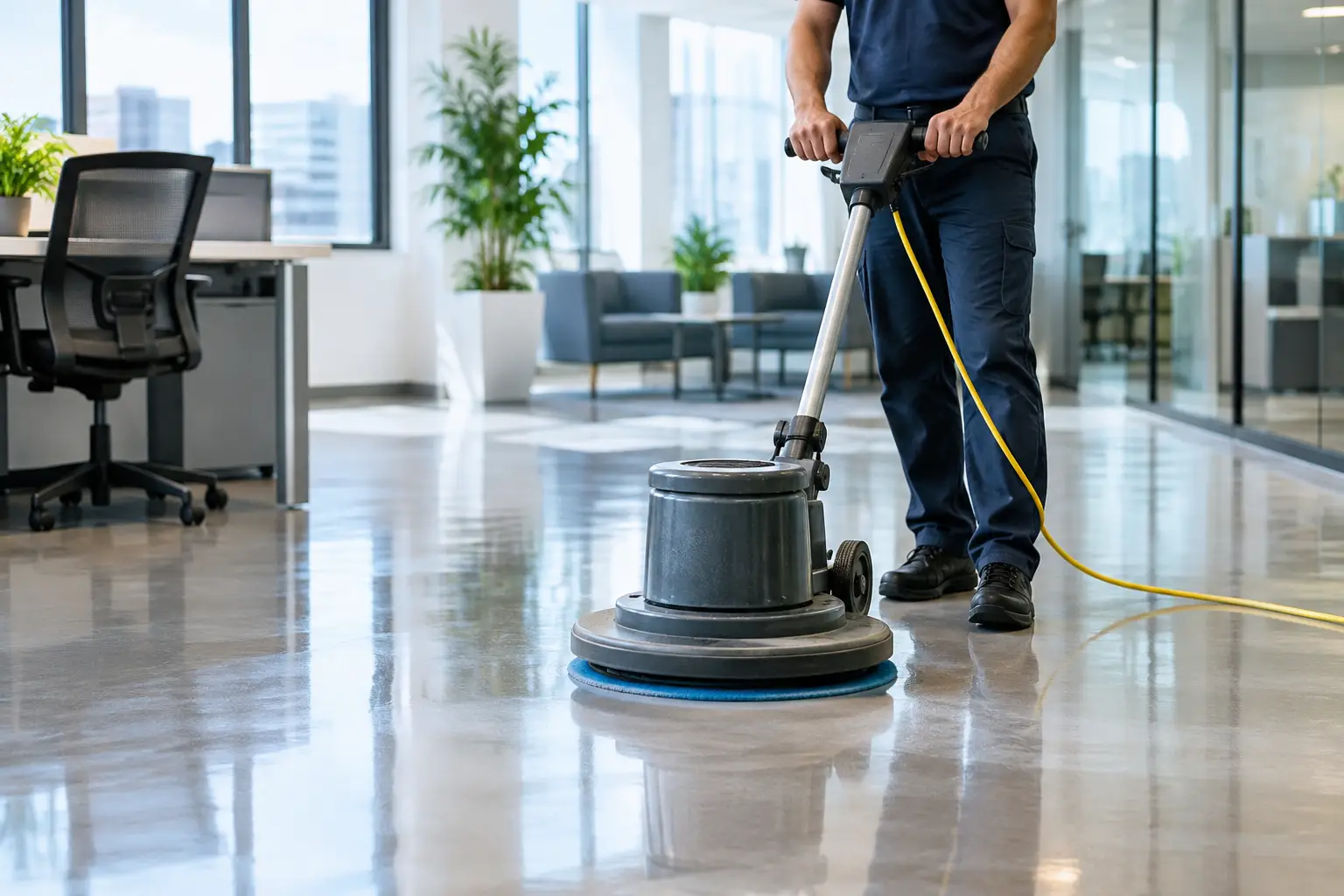
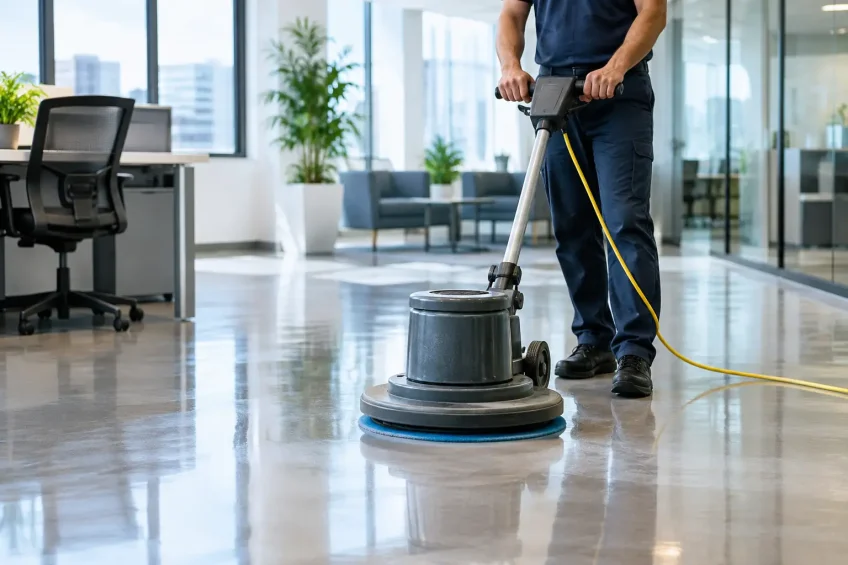
For hard floors, this may involve scrub-and-dry cleaning to remove compacted soil, burnishing where a compatible finish is in place, or stripping and reapplication of a protective coating when the existing layer is worn. Burnishing can improve gloss and remove minor scuffs, but it will not repair a failing finish or correct deep scratches. In those situations, more substantial restoration is needed.
For carpets, deep cleaning should be planned before soiling becomes visually obvious across the whole floor. High-traffic lanes often need attention sooner than enclosed offices or lightly used meeting rooms. A zone-based schedule gives better results than treating every area at the same interval.
Regular inspections help determine when to move from routine maintenance to specialist work. Useful checks include surface shine or dullness, stain recurrence, visible traffic lanes, lifting edges, scratches, moisture damage and the condition of entrance matting. Recording these findings supports informed decisions and prevents small defects becoming larger operational issues.
Make quality control visible
Commercial floor care should be measurable. A reliable provider will use agreed specifications, site inspections and clear communication to show that work has been completed to the required standard. This matters particularly in multi-storey offices and shared buildings, where standards can vary between areas unless they are actively managed.
Cleaning operatives need training not only in machinery and chemical handling, but also in recognising defects that require escalation. Loose flooring, damaged thresholds and persistent wet areas may sit outside the cleaning scope, yet identifying them early supports workplace safety and protects the client’s asset.
At EDM Cleaning, floor-care plans are tailored around the site, its people and its operational hours. This combines trained operatives, appropriate equipment and formal quality control so that cleaning supports the wider facilities operation rather than adding another task to manage.
A well-kept floor should rarely demand attention from the people using the building. With the right maintenance plan in place, it remains safe underfoot, consistent in appearance and ready for the next employee, visitor or working day.