Floor Polishing Versus Replacement for Offices
A worn hard floor is rarely just a cosmetic issue. In a busy office, reception, corridor or shared entrance, it can affect first impressions, slip resistance, cleaning efficiency and the confidence people have in the building’s overall standards. The decision on floor polishing versus replacement should therefore be made as a facilities decision, not simply a response to an unsightly surface.
Polishing can restore clarity, reflectivity and protection to many hard-floor finishes. Replacement provides a fresh start where the underlying material is no longer sound or suitable. The right route depends on the floor type, the cause and depth of damage, daily footfall, safety requirements and how the work can be planned around building operations.
Floor polishing versus replacement: start with the floor’s condition
The most useful question is not whether a floor looks old. It is whether its protective surface, structure and safe performance can still be restored.
A professional assessment should distinguish between surface-level wear and material failure. Dullness, light scratching, scuffing, embedded soil and an inconsistent sheen often indicate that a floor has lost protection rather than reached the end of its serviceable life. In these cases, deep cleaning, machine polishing, burnishing or refinishing may bring the surface back to an appropriate standard.
Replacement becomes more likely where there are cracked tiles, lifting edges, broken joints, deep gouges, moisture damage, loose sections or persistent staining that has penetrated the material. These faults can create trip hazards, make routine cleaning less effective and allow dirt or moisture to collect beneath the surface.
This distinction matters because a polished but unstable floor is not a solution. Equally, replacing a fundamentally sound floor because it has become dull can create unnecessary disruption to a working environment.
When polishing is the practical choice
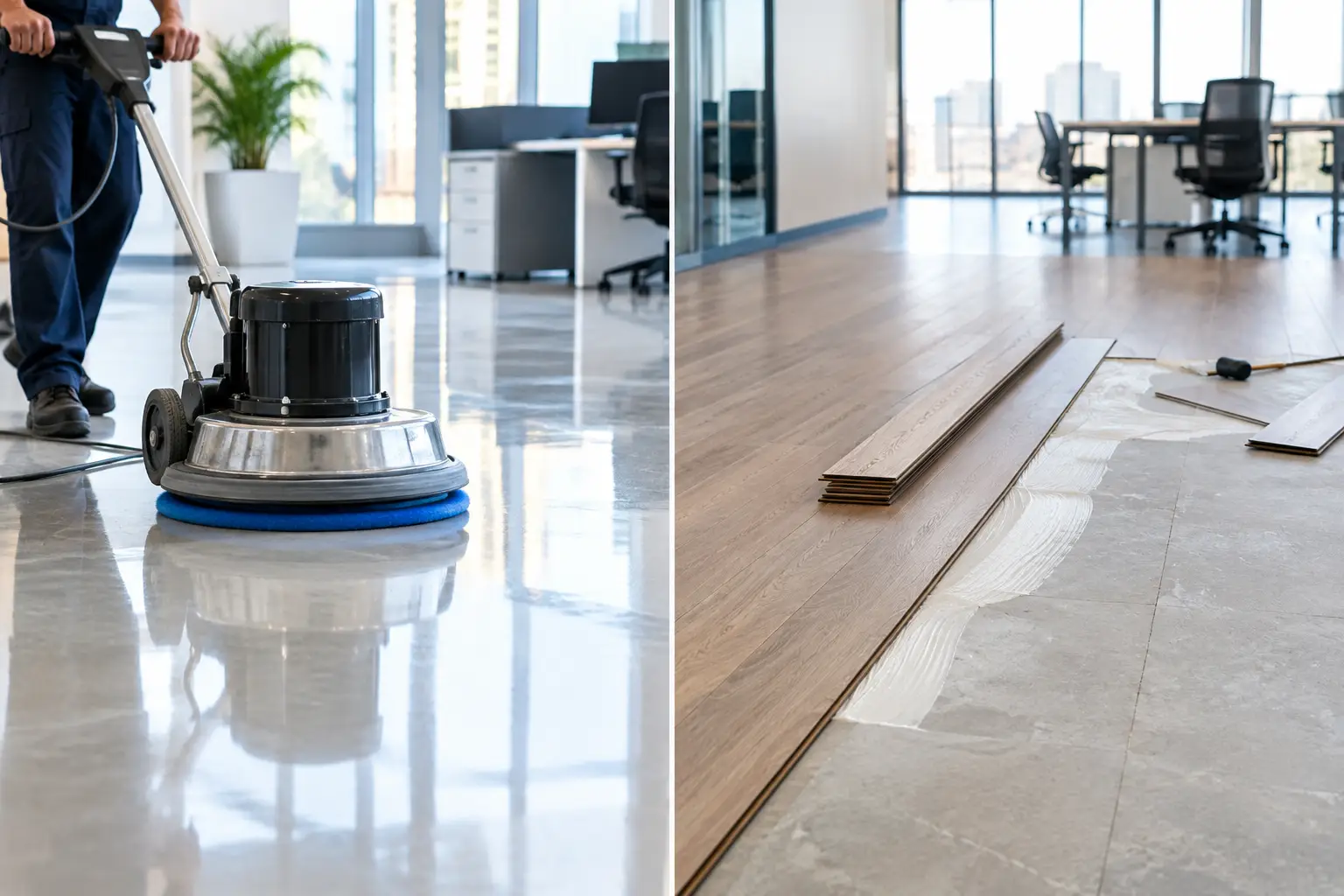
Floor polishing is usually appropriate when the floor remains structurally sound but needs its appearance and protective finish renewed. It is particularly valuable in commercial areas where floors receive regular traffic from staff, visitors, delivery teams and contractors.
Vinyl, linoleum, terrazzo, marble and other stone floors can often benefit from specialist maintenance, although the correct method differs significantly by material. A stone floor may require careful honing and polishing to restore its natural appearance. A vinyl floor may need a deep clean, removal of degraded dressing and reapplication of a suitable protective finish. Applying the wrong treatment can reduce performance or cause lasting damage, so material identification should come before any work begins.
Polishing is often a strong option where the priority is to improve presentation while retaining the existing floor. A properly maintained surface can be easier to clean, less likely to retain visible marks and more consistent in appearance across high-profile spaces such as receptions, meeting-suite corridors and client-facing entrances.
It can also be planned in phases or outside core hours, helping facilities teams maintain workplace readiness. This is especially useful in Central London offices where access, tenant schedules and shared-building arrangements can limit the time available for intrusive works.
Signs that polishing may be enough
A polishing or refinishing programme is worth considering when wear is primarily visual or confined to the finish. Typical signs include a loss of shine in traffic lanes, heel marks, minor scratches, a patchy appearance after routine cleaning, and a surface that still feels level, secure and dry underfoot.
The floor should also be assessed for cleaning history. Some apparently poor surfaces are affected by a build-up of unsuitable cleaning products or residues rather than permanent deterioration. Specialist deep cleaning can reveal the true condition before a more significant decision is made.
When replacement is the responsible option
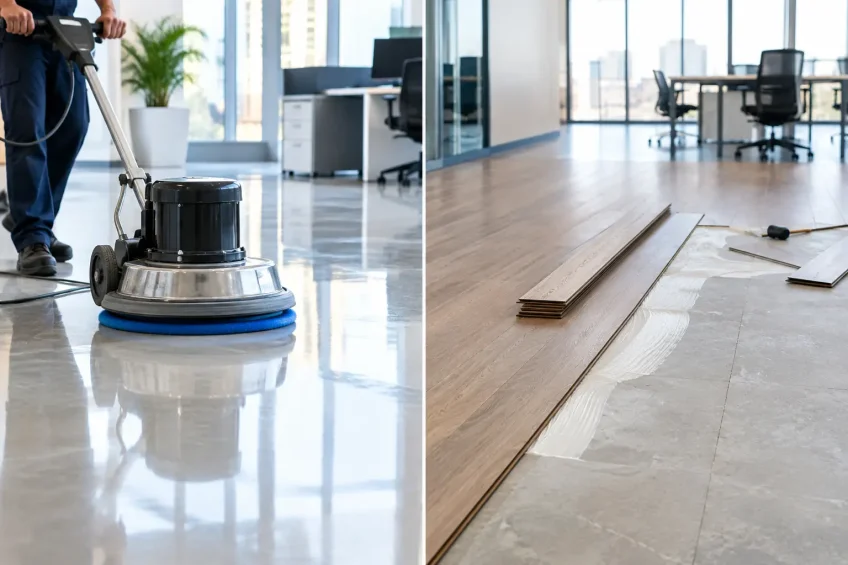
Replacement is generally the better long-term decision where the floor’s condition creates ongoing safety, hygiene or operational concerns. A surface may be difficult to restore when damage extends beneath the finish or when previous repairs have left uneven transitions and weak points.
In commercial premises, the clearest trigger is often safety. Loose tiles, split vinyl, damaged stair nosings, uneven thresholds and lifting carpet-to-floor transitions need prompt attention. A visible defect may be small, but repeated footfall can make it worse quickly. Where a damaged area creates a foreseeable slip or trip risk, temporary cleaning treatments should not be used as a substitute for proper repair or replacement.
Moisture is another key factor. Water ingress below flooring can affect adhesives, cause warping and create conditions that are difficult to clean properly. The source must be investigated first. Replacing the visible floor without resolving a leak, condensation problem or subfloor issue simply postpones the disruption.
Replacement may also be appropriate if the existing material no longer meets the needs of the space. For example, an entrance subject to heavy wet-weather traffic may require a more resilient finish and better matting strategy. A refurbished office layout may need a floor solution that supports new traffic routes, acoustic requirements or accessibility standards.
Avoid treating recurring damage as routine wear
A floor that repeatedly needs local repairs is signalling a wider issue. The cause may be unsuitable material, excessive abrasion, poor drainage, cleaning chemicals that are too aggressive, or equipment being moved across unprotected surfaces. Recording where and when deterioration occurs helps facilities managers decide whether targeted maintenance remains viable.
This is where planned inspections add value. They turn an isolated cleaning request into a considered maintenance decision, supported by evidence of the floor’s condition and use.
Consider operational impact alongside appearance
The disruption associated with floor work is not limited to the treatment itself. Facilities teams should consider access routes, furniture movement, drying and curing times, odour control, noise, ventilation and safe segregation of work areas. For multi-tenant buildings, there may also be landlord requirements and restrictions around deliveries or out-of-hours access.
Polishing can usually be delivered with less disturbance than replacement, particularly when work is phased by zone. However, it still requires appropriate preparation. Entrances and corridors need clear communication, alternative routes and suitable barriers while surfaces are being treated or allowed to cure.
Replacement can be more disruptive, but it may offer a more dependable outcome when the floor has reached the end of its useful service life. The objective is not always to minimise immediate disruption. It is to avoid a cycle of repeated interventions that continue to affect staff and visitors over time.
Build maintenance into the decision
Whether a floor is polished or replaced, its future performance will depend on the maintenance plan that follows. A new or restored surface needs cleaning products, pads, machines and frequencies suited to its material and traffic level. Overly harsh chemicals, excess water and abrasive equipment can shorten the life of finishes that would otherwise perform well.
A practical hard-floor programme should include daily removal of grit, prompt treatment of spills, periodic deep cleaning and scheduled restorative work before the finish deteriorates fully. Grit is especially significant in entrances and walkways because it acts like an abrasive under shoes, castors and wheeled equipment.
Effective entrance matting also deserves attention. It reduces the moisture and debris reaching internal flooring, helping protect both safety and appearance. In many offices, strengthening the cleaning and matting routine can extend the useful life of a polished or newly installed floor considerably.
A clear assessment process for commercial sites
Before committing to either option, facilities managers should arrange a site-specific review that considers material type, age, visible defects, traffic patterns, previous treatments and the condition of the subfloor where relevant. The review should also identify any immediate risks that need isolating or repairing.
Photographic condition records are useful for larger premises or portfolios. They provide a baseline, support consistent standards between sites and make it easier to monitor whether damage is improving, stable or progressing. For offices with prominent public areas, defining the required finish level is equally helpful. A service corridor may need a clean, safe and durable surface, while a reception floor may require a higher standard of visual presentation.
EDM Cleaning approaches hard-floor maintenance as part of the wider workplace environment. Trained operatives, appropriate equipment and documented quality checks help ensure treatments are selected for the site rather than applied as a generic solution.
Choose the outcome that supports the building
Floor polishing is often the right answer when a sound surface needs protection, restoration and a more professional finish. Replacement is the right answer when deterioration affects safety, cleanliness or dependable daily use. Neither option should be judged on appearance alone.
The strongest decision is one that considers how the floor is used, what is causing the wear and how the work will support the building after the operatives have left. A well-timed maintenance programme can preserve a floor’s value; a well-planned replacement can remove a recurring operational problem and give the workplace a more reliable foundation for the day ahead.