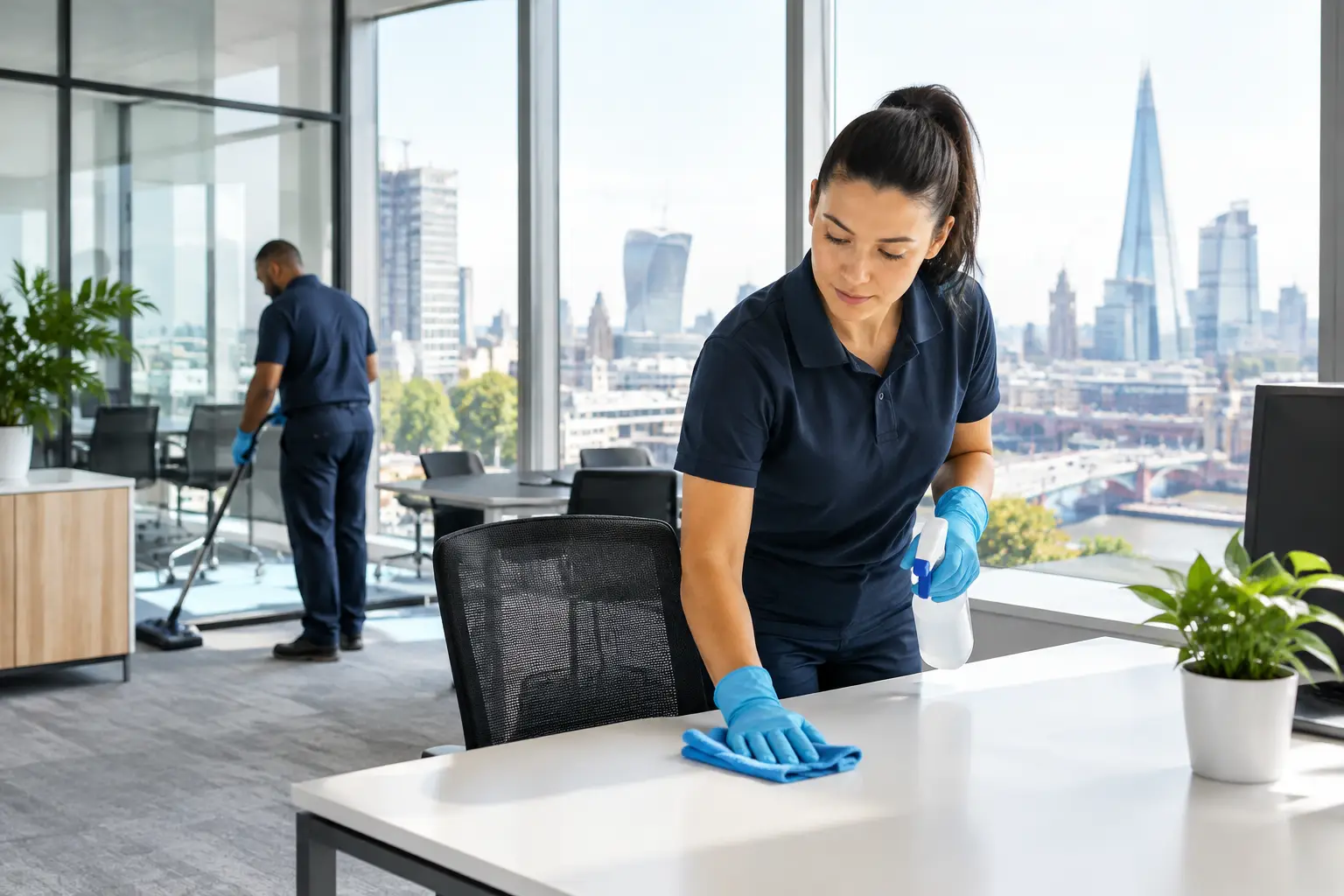
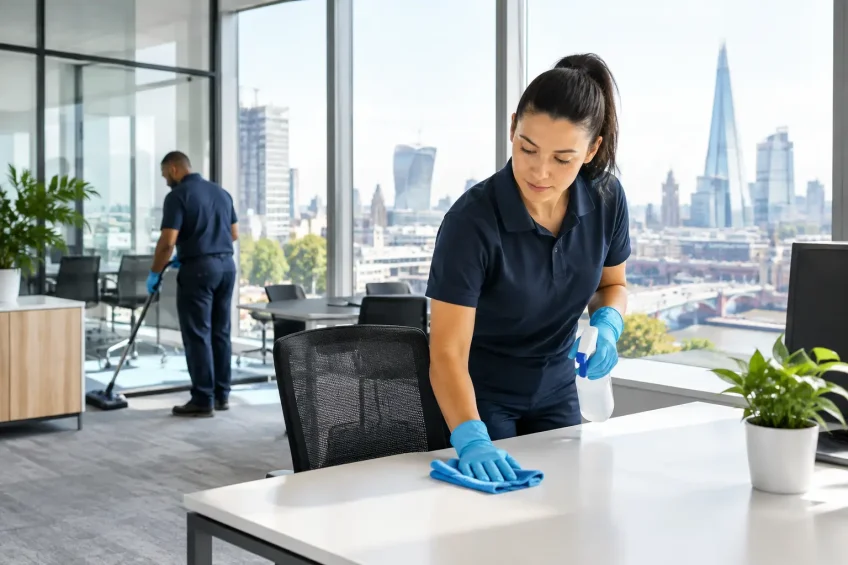
London Office Cleaning Checklist for Facilities Teams
A London office cleaning checklist should do more than assign tasks at the end of the day. For facilities and operations teams, it is a practical control document: one that protects hygiene, supports employee wellbeing, preserves the building’s presentation and confirms that the workplace is ready for the next working day.
The right checklist reflects how the office is actually used. A client-facing reception, busy shared kitchen, executive meeting suite and secure server room all require different standards, frequencies and cleaning methods. Treating every area alike can leave high-risk or high-visibility spaces below the standard your organisation expects.
Start with a site-specific cleaning standard
Before setting frequencies, define what clean looks like in each part of the premises. This gives cleaning operatives clear direction and gives facilities managers a basis for inspection and quality control.
Your standard should take account of footfall, opening hours, visitor activity, desk-sharing arrangements, floor finishes, washroom use and any sensitive equipment. A small office with assigned desks may need a very different programme from a Central London headquarters with daily visitors and hybrid teams moving between floors.
It is also useful to separate routine cleaning from periodic maintenance. Routine tasks keep the workplace presentable and hygienic each day. Periodic tasks protect assets and address build-up that cannot be managed properly within a standard evening clean.
Daily office cleaning checklist
Daily cleaning should focus on the areas employees and visitors touch, see and rely on most. The aim is not simply to remove visible dust. It is to maintain a consistent workplace standard without interrupting business operations.
Entrances, reception and shared circulation areas
Reception creates an immediate impression of how an organisation operates. Floors should be vacuumed or mopped according to their surface type, entrance matting should be cleared of debris, and glass doors or internal partitions should be free from fingerprints and smears. Reception desks, visitor seating, lift call buttons, handrails and door furniture should be cleaned with appropriate products.
In high-footfall buildings, these areas may need attention during the day as well as after hours. Wet weather, construction activity nearby and heavy visitor traffic can quickly affect floor appearance and safety.
Workstations, meeting rooms and touchpoints
Desks should be cleared of obvious debris and cleaned in line with the agreed desk policy. In offices where staff hot-desk, daily cleaning of desk surfaces, shared screens, phones and docking areas may be necessary. In assigned-desk environments, cleaning around personal belongings needs a more careful approach.
Meeting rooms require particular attention because they are often used by visitors and can turn over several times a day. Tables, chair arms, room controls, whiteboards and presentation touchpoints should be checked, while bins should be emptied and liners replaced where required.
A daily touchpoint programme should cover items such as door handles, light switches, push plates, lift buttons, shared printers, kitchen appliance handles and communal equipment controls. The method and disinfectant used must be suitable for the surface and supported by COSHH procedures.
Kitchens, tea points and breakout spaces
These areas can become a source of complaints quickly. Daily work should include cleaning worktops, sinks, taps, cupboard handles, tables, chairs and appliance exteriors. Food waste should be removed, bins relined and floors cleaned thoroughly, particularly beneath tables and around waste stations.
The checklist should state who is responsible for dishes left by staff. Many office cleaning teams will maintain shared areas but should not be expected to wash personal crockery unless that service has been agreed. Clear boundaries prevent avoidable frustration for both occupiers and operatives.
Washrooms
Washrooms need a defined hygiene process rather than a visual once-over. Toilets, urinals, basins, taps, dispensers, mirrors, cubicle doors, sanitary units and floors should be cleaned and checked. Consumables such as soap, toilet tissue, hand towels and sanitary disposal supplies must be replenished before they run low.
A washroom inspection record is valuable in larger workplaces or sites with daytime attendance. It provides accountability, identifies recurring issues and reassures building users that standards are actively monitored.
Waste and recycling
Empty internal bins, separate recycling correctly and remove waste to the designated collection point in accordance with site procedures. The checklist should identify confidential-waste arrangements, battery disposal, food-waste streams and any waste that requires specialist handling.
Waste management is often where a well-run cleaning operation becomes visible. Overflowing bins, incorrect segregation or missed collections undermine an otherwise clean office and can create unnecessary health and safety concerns.
Weekly tasks that protect appearance
Weekly work allows the team to address areas that do not necessarily need full treatment every day but still affect the condition of the office. This may include detailed cleaning of skirting, ledges, internal glass, lower wall areas, chair bases, cable-management areas and accessible ventilation grilles.
Floors need particular consideration. Vacuuming alone will not maintain carpet appearance in busy routes, while hard floors can lose their finish if they are cleaned with unsuitable chemicals or excessive water. The cleaning schedule should specify the correct process for each surface, including spot treatment where needed.
A weekly inspection of furniture, kitchen equipment and washroom fittings can also identify damage, leaks or faults before they become a larger facilities issue. Cleaning operatives are often the first people to notice changes in the workplace, provided there is a simple process for reporting them.
Periodic cleaning and specialist requirements
Some work belongs on a monthly, quarterly or project-based plan rather than the daily rota. This is where an office cleaning checklist becomes a useful facilities tool rather than a basic task list.
Periodic requirements may include:
- carpet extraction or low-moisture carpet maintenance in high-traffic areas
- hard-floor machine cleaning, polishing or restoration appropriate to the finish
- internal and external window cleaning, including glass partitions and high-level glazing
- deep cleaning of kitchens, appliances, washrooms and breakout furniture
- IT and computer-equipment cleaning using safe, suitable methods
- server-room cleaning with controlled procedures for sensitive environments
- post-build or post-refurbishment cleaning before an area returns to use
Frequency depends on the building, occupancy and finish. A polished stone reception may require more regular specialist maintenance than a carpeted back-office floor. Similarly, server-room cleaning must be planned around access controls, equipment sensitivity and dust-management requirements, not added casually to a general cleaning shift.
Build quality control into the checklist
A checklist only works when completion can be verified. Facilities managers should agree how work is inspected, how issues are logged and how missed standards are corrected. This does not need to create unnecessary administration, but it should create a reliable audit trail.
For larger or multi-floor offices, zone-based inspections are often more useful than a single sign-off. A supervisor can assess reception, washrooms, kitchens, meeting rooms and work areas against agreed standards, then record any actions required. Photo reporting can be helpful for defects, spillages, damage or periodic project work where a visual record adds value.
Quality checks should assess outcomes, not just whether a task was ticked. For example, a washroom may have been serviced, but empty soap dispensers or water marks on mirrors still mean the required result has not been achieved. This distinction helps maintain standards across changing teams and busy periods.
Make health, safety and sustainability practical
The cleaning checklist should support safe working for operatives, employees and visitors. Include safe storage arrangements, correct product dilution, wet-floor signage, equipment checks and manual-handling considerations. Cleaning plans must align with site risk assessments and COSHH controls, especially where products are used around food areas, IT equipment or sensitive surfaces.
Sustainability should be managed in practical terms. This can mean using appropriate dosing to avoid chemical waste, selecting suitable environmentally considered products, reducing disposable materials where possible and ensuring waste streams are separated correctly. The best approach is one that maintains hygiene and presentation without creating avoidable environmental impact.
Review the checklist as the office changes
A cleaning schedule should not remain fixed simply because it was agreed at the start of a contract. Office occupancy changes, new layouts are introduced, refurbishments take place and seasonal demands affect entrances and shared facilities. Review the plan after major workplace changes and whenever recurring feedback points to a gap.
For organisations across the City of London and West End, flexibility is especially useful. A board meeting, tenant event, office move or increased attendance can require additional support at short notice. A cleaning partner should be able to adjust the programme while retaining clear quality controls and consistent site knowledge.
EDM Cleaning develops tailored programmes around each client’s building, operational timetable and specialist requirements, supported by trained operatives and documented quality assurance. A well-managed checklist gives your team confidence that cleaning is not merely completed, but completed to a standard that supports the people and business inside the building.
The most useful next step is to walk the premises at the time it is busiest, then again after cleaning has been completed. The gap between those two observations will show exactly where your checklist needs to be more precise.