How to Remove Construction Dust from Offices
Construction work can leave an office looking complete while a fine layer of dust continues to settle on desks, ventilation grilles, glass, flooring and IT equipment. Knowing how to remove construction dust properly is essential before employees, visitors or contractors return. A quick wipe-down is rarely enough: post-build dust travels through the building, can affect indoor air quality and may damage finishes if removed with the wrong method.
For facilities and property managers, the objective is not simply to make a space look clean. It is to return it to a safe, presentable and operationally ready condition, with a documented process that reflects the building’s materials, occupancy plans and health and safety requirements.
Why construction dust requires a specialist approach
Construction dust is not one material. It may include plaster, cement, wood fibres, drywall particles, paint residue, insulation fibres and silica-containing dust from cutting, drilling or grinding. The composition will depend on the works completed and the age and condition of the building.
Fine particles are easily disturbed. Dry sweeping, feather dusters and ordinary domestic vacuum cleaners can put dust back into the air instead of removing it. This means it can resettle long after the first clean, particularly around skirting, cable trays, air vents, high-level ledges and the undersides of office furniture.
There is also a commercial consideration. Dust on monitors, keyboards, server-room surfaces, carpets and hard floors can undermine the quality of a newly refurbished space before it is handed back to the business. A structured post-build clean protects the investment made in the project and avoids asking internal teams to manage remedial cleaning after occupation.
How to remove construction dust safely and thoroughly
The most reliable approach follows a controlled sequence: assess the site, remove heavy debris, clean from high level to low level, capture fine dust with appropriate equipment, then inspect and repeat where required. Cleaning too quickly, or in the wrong order, often creates more work because dust is transferred from one area to another.
Start with a site assessment and clear handover
Before cleaning begins, confirm that construction works are complete and that trades have removed their tools, waste and loose materials. The cleaning team needs safe access, suitable lighting, water and power supplies, plus information about newly installed surfaces and any restricted areas.
A risk assessment should identify potential hazards such as exposed services, unfinished floor edges, wet paint, dust-sensitive equipment and materials requiring specialist handling. If there is any possibility of hazardous dust, including respirable crystalline silica, the cleaning specification and equipment must be selected accordingly. This is not a situation for improvised cleaning methods.
It is also useful to agree the standard required for handover. A shell-and-core space, a newly fitted office and a fully occupied workplace need different levels of detail. Defining this early helps avoid uncertainty over who is responsible for glass, internal joinery, appliances, furniture, IT equipment and external access areas.
Remove debris before tackling fine dust
Loose packaging, offcuts, protective films and larger waste should be removed first. This allows cleaners to access the floor perimeter and prevents debris from scratching newly laid flooring or worktops during the next stages.
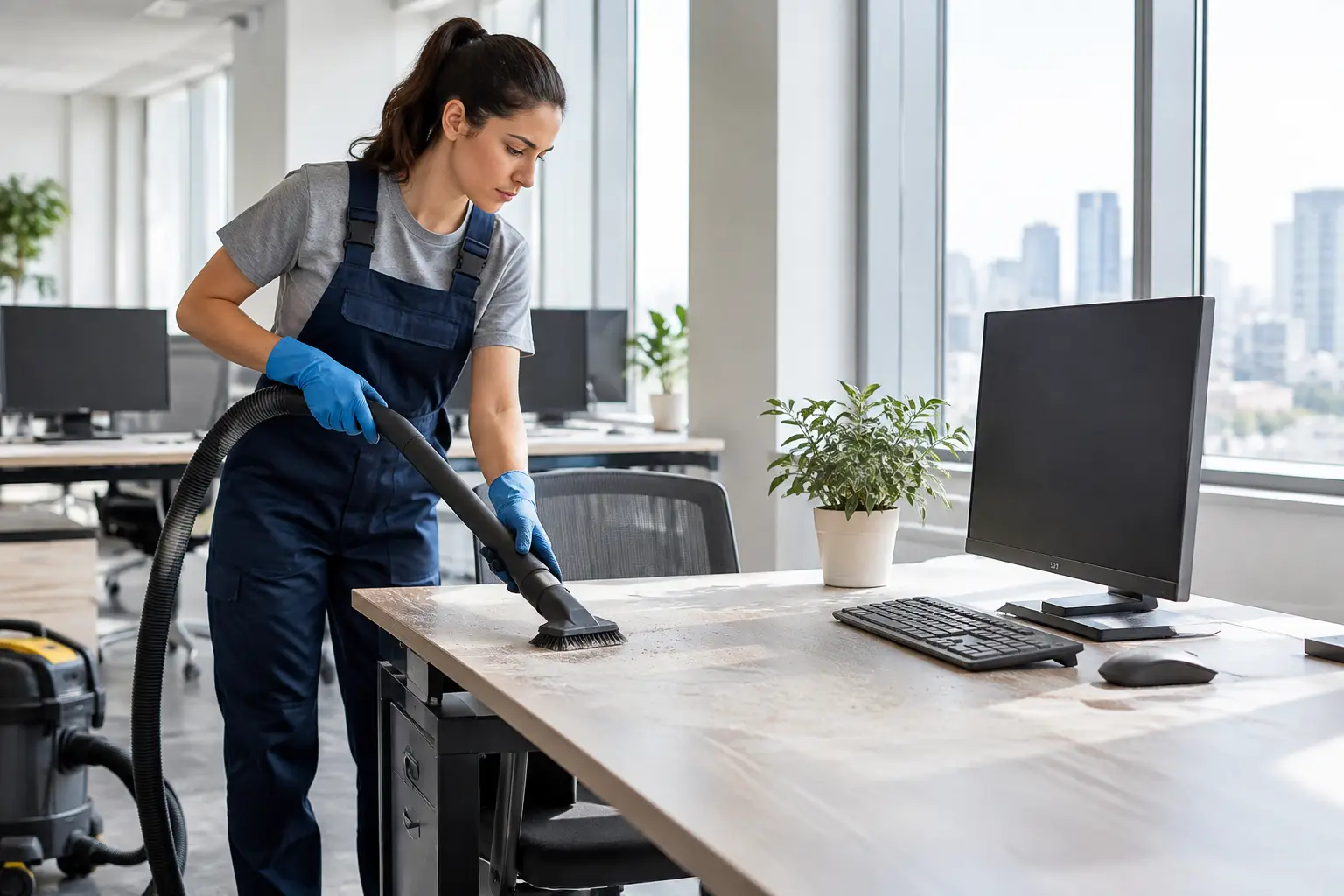
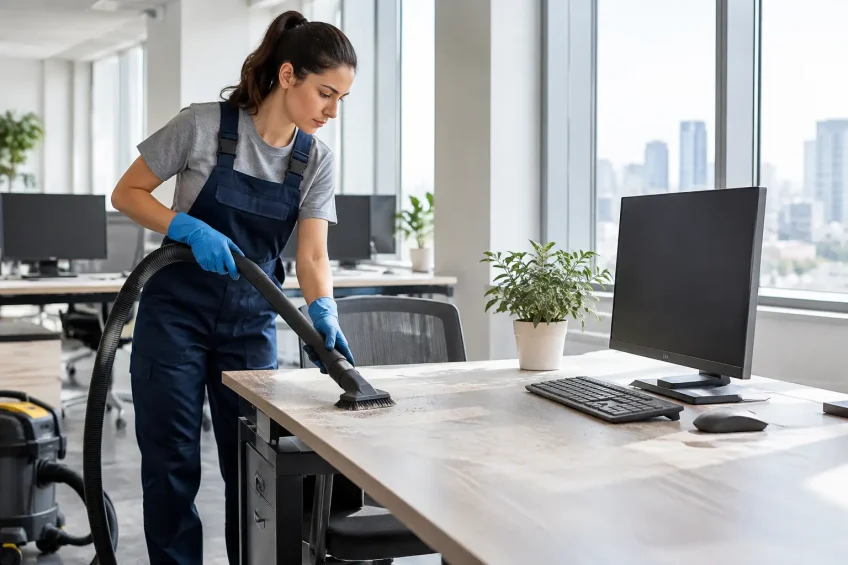
Do not use dry brooms to clear the remaining dust. Instead, use industrial vacuum equipment fitted with appropriate filtration. For general post-build cleaning, HEPA-filtered equipment can help capture fine particles. Where the risk assessment identifies hazardous dust, the vacuum class and filtration must be suitable for that material and used by trained operatives.
Cleaning should work from the highest points downwards. High-level ledges, pipework, tops of cupboards, light fittings and ventilation grilles are addressed before desks, joinery and floors. This simple discipline prevents newly cleaned lower surfaces from being contaminated again.
Use the right method for each surface
Construction dust is abrasive. Rubbing it across a polished stone surface, glass partition or lacquered desk can leave scratches and dull patches. The first pass should therefore lift and capture dust rather than spread it.
Microfibre cloths, changed regularly, are effective for hard surfaces when used with the correct low-residue cleaning solution. Damp wiping is preferable to dry dusting, but cloths should be only lightly moistened where electrical equipment or sensitive finishes are involved. Floors may need several vacuum and mop cycles, especially at edges, under radiators and around entrance points.
Particular care is needed with the following areas:
- Hard floors: Vacuum thoroughly before damp mopping. Check the floor manufacturer’s guidance, particularly for natural stone, timber, vinyl and newly sealed surfaces.
- Carpets and entrance matting: Use commercial extraction or specialist carpet-cleaning methods where dust has become embedded. Vacuuming alone may not remove fine particulate matter from deep within fibres.
- Glass and glazed partitions: Remove loose dust before cleaning. Residue from plaster or paint should be treated carefully to avoid scratching the glass.
- Joinery and fitted furniture: Clean internal drawers, shelving, cupboard tops and recessed handles, where dust commonly collects unnoticed.
- Washrooms and kitchens: Clean vents, extractor covers, taps, splashbacks and the interiors of cupboards. These areas should be hygienically ready as well as visually clean.
Protect computers, AV systems and server-room environments
IT equipment should never be treated as an ordinary desk surface. Dust can block ventilation ports, collect around cables and affect the performance of keyboards, monitors, printers and audiovisual equipment. Liquids, aerosol sprays and high-pressure air are inappropriate around live equipment.
Where possible, arrange for equipment to be powered down before cleaning, following the organisation’s IT procedures. Specialist cleaning can then be carried out using suitable anti-static materials and carefully controlled vacuuming. Server rooms and comms cupboards require an especially cautious approach because airborne dust can create operational risk in spaces that support business continuity.
If refurbishment work has taken place near occupied technology areas, do not assume that closing a door has contained the dust. Inspect vents, cable routes and nearby ceiling voids, and consider whether filters in local air-handling systems need attention.
Address ventilation and overlooked high-level areas
Dust that has entered HVAC systems can continue circulating after the visible cleaning is complete. Cleaning accessible grilles and vents is a sensible first step, but a facilities manager should also assess whether filters require changing and whether the system needs inspection before full occupation resumes.
High-level cleaning matters for the same reason. Ceiling grids, trunking, beams, tops of partition walls and blind mechanisms are easy to miss during a rushed handover. Yet dust from these surfaces will fall or circulate over time. A detailed post-build programme includes these areas rather than limiting attention to what is visible at eye level.
Build inspection and quality control into the process
A post-build clean is usually most effective in stages. An initial builders’ clean removes debris and heavy soiling. A detailed clean follows once trades are finished, concentrating on all surfaces, fixtures and flooring. A final sparkle clean may be needed shortly before handover, especially where other contractors have returned to complete snagging work.
Inspection should take place in good light and include touch points as well as appearance. Run a clean cloth across desk edges, window sills and high surfaces. Check floor corners, internal cupboards, ventilation grilles and the tops of doors. Walk the route an employee or visitor will take from the entrance to the workspace. This reveals the details that can affect first impressions.
Documented quality checks are valuable on larger or multi-floor projects. They create accountability, give the client a clear record of completed areas and make it easier to identify any work that must be revisited before occupation. The right cleaning partner will also coordinate around access restrictions, security requirements and the wider handover schedule.
When a routine clean is not enough
Routine office cleaning is designed to maintain a clean workplace, not to recover a building after construction activity. If dust is visible in ceiling voids, embedded in carpets, present around technical equipment or repeatedly resettling after cleaning, a specialist post-build service is the appropriate response.
This is particularly relevant for commercial premises in Central London, where refurbishment projects often take place in occupied or partly occupied buildings with limited loading access and tightly managed handovers. A tailored plan allows cleaning to be phased around contractors, building management and business operations rather than creating further disruption.
EDM Cleaning provides post-build and specialist commercial cleaning with trained operatives, suitable equipment and quality-control processes designed around each site. The aim is to make the handover simpler for facilities teams and ensure the workplace is ready for the people who rely on it.
A properly cleaned site should feel finished, not merely cleared. When the last fine layer of dust has been removed from the places people see and the systems they depend on, the building is ready to support a confident return to work.