Corporate Carpet Restoration for London Offices
A stained, flattened or uneven office carpet changes how a workplace feels before anyone has reached reception. It can make a well-run building appear tired, retain odours and create avoidable concerns about hygiene. Corporate carpet restoration is the considered process of recovering the condition, appearance and useful life of commercial carpet – without treating every mark as a reason for replacement.
For facilities and operations teams, this is not simply a cleaning task. It is a practical part of protecting the workplace environment, supporting staff and visitor confidence, and maintaining the presentation of a building that is in constant use.
What corporate carpet restoration involves
Commercial carpet is exposed to a different level of wear from domestic flooring. Entrance routes collect moisture, grit and traffic pollution. Desk areas are affected by chair movement and footfall. Kitchens, meeting rooms and breakout spaces are vulnerable to spills, food residues and drinks. Over time, soil works down into the pile, dulling the colour and reducing the carpet’s ability to recover after pressure.
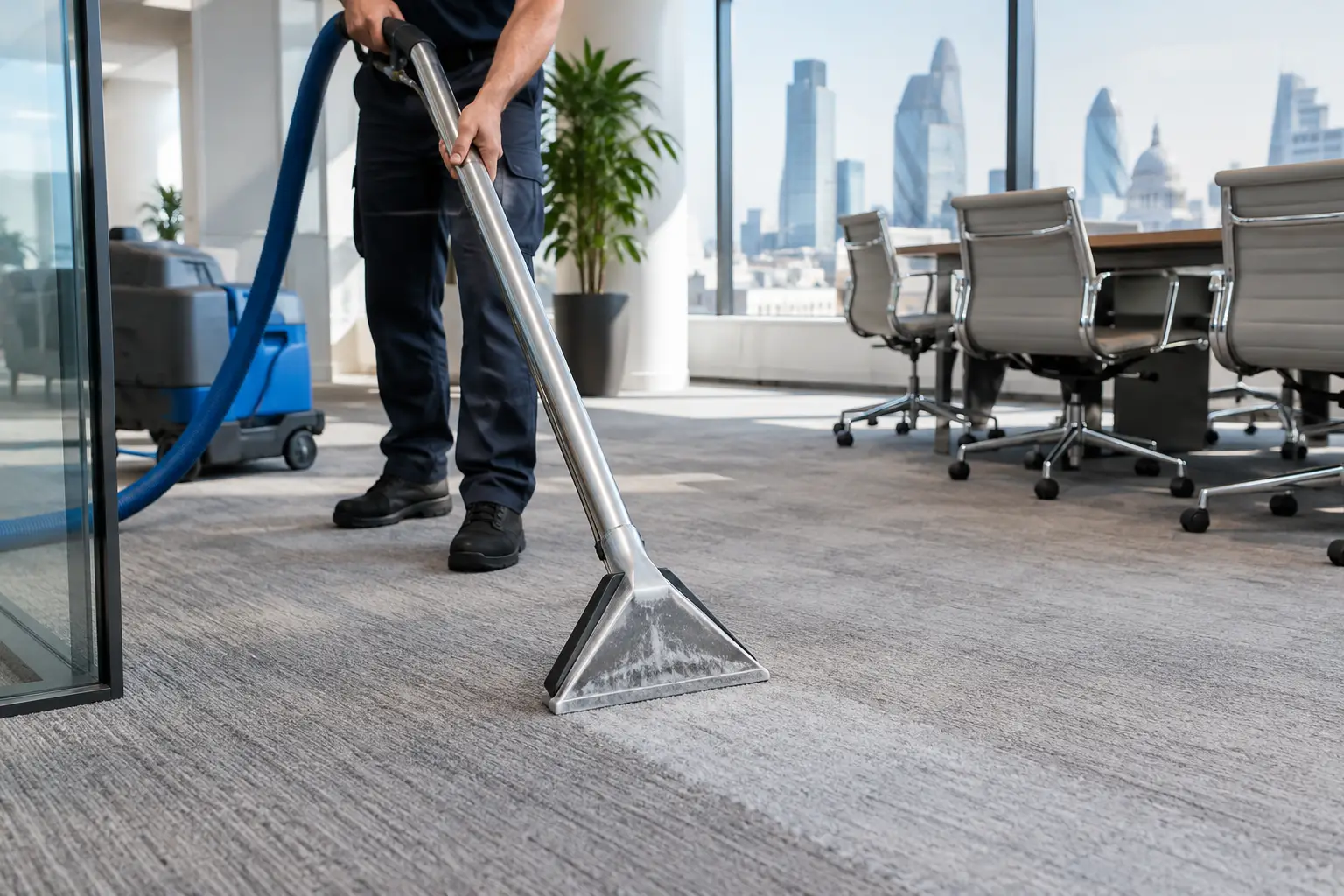
Corporate carpet restoration goes beyond a quick surface clean. It starts with an assessment of the carpet fibre, construction, traffic patterns, staining and any previous treatments. The right approach may include dry soil removal, targeted spot treatment, low-moisture cleaning, hot-water extraction, pile lifting and drying management. The purpose is to remove embedded soil safely while improving the carpet’s overall finish and keeping disruption to the working day under control.
The method matters. A process that is suitable for one carpet type may be unsuitable for another, particularly where there are delicate fibres, specialist backings, raised access floors or manufacturer care requirements. Testing products in an inconspicuous area and working to COSHH-led procedures helps protect both the flooring and the people using the space.
Why restoration is an operational decision
Replacing carpet is sometimes necessary, especially where it is physically damaged, delaminated or beyond hygienic recovery. However, many carpets that look ready for replacement are affected primarily by accumulated soil, worn traffic lanes and poorly treated stains. Restorative work can improve their condition substantially and help organisations make a more informed decision about renewal.
This is particularly relevant in Central London offices, where access, building rules and project timing can make replacement programmes complex. Restoring existing flooring can reduce the immediate disruption associated with lifting, disposing of and fitting carpet, while helping to maintain a professional setting between larger refurbishment cycles.
There is also a workplace-readiness benefit. A clean, well-maintained floor contributes to an environment employees are comfortable returning to, while visitors see care and attention from the moment they arrive. It supports the wider standard of a building alongside regular office cleaning, washroom servicing, hard-floor maintenance and reception presentation.
The signs a carpet needs more than routine cleaning
Daily vacuuming and planned maintenance are essential, but they cannot always resolve deep-set contamination or heavy traffic wear. Facilities managers should look for a gradual greying of the carpet, especially around entrances and circulation routes, as well as visible lanes between workstations.
Persistent odours are another signal. They may be caused by residues in the fibres, past spills or moisture that has not dried properly following earlier cleaning. Stains that reappear after an attempted clean can indicate that soil remains below the surface and is wicking upwards as the carpet dries.
Other signs include flattened pile, dark edges around skirting, sticky residues in kitchen areas and an uneven appearance between frequently used and quieter parts of the floor. Addressing these issues early is generally more effective than waiting until the carpet affects the impression of the whole office.
A restoration plan should fit the building
The best corporate carpet restoration programme is planned around how the premises operate. A busy headquarters may need work completed in phases across evenings or weekends. A smaller office may prefer a concentrated programme scheduled around a quieter day. In multi-tenant buildings, lift access, loading arrangements, security procedures and noise restrictions may also shape the delivery plan.
Drying time deserves particular attention. Carpets should be left clean, fresh and ready for safe use, not damp when employees arrive. The cleaning method, ventilation, ambient temperature, pile density and extent of soiling all affect drying. A competent provider will set expectations clearly, use appropriate equipment and arrange the work so that the area can return to service with minimal interruption.
Furniture is another consideration. Some workplaces need desks, chairs and meeting-room furniture moved as part of the service, while others require work around fixed layouts or staged zones. Agreeing these details in advance reduces pressure on the client team and ensures that access, protection and reinstatement are properly managed.
Restoration methods are not one-size-fits-all
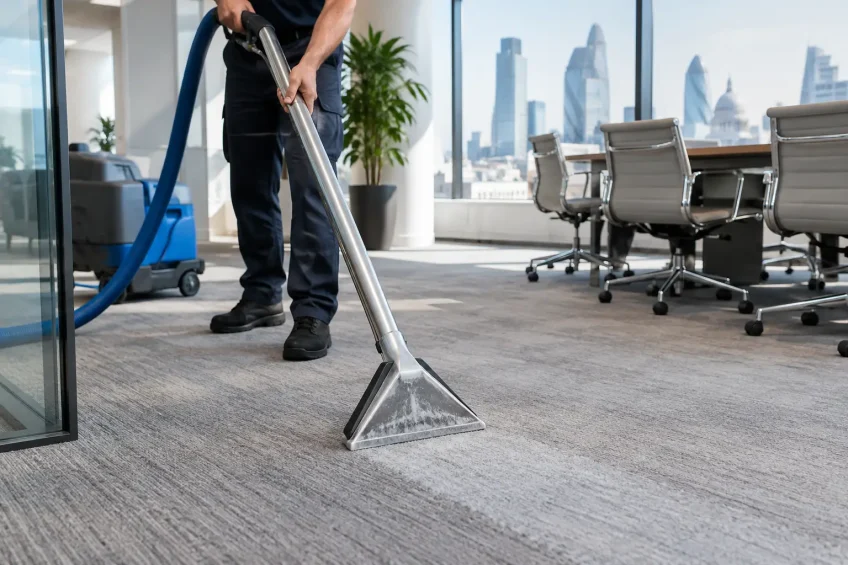
Hot-water extraction can be highly effective for removing embedded soil in suitable commercial carpets. It uses controlled application and recovery of cleaning solution to lift contaminants from the fibres. The quality of extraction is critical: leaving excess moisture behind can extend drying times and affect the finish.
Low-moisture methods can be a strong option where rapid drying is required or where the carpet construction calls for limited moisture. Encapsulation cleaning, for example, can help release and capture soil through a controlled process before vacuum removal. It may be used as part of an ongoing maintenance programme, although heavily soiled carpets may still need a deeper restorative treatment.
Targeted stain removal requires expertise and patience. Coffee, ink, food, oil-based products and dye transfer do not respond to the same treatments. Aggressive products or overworking a stain can damage fibres, alter colour or spread the affected area. It depends on the stain, the carpet material and how long the contamination has been present.
Protecting results after the restoration visit
A restored carpet stays presentable for longer when the maintenance plan reflects the way the office is used. Entrance matting should be sufficient for the level of external footfall and cleaned regularly so it can continue trapping grit rather than transferring it indoors. Regular vacuuming should focus on traffic routes as well as open areas, with equipment selected for commercial carpet rather than domestic use.
Spills should be reported and attended to promptly. The longer a substance remains in the pile, the greater the risk of staining, odour and fibre damage. It is also sensible to avoid improvised chemical treatments from office cupboards. These can set stains, leave a residue that attracts more soil or create a compatibility issue for later professional treatment.
For high-use areas, periodic interim cleaning can keep the floor looking more consistent between deeper restoration visits. The right frequency depends on footfall, the type of work carried out on site, the carpet colour and the standard expected by the organisation. A light-coloured reception carpet in a heavily used City office will require a different schedule from a low-traffic boardroom.
Quality control and accountability matter
Carpet restoration should be delivered with the same discipline as any other facilities service. That means a clear scope of work, trained operatives, suitable equipment, safe product handling and an inspection process once the work is complete. Before-and-after checks are useful not only for confirming standards but also for identifying areas where wear is permanent and future repair or replacement should be planned.
Communication is equally important. Site teams need to know when work will take place, which areas will be unavailable, how long drying is expected to take and who to contact if access arrangements change. For the facilities manager, a service provider that handles these details reliably removes administrative burden and makes specialist cleaning easier to manage.
EDM Cleaning approaches commercial flooring as part of the wider condition and readiness of a workplace. Tailored planning, supported operatives and formal quality control help ensure that restoration work fits the operational needs of the site rather than creating further work for the client team.
A carpet does not need to look new to perform well and present professionally. What matters is a clean, even, hygienic finish that supports the standard your employees and visitors should expect when they walk through the door.