Office Sanitisation Frequency: What Works?
A single weekly clean may keep an office looking presentable, but it will not necessarily keep high-contact areas hygienic between busy working days. The right office sanitisation frequency depends on how people use the building: who comes through the door, which spaces are shared, and how quickly surfaces are touched again after cleaning.
For facilities and office managers, the objective is not to sanitise every surface constantly. It is to apply the right level of attention at the right intervals, supported by clear records, trained operatives and a plan that can adapt when workplace activity changes.
Why office sanitisation frequency needs a risk-led approach
Sanitisation is most effective when it is built around risk rather than a fixed, one-size-fits-all schedule. A low-occupancy office with assigned desks has different requirements from a client-facing headquarters with shared meeting rooms, hot-desking, reception staff and frequent deliveries.
The key consideration is the rate of recontamination. A door handle outside a shared washroom, for example, may be touched hundreds of times in one day. A rarely used archive cupboard may only need attention during the routine cleaning service. Giving both the same treatment frequency can waste resource in one area while leaving a higher-risk touchpoint unattended.
A sensible plan also separates routine cleaning from sanitisation. Cleaning removes visible dirt, dust and debris. Sanitisation uses appropriate products and methods to reduce microorganisms on suitable surfaces. Both are needed, but they should be scheduled according to the space, the surface material and the activity taking place there.
How often should an office be sanitised?
There is no universal answer. For most occupied commercial offices, daily sanitisation of shared, high-touch points is a sound baseline. This commonly includes entrance handles, lift buttons, handrails, shared kitchen surfaces, washroom touchpoints, photocopier controls and meeting-room tables.
Spaces with heavier use may require more frequent attention during the day. Reception areas, breakout spaces, communal kitchens and washrooms can benefit from scheduled daytime checks, particularly where there is a high volume of employees, visitors or contractors. In these locations, a cleaner may refresh touchpoints two or more times across the working day, alongside replenishing washroom and hygiene supplies.
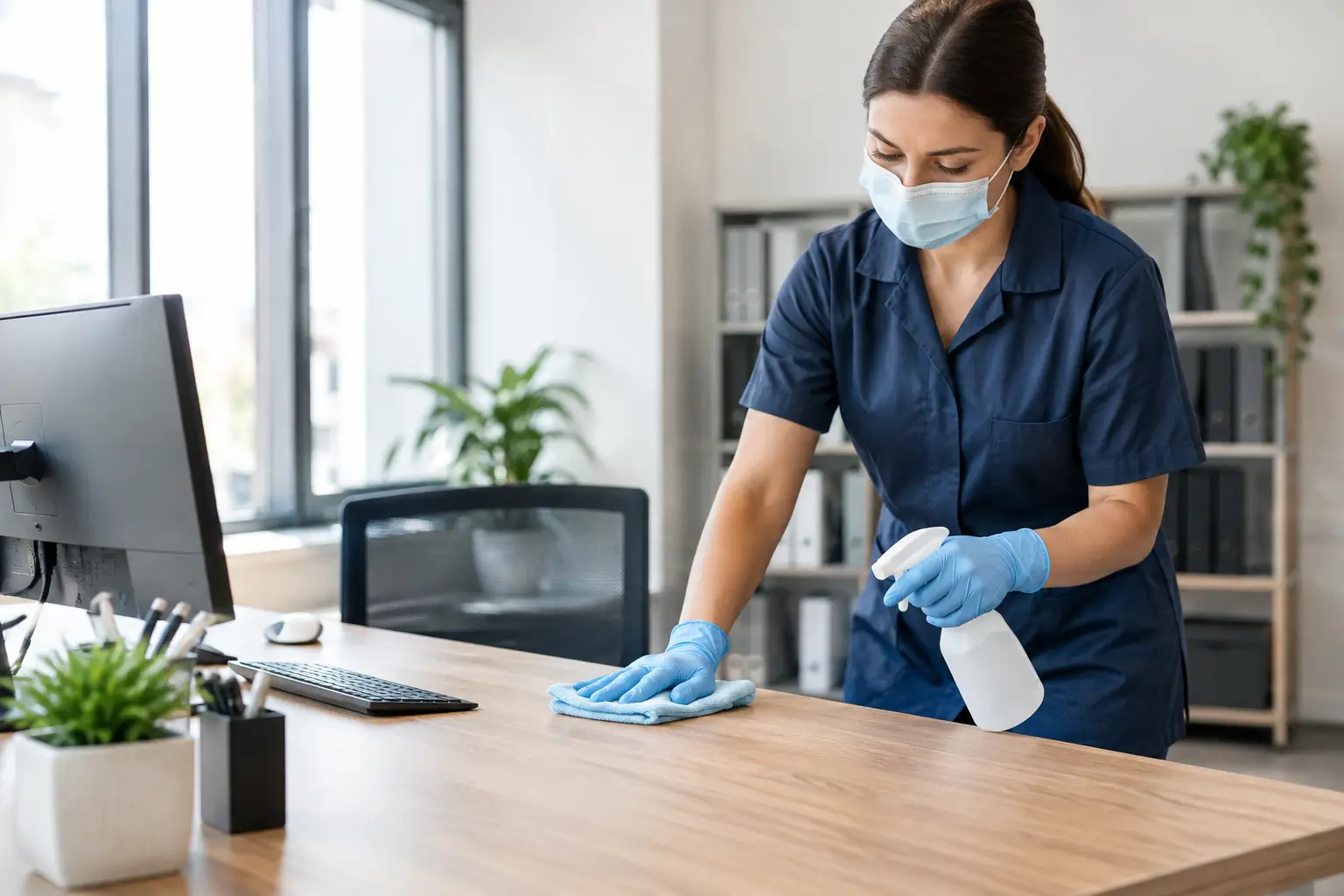
Desks need a more considered approach. In an office with dedicated workstations, a daily clean supported by individual employee responsibility for personal items may be appropriate. In a hot-desking environment, sanitising the desk, chair arms and shared equipment between users or at defined changeover periods provides greater assurance.
High-touch areas: daily, and often more than once
High-touch points should sit at the centre of an office sanitisation plan because they are repeatedly used by different people. Their frequency should reflect footfall and usage patterns, not simply the size of the office.
Particular attention is usually needed for:
- entrance doors, access-control panels, lifts and stair rails
- washroom doors, flush controls, taps, dispensers and hand dryers
- shared kitchens, including appliance handles, worktops and dining tables
- meeting rooms, especially table surfaces, light switches and controls
- printers, copier screens, vending machines and other shared equipment
A daytime cleaning presence can be valuable in larger or visitor-facing premises. It allows the schedule to respond to actual use rather than waiting until the building is empty. It also gives facilities teams a clear point of contact when an urgent issue needs resolving.
Washrooms and kitchens: frequency follows use
Washrooms and kitchen areas are operationally important spaces. A poorly maintained washroom affects staff confidence and visitor perception immediately, while an untidy kitchen can quickly become unhygienic during a busy day.
In a modestly occupied office, thorough daily cleaning with periodic checks may be sufficient. In a densely occupied building or a site hosting regular meetings, inspections and sanitisation visits throughout the day are often more suitable. The required frequency should account for peak periods, such as morning arrivals, lunch breaks and events.
This is also where consumable management matters. Soap, hand towels, toilet tissue and waste provision are part of an effective hygiene system. Sanitising a washroom without ensuring staff and visitors can dry their hands properly leaves an obvious gap in the overall standard.
When to increase your office sanitisation frequency
A cleaning specification should not be static. Occupancy patterns, seasonal illness, office moves and corporate events can all change the right level of service. Facilities managers benefit from agreeing review points with their cleaning provider so that adjustments can be made without unnecessary administration.
Increase the frequency when there is a return-to-office push, a period of high visitor attendance, an outbreak of illness, refurbishment activity or a temporary rise in shared-space use. A large training day or all-staff meeting, for instance, may justify additional pre-event and post-event attention to reception, washrooms, breakout areas and meeting rooms.
Post-build and refurbishment environments need particular care. Dust, debris and repeated contractor movement can affect air quality, presentation and hygiene. These sites may require a dedicated builders clean followed by a detailed clean and sanitisation programme before staff return.
Seasonality also matters. During winter, when respiratory illnesses are more common and windows may be opened less frequently, many businesses choose to increase high-touch sanitisation. This is a proportionate operational decision, not a substitute for good ventilation, hand hygiene and clear workplace policies.
Match methods to surfaces and equipment
More frequent sanitisation is not automatically better if it damages surfaces or disrupts operations. The products, contact times and application methods must be appropriate for the area being treated.
IT equipment is a clear example. Keyboards, mice, screens, telephones and touch-control panels collect frequent hand contact, yet they need specialist handling to avoid moisture damage or residue. A trained cleaning team can work to an agreed process that supports hygiene without putting critical equipment at risk.
The same care applies to natural stone, specialist floor finishes and sensitive server-room environments. These areas call for suitable products, controlled methods and operatives who understand the site requirements. A generic approach may create avoidable maintenance issues.
Electrostatic disinfection can be useful as a supplementary measure for certain settings, such as after confirmed illness, before reopening a space or following a high-footfall event. It should be planned as part of a wider cleaning programme, not treated as a replacement for routine surface cleaning and targeted sanitisation.
Build sanitisation into a workable cleaning specification
The most reliable arrangements define what will be sanitised, how often, when it will happen and how completion will be checked. This gives office managers confidence that standards are being delivered consistently rather than relying on informal assumptions.
A practical specification should identify priority areas, service times, access constraints and any sensitive surfaces or equipment. It should also distinguish between daily tasks, periodic deep cleaning and responsive work. For example, washroom touchpoints may be sanitised several times daily, while a deeper clean of upholstery, carpets or hard floors follows a separate planned schedule.
Quality control is equally important. Regular site inspections, communication logs and clear escalation routes help identify whether a schedule remains appropriate. If the office layout changes, an additional tenant moves in or meeting-room use increases, the service can be adjusted before standards start to slip.
Choose consistency over a blanket promise
The best office sanitisation frequency is the one that reflects real activity within the workplace and is delivered consistently by trained, accountable operatives. It should protect hygiene standards without over-servicing low-use areas or placing unsuitable products on specialist surfaces.
For Central London offices with changing attendance patterns, the most useful cleaning partner is one that can review the detail, support day-to-day operations and adapt the plan as the building’s needs evolve. A well-managed sanitisation schedule gives employees and visitors something tangible: confidence that the workplace is ready for the next working day.