Best Workplace Hygiene Routines for Offices
A busy office can look presentable at 9am and still fall short of the hygiene standards employees, visitors and facilities teams expect. The best workplace hygiene routines do more than remove visible dust and waste. They reduce avoidable contamination risks, protect shared equipment, support staff confidence and ensure the building is ready to perform throughout the working day.
For facilities and operations managers, the challenge is consistency. Hygiene needs change with occupancy, weather, building layout, hybrid working patterns and the type of work carried out on site. A well-designed routine gives every area the right attention at the right frequency, with clear ownership and checks that demonstrate standards are being maintained.
Start with a site-specific hygiene plan
There is no useful one-size-fits-all cleaning schedule. A high-traffic reception, for example, has very different demands from a meeting suite used twice a week or a restricted server room. The starting point should be a site assessment that identifies how people move through the premises, which surfaces are touched most often and where hygiene failures would have the greatest operational impact.
Map the workplace into practical zones: entrances and receptions, desks and collaboration spaces, kitchens, washrooms, meeting rooms, lift areas, touchpoints and specialist rooms. Then agree cleaning frequencies around actual usage rather than assumptions. A washroom on a busy floor may need servicing several times during the day, while a low-occupancy area may be better served by a thorough scheduled clean.
This approach also helps avoid a common mistake: treating hygiene as a single evening-cleaning task. Daytime attention to washrooms, kitchens, shared touchpoints and spillages is often what keeps a workplace comfortable and credible between the main cleaning shifts.
Best workplace hygiene routines begin with hand hygiene
Hand hygiene remains one of the simplest ways to reduce the transfer of dirt and germs around shared workplaces. It works only when facilities make the right behaviour easy. Washrooms and kitchen areas should have reliable supplies of soap, hand-drying materials and sanitiser where appropriate. Empty dispensers, overflowing bins and poorly maintained hand-drying facilities quickly undermine the rest of the cleaning programme.
Placement matters. Sanitiser stations are most useful at entrances, near lift lobbies, in shared kitchen areas and beside high-use meeting spaces. They should support handwashing rather than replace it. Clear, discreet reminders can help, particularly during periods of heightened illness or when visitor numbers are high, but facilities should avoid filling the workplace with signs that people stop noticing.
Routine checks should confirm that dispensers work, consumables are stocked and surfaces around handwashing points remain clean. A replenishment plan is as important as the product itself.
Focus cleaning effort on high-touch surfaces
Not every surface needs the same cleaning method or frequency. High-touch points deserve deliberate attention because many different people use them in quick succession. These include door handles, push plates, lift buttons, stair rails, reception counters, shared printers, kitchen appliance handles, taps, flush controls and meeting-room controls.
The most effective routine separates cleaning from disinfection. Cleaning removes soil and residue, allowing a disinfectant to work properly where disinfection is required. Applying disinfectant to an unclean surface, or wiping it away before its stated contact time, may provide false reassurance rather than a reliable outcome.
Teams should use approved products in line with manufacturer instructions and site risk assessments. Colour-coded equipment and well-managed cloth changes also help prevent cross-contamination between washrooms, kitchens and general office areas. These details may seem small, but they are where consistent standards are won or lost.
Keep shared desks and technology in the routine
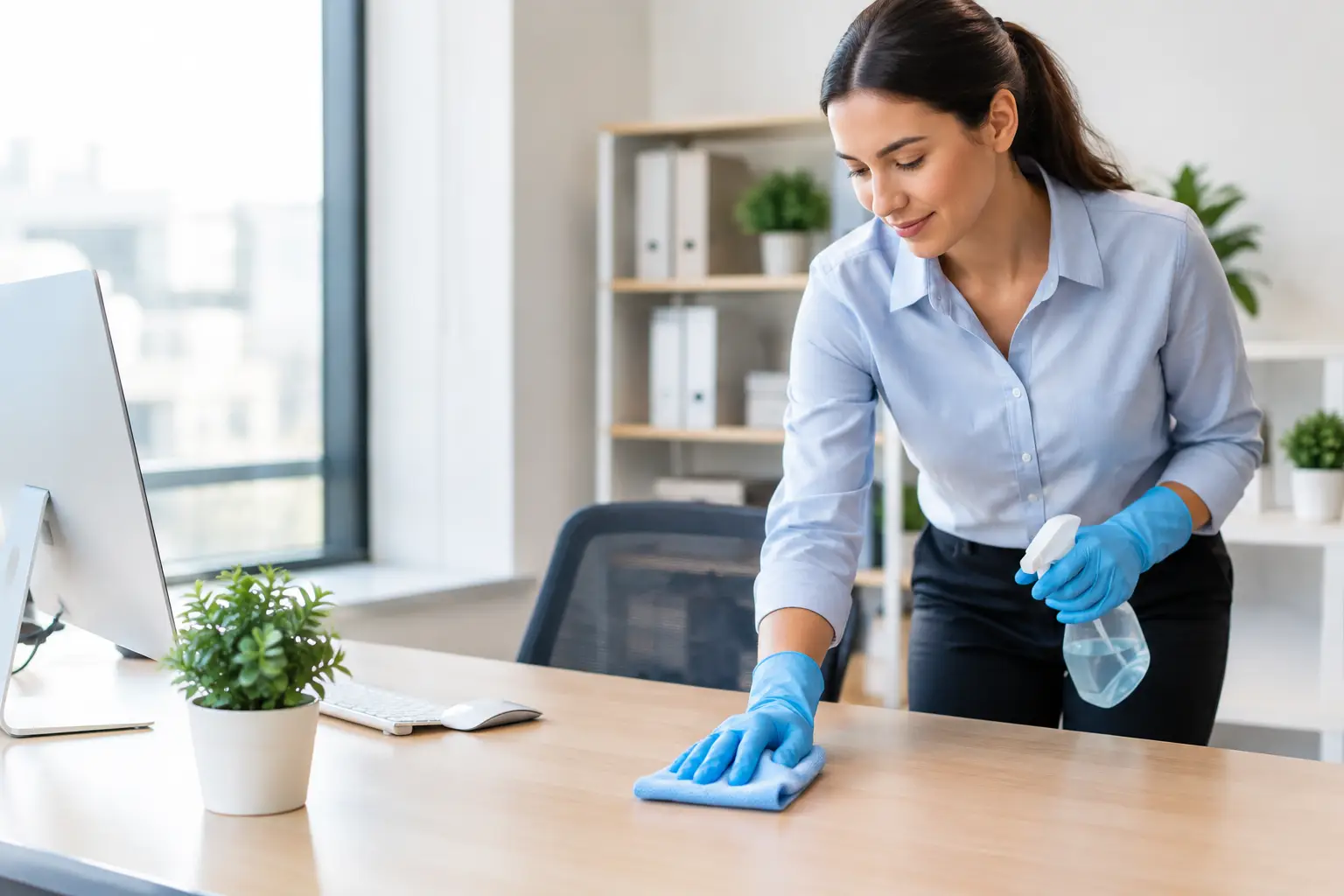
Hybrid work has increased the use of shared desks, lockers and collaboration areas. These spaces need a clear reset routine so the next user arrives at a clean, functional workstation. Desk surfaces, chair arms, docking stations and shared peripherals should be cleaned at an agreed frequency, with a simple process for employees to report issues between scheduled visits.
Technology requires particular care. Screens, keyboards, telephones and other IT equipment can collect dust and debris, but excessive moisture or unsuitable chemicals can cause damage. Specialist computer and IT-equipment cleaning uses appropriate materials and methods to maintain hygiene without putting business-critical assets at risk.
It depends on the workplace whether employees clean their own workstations at the end of the day or a cleaning team carries out the task. In practice, the strongest arrangement is usually shared responsibility: employees keep personal work areas orderly and report spillages promptly, while trained operatives complete planned cleaning and periodic detailed attention.
Treat washrooms and kitchens as operational priorities
Washrooms have an immediate effect on how people judge an organisation’s care and professionalism. A routine should cover sanitary ware, taps, dispensers, mirrors, floors, bins, odour control and consumable levels. It must also include regular inspections, because a washroom can deteriorate quickly during a busy day.
Kitchen hygiene requires equal discipline. Communal appliances, worktops, dining tables, sinks, taps and waste areas should be addressed daily, with deeper cleaning scheduled for fridges, microwaves, dishwashers and cupboard interiors. Food debris and standing water can create odours, attract pests and make a well-maintained office feel neglected.
The trade-off is between convenience and accountability. Shared kitchens work better when staff have clear expectations for washing up, labelling food and removing personal items, while the cleaning plan covers the professional cleaning tasks that cannot depend on individual goodwill.
Build waste management into everyday hygiene
Bins that are too small, poorly placed or emptied only after they overflow create unnecessary hygiene and presentation issues. Waste points should reflect the way the office is used, including separate provision for general waste, recycling, confidential waste and sanitary disposal where required.
Daily removal is usually essential in kitchens, washrooms and food-service areas. Desk-side bins may be suitable in some workplaces, but centralised waste stations can reduce clutter and improve recycling when they are convenient and clearly labelled. Cleaning teams should also be alert to spillages, leaking bags and waste areas that need washing rather than simply emptying.
A good routine considers what happens after waste leaves the desk. Service routes, collection points and external bin areas should be managed so that waste handling does not disrupt employees or detract from the arrival experience for visitors.
Use periodic deep cleaning to protect daily standards
Daily cleaning maintains the workplace. Periodic deep cleaning restores areas that routine servicing cannot fully address. Carpets, upholstery, hard floors, internal glass, ventilation grilles and difficult-to-reach surfaces all benefit from planned specialist attention.
The right interval depends on footfall, building use and material type. Entrance matting and carpets in a heavily used London office may need more frequent treatment during wet weather, while hard floors may require machine cleaning and maintenance to preserve both appearance and slip resistance. Scheduling this work proactively is less disruptive than waiting until staining, odours or visible wear force an urgent response.
Deep cleaning is also valuable after fit-outs, refurbishment, high-occupancy events or periods of increased illness. In these cases, electrostatic disinfection may form part of a broader response where appropriate, but it should not be viewed as a substitute for regular, thorough cleaning.
Make quality control visible and useful
A hygiene routine is only dependable if someone verifies that it has been completed properly. Cleaning checklists, supervisor inspections, service reports and structured client feedback give facilities teams a practical view of performance. They also make it easier to identify recurring issues, such as an understocked washroom, a difficult waste point or a meeting room that needs more frequent servicing.
Quality control should not become paperwork for its own sake. The most useful records show what was done, when it was done, what was found and what action followed. This is particularly valuable for organisations with health-and-safety obligations, multiple floors, sensitive areas or demanding visitor environments.
Training is central to this process. Operatives need to understand safe chemical handling, COSHH requirements, infection-control practices, equipment use and the specific needs of the site. A well-supported cleaning team is better placed to notice problems early and resolve them without creating extra administration for the facilities manager.
Review routines as the workplace changes
Hygiene plans should be reviewed after changes in occupancy, layout, working hours or building use. A new collaboration zone, a return-to-office initiative or an increase in client meetings can quickly make an old schedule unsuitable. Regular review keeps service levels aligned with the reality of the workplace rather than the assumptions made months earlier.
For offices across Central London, where buildings often combine high visitor traffic, shared amenities and tight operating hours, a tailored cleaning partnership can remove much of this pressure. EDM Cleaning supports clients with planned commercial cleaning, specialist services and accountable quality control designed around each site.
The most effective workplace hygiene routine is one employees barely need to think about: washrooms are stocked, shared spaces are ready, touchpoints are cared for and issues are dealt with before they interrupt the day. That consistency gives facilities teams more time to focus on the wider operation, with confidence that the workplace is supporting the people who rely on it.