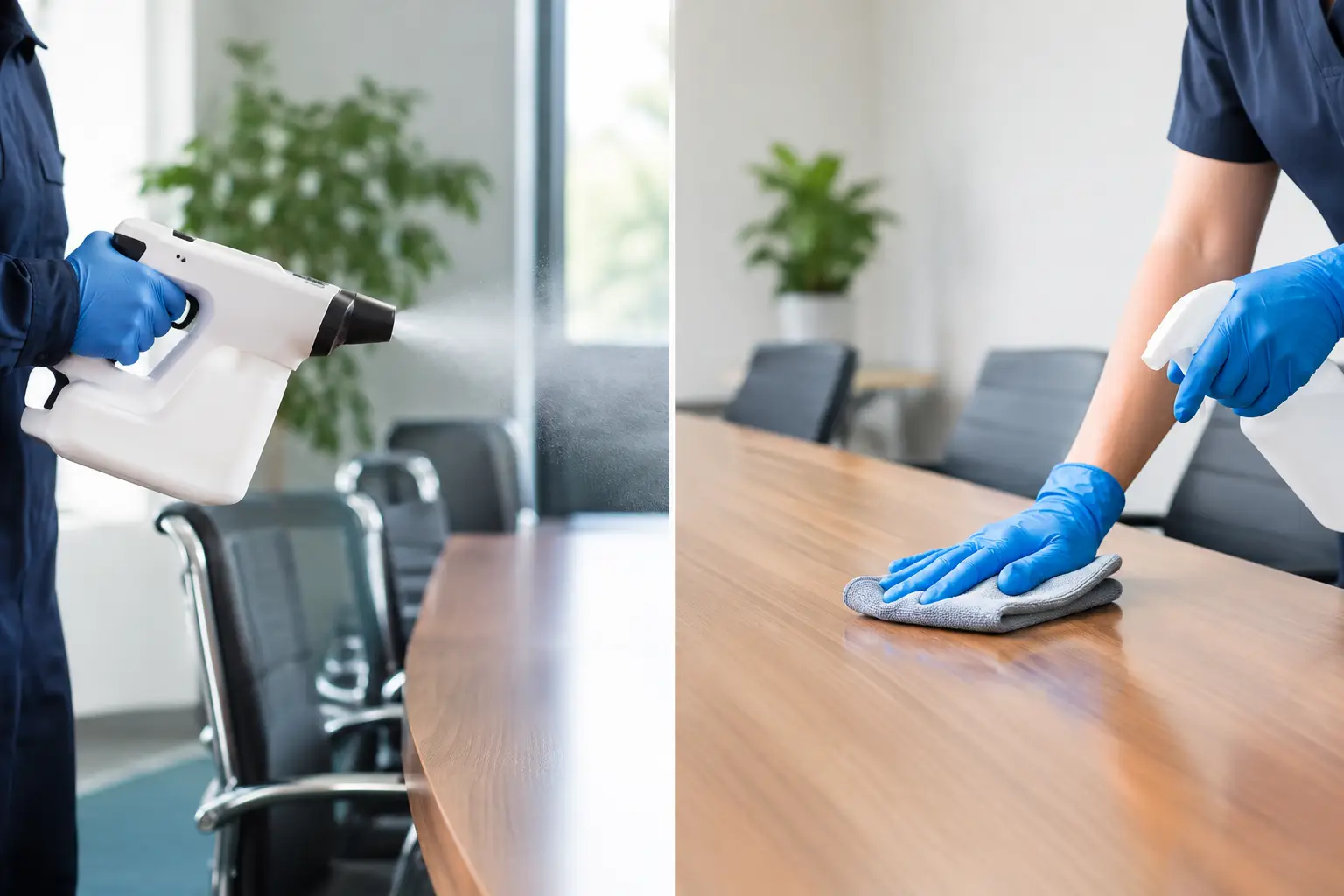
Electrostatic Versus Manual Disinfection
A busy office can look clean while still carrying risk on door furniture, shared equipment and the touchpoints people use without thinking. Electrostatic versus manual disinfection is therefore not simply a choice between two cleaning methods. For facilities managers, it is a decision about coverage, disruption, safety, documentation and how a disinfection programme supports a workplace that is ready for staff and visitors.
Both methods have a clear role in commercial premises. The right approach depends on the layout of the building, the type of surfaces present, the level of use, the required turnaround time and the product being applied. Most importantly, neither method should be treated as a substitute for a properly planned cleaning regime.
Electrostatic versus manual disinfection: the key difference
Manual disinfection involves a trained operative applying an appropriate disinfectant to surfaces using cloths, wipes, mops or other controlled tools. It is deliberate, targeted work. The operative can remove visible soil, focus on frequently touched points and respond to the condition of each surface as they go.
Electrostatic disinfection uses specialist equipment to apply a charged mist of disinfectant. The electrical charge helps the droplets seek out and adhere to surfaces, including areas that may be harder to reach through conventional spraying. This can make the process particularly useful for large, furnished or high-contact spaces where consistent broad coverage is required.
The distinction matters because coverage is not the same as cleaning. An electrostatic application may coat a surface efficiently, but dirt, grease and organic matter can reduce the effectiveness of some disinfectants. Where surfaces are visibly soiled, they should be cleaned first. A competent programme treats cleaning and disinfection as connected stages, not competing activities.
What manual disinfection does well
Manual disinfection gives an operative close control over the process. In an office, this is valuable around desk areas, kitchen worktops, washrooms, meeting rooms and reception points, where the cleaning team needs to deal with marks, spills and residue before disinfecting.
It is also well suited to sensitive or intricate environments. Shared keyboards, telephones, access-control panels and specialist equipment often need careful handling. Product compatibility, the amount of moisture used and manufacturer guidance should all be considered. A broad misting process is not automatically appropriate for every surface, particularly around IT equipment or in technical rooms.
Manual work makes it easier to verify key touchpoints as part of a daily or scheduled routine. A supervisor can inspect whether door handles, lift buttons, handrails, taps, flush controls, light switches and shared appliances have been addressed. That visibility supports quality control and gives facilities teams a practical record of what has been completed.
Its limitation is consistency over a large footprint. Manual disinfection depends heavily on access, time and a clear specification. A crowded office with hot desks, chair arms, storage areas and high levels of movement can contain many surfaces that are easy to miss if the work is rushed or poorly planned.
Where electrostatic disinfection adds value
Electrostatic disinfection can support faster application across sizeable areas and complex layouts. It is often considered after a period of illness in the workplace, before reoccupation, following building works, or as part of a planned deep-cleaning programme. In meeting suites, open-plan offices, communal areas and other high-use zones, the equipment can help reach the sides and undersides of objects that are awkward to treat manually.
For commercial buildings, the principal benefit is repeatable coverage when the process is carried out by trained operatives using suitable equipment and an approved product. The mist must be applied at the correct rate, and surfaces must remain wet for the product’s specified contact time. If a disinfectant dries too quickly or is wiped away prematurely, the intended level of disinfection may not be achieved.
This method can also reduce the physical burden of applying product across a broad area. That does not mean the job becomes automatic. Rooms still need to be prepared, access managed and sensitive items protected. Operatives need to understand the equipment, the product label, dilution requirements where applicable, ventilation arrangements and the personal protective equipment required by the risk assessment.
Electrostatic application is best viewed as a specialist tool within a wider hygiene plan. It can enhance a routine, but it does not eliminate the need for detailed cleaning, waste removal, washroom servicing or focused attention to points where contamination is most likely to build up.
Coverage must be balanced with control
A common assumption is that an electrostatic sprayer will reach every surface without further consideration. In practice, furniture positioning, room contents, air movement and the operative’s technique all influence the result. The method should be used methodically, with rooms divided into manageable sections and the application pattern planned around the actual use of the space.
Manual disinfection offers a different kind of assurance: direct contact with a known list of touchpoints. For this reason, many workplaces benefit from combining the two. A team may manually clean and disinfect high-touch surfaces, then use electrostatic equipment for wider coverage in appropriate communal or open-plan areas.
Choosing the right method for your premises
The most suitable approach begins with an assessment of the workplace rather than a standard package. A low-occupancy office with controlled access may require a well-specified manual programme centred on touchpoints and washrooms. A large headquarters with frequent visitors, shared workstations and varied meeting spaces may benefit from planned electrostatic treatment alongside its regular cleaning schedule.
Consider how the premises are used. Areas with regular hand contact, food preparation or washroom use require close, frequent attention. Spaces that are difficult to access, heavily furnished or temporarily out of service may be candidates for specialist electrostatic disinfection, provided the surfaces and contents are suitable.
Timing is equally important. Disinfection may need to take place outside normal working hours to allow for safe access, ventilation and the product’s required contact time. Cleaning teams should work to an agreed schedule that avoids unnecessary disruption while maintaining standards between shifts, meetings and visitor activity.
A good specification should also identify exclusions and precautions. Paper files, exposed food, delicate fabrics, artwork, unprotected electronics and specialist machinery may need to be removed, covered or treated by another method. Clear communication with occupants helps prevent equipment being left in unsuitable areas and makes the process safer for everyone.
Product choice, compliance and evidence
The equipment is only one part of the decision. The disinfectant must be appropriate for the intended use and applied in accordance with its instructions. Facilities managers should expect a cleaning provider to assess hazards, follow COSHH requirements, provide trained operatives and use documented procedures.
Contact time is especially significant. Every disinfectant has directions that state how long it needs to remain on the surface to work as intended. This requirement can affect scheduling, room access and whether a surface can be used immediately afterwards. It should never be guessed or shortened for convenience.
Environmental considerations should also be part of the conversation. Responsible product selection and accurate dosing can reduce unnecessary chemical use, while trained teams can avoid over-application and prevent damage to finishes. This is particularly relevant in well-maintained corporate spaces where floor surfaces, stone, furnishings and technology represent a substantial operational investment.
Documentation gives the service practical value beyond the immediate result. Site-specific risk assessments, cleaning schedules, product information and quality checks help demonstrate that the work has been planned and delivered responsibly. For buildings with several occupiers or strict internal standards, that accountability can make day-to-day facilities management considerably easier.
A combined approach is often the strongest one
Electrostatic versus manual disinfection should not be framed as a winner-takes-all decision. Manual work remains essential for removing soil, treating high-touch points carefully and managing delicate surfaces. Electrostatic application can extend coverage efficiently in suitable areas and support a deeper hygiene response when the site requires it.
The most effective programmes are built around the building, its people and the way each space is used. They set clear frequencies, define who is responsible for what, account for product contact times and include checks that confirm standards have been met.
For London workplaces where presentation, continuity and employee confidence matter every day, a tailored disinfection plan is a practical investment in readiness. The useful question is not which method sounds more advanced, but which combination gives your premises the right level of care, control and assurance.