How to Maintain Vinyl Flooring in Offices
A vinyl floor can look clean at 8am and still be accumulating fine grit, moisture and scuff marks before the morning meeting has finished. In a busy commercial building, knowing how to maintain vinyl flooring is less about an occasional intensive clean and more about putting the right daily and planned maintenance in place. Done properly, it protects presentation, supports slip resistance and helps the floor deliver the service life expected of it.
For facilities managers, vinyl flooring is often chosen for good reason. It is hard-wearing, practical and available in finishes suited to reception areas, corridors, kitchens, washrooms and open-plan offices. However, it is not maintenance-free. The wrong chemicals, excessive water or abrasive equipment can dull the surface, weaken seams and create avoidable safety concerns.
Start with the floor specification, not a generic routine
Vinyl is a broad category. A luxury vinyl tile floor, sheet vinyl installation and safety vinyl may each have different cleaning and maintenance requirements. The finish also matters. Some floors have a factory-applied polyurethane coating designed for straightforward cleaning, while others may need a compatible protective dressing as part of their maintenance programme.
Before setting a routine, confirm the manufacturer’s guidance, the age and condition of the installation, and the areas of heaviest traffic. Entrances, lift lobbies, printer areas, tea points and routes to washrooms normally need more frequent attention than enclosed meeting rooms. A routine that treats every area identically can waste resource in low-use spaces while allowing high-traffic zones to deteriorate.
A competent site assessment should also identify damaged edges, lifting tiles, open seams, worn finishes and areas where water is regularly tracked in. Cleaning can preserve a floor, but it cannot resolve underlying installation faults. Reporting these early makes repairs more manageable and helps prevent a minor defect becoming a trip hazard or a wider replacement issue.
Remove dry soil before it becomes abrasion
Fine grit is one of the most damaging contaminants on vinyl flooring. It may not be highly visible, but under foot traffic it acts like an abrasive. Over time, this can leave a floor looking grey, scratched or unevenly worn, particularly around entrances and circulation routes.
Daily dry soil removal is therefore the foundation of an effective programme. Depending on the site, this may involve vacuuming with suitable hard-floor attachments, dust control mopping, or mechanical sweeping in larger areas. The aim is to lift debris rather than push it into corners or across the surface.
Entrance matting has a significant role here. Well-positioned barrier matting reduces the amount of dirt and moisture brought into the building, lowering the cleaning burden on the floor beyond it. Mats should be large enough to allow several steps, laid flat and cleaned regularly themselves. A saturated or overloaded mat cannot perform its intended function and may create its own slip risk.
Clean little and often with the right solution
Routine damp cleaning removes the residue that dry methods cannot. In most commercial settings, a neutral cleaner diluted to the correct ratio is the appropriate choice for regular vinyl floor care. It should be compatible with the floor type and used in line with both the product instructions and the site’s COSHH procedures.
More chemical is not better. Overdosing can leave a sticky film that attracts dirt, causes streaking and reduces the appearance of the floor. Under-dosing may fail to remove soil effectively. Accurate dilution, clean water and clean mop heads are simple controls that make a noticeable difference.
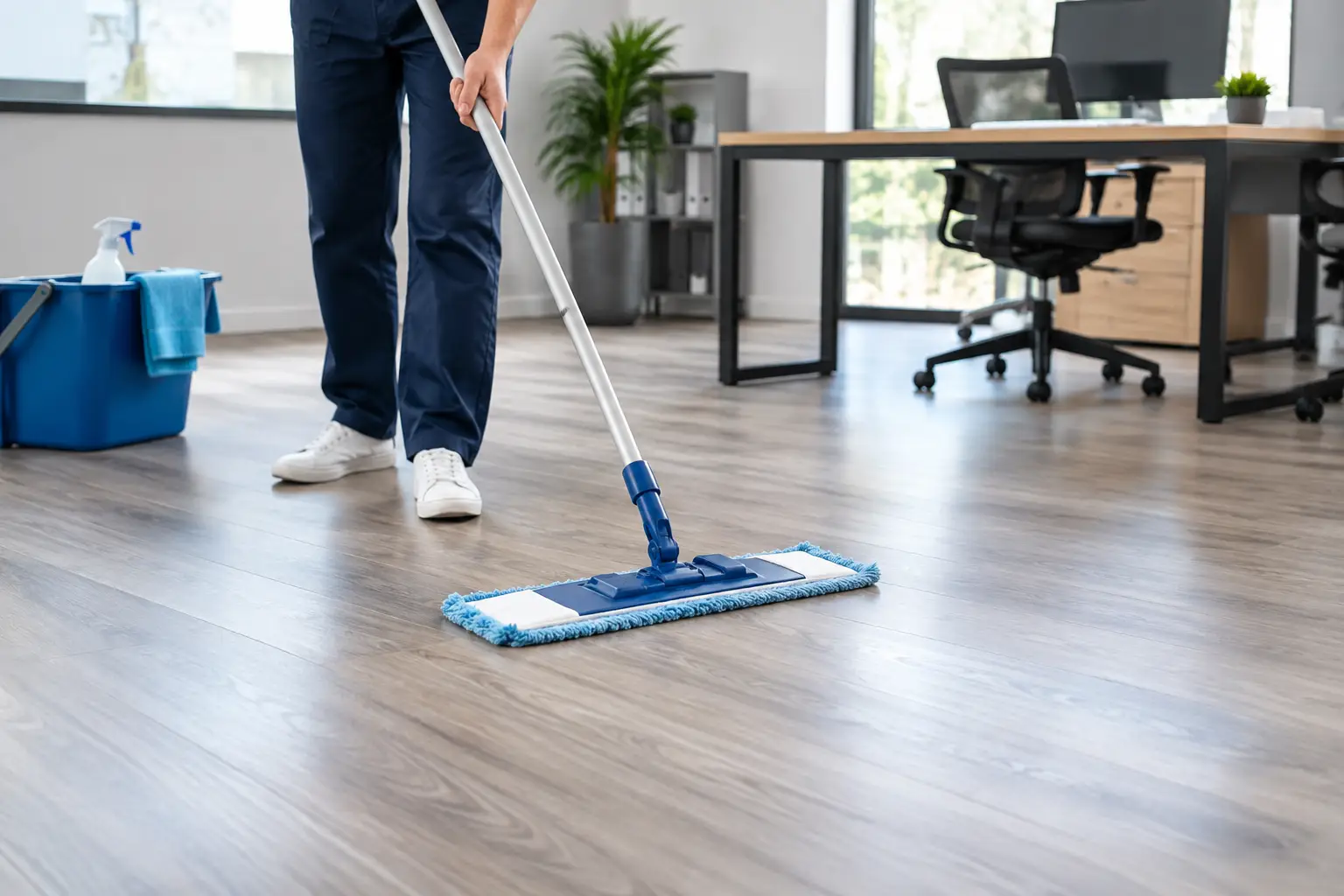
Water use requires equal care. Vinyl is water resistant, but standing water can penetrate poorly sealed joins, affect adhesives and make the surface unsafe while cleaning is under way. Mops should be damp rather than saturated, and the area should be allowed to dry promptly. In busy offices, planned cleaning windows and clear warning signage help protect people moving through the building.
For larger floor areas, a scrubber dryer can provide a consistent result while recovering dirty water in the same pass. The machine, pad or brush selection and solution strength must suit the floor. An overly aggressive pad can remove protective coatings or alter the surface appearance, so machine cleaning should be undertaken by trained operatives with an agreed method statement.
Deal with spills, marks and scuffs promptly
A prompt response protects both the floor and the people using the space. Food and drink spills, wet footwear, printer toner, ink and grease from kitchen areas should be contained and cleaned without delay. This reduces staining, limits slip risks and prevents contaminants being carried further through the workplace.
Scuff marks are common in reception and corridor areas where shoes, bags and wheeled furniture pass repeatedly. They should be assessed before treatment. Gentle cleaning with an approved product or a suitable non-abrasive pad may be effective, but aggressive rubbing can leave a patch that is more noticeable than the original mark.
Avoid household-style shortcuts such as bleach, solvent-based cleaners, highly alkaline degreasers, abrasive powders and steam cleaning unless the floor manufacturer specifically confirms their suitability. These methods may damage the protective layer, fade the design or affect the adhesive beneath the surface. The safest approach is always to test an approved method in an inconspicuous area where there is any uncertainty.
Build periodic maintenance into the facilities plan
Daily cleaning maintains hygiene and appearance, but periodic maintenance restores areas that are beginning to show traffic wear. The frequency depends on footfall, the floor’s finish, cleaning history and the standards expected within the building. A client-facing reception will usually need a different programme from a lightly used back-office area.
Periodic work may include deeper machine scrubbing to remove ingrained soil, followed by the application of a compatible protective finish where appropriate. This can improve cleanability and refresh the appearance of a floor that has become dull through use. It is not suitable for every type of vinyl, however. Applying a finish to a floor designed to be maintained without one can create unnecessary build-up and alter the intended look.
Where a coating has become worn or uneven, a controlled strip-and-recoat process may be needed. This is specialist work: inadequate rinsing, rushed drying times or incompatible products can compromise the final result. Planned intervention is usually preferable to waiting until the floor looks visibly neglected, when more disruptive restorative work may be required.
Protect the floor between cleans
Maintenance is most effective when cleaning teams and building users work to the same practical controls. Chair mats or suitable glides can reduce damage from wheeled chairs, while protective pads under moveable furniture help prevent scratching. Heavy items should be lifted or moved on appropriate equipment rather than dragged across the floor.
Take care with rubber-backed mats, furniture feet and certain types of rubber wheels. Some materials can react with vinyl and leave discolouration that is difficult to remove. This is particularly relevant in meeting rooms, fitness areas and spaces with mobile equipment. Checking compatibility before introducing new furniture or matting is a small step that can prevent permanent marking.
Daylight can also affect appearance over time. In areas with strong direct sunlight, blinds or other suitable solar control measures may help reduce uneven fading. This is not a cleaning issue, but it is part of preserving a consistent finish across the workplace.
Make quality control visible
A reliable vinyl floor maintenance programme should be documented rather than left to assumption. Cleaning frequencies, products, dilution rates, machine settings, safety measures and escalation routes should be clear to the operatives delivering the service. Supervisory inspections can then focus on the areas that matter most: entrances, perimeter edges, corners, high-touch shared spaces and visible traffic lanes.
For facilities teams, this level of control provides confidence that standards are being maintained consistently across shifts and changing occupancy patterns. It also creates a useful record when a recurring issue needs investigation, whether that is persistent scuffing, water ingress or a change in the floor’s finish.
A professional hard-floor maintenance plan should be flexible enough to respond to events such as wet weather, office moves, post-build works or periods of higher visitor traffic. These are the moments when a standard routine may need temporary reinforcement to keep the premises safe, presentable and ready for use.
Well-maintained vinyl flooring does not draw attention to itself. It provides a clean, safe and professional surface that supports the everyday running of the workplace. With the right products, trained operatives and a maintenance schedule matched to how the building is actually used, it remains an asset rather than another avoidable facilities concern.