Graffiti Removal for Commercial Properties
A fresh graffiti tag on a frontage, loading bay door or perimeter wall can change how a building is perceived before a visitor reaches reception. Effective graffiti removal is therefore more than a cosmetic response. It protects the presentation of commercial premises, helps deter repeat vandalism and prevents unsuitable cleaning methods from permanently damaging valuable surfaces.
For facilities and property managers, the priority is a prompt, controlled service that restores the area with minimal disruption to occupiers, neighbours and day-to-day operations. The right response depends on the surface, the type of marking and the condition of the building fabric.
Why graffiti requires a planned commercial response
Graffiti is often treated as a minor maintenance issue until it appears in a prominent location or spreads across multiple areas. In commercial settings, however, visible vandalism can undermine the standard that tenants, employees and clients expect from a managed property. It may also create the impression that the site is not actively monitored.
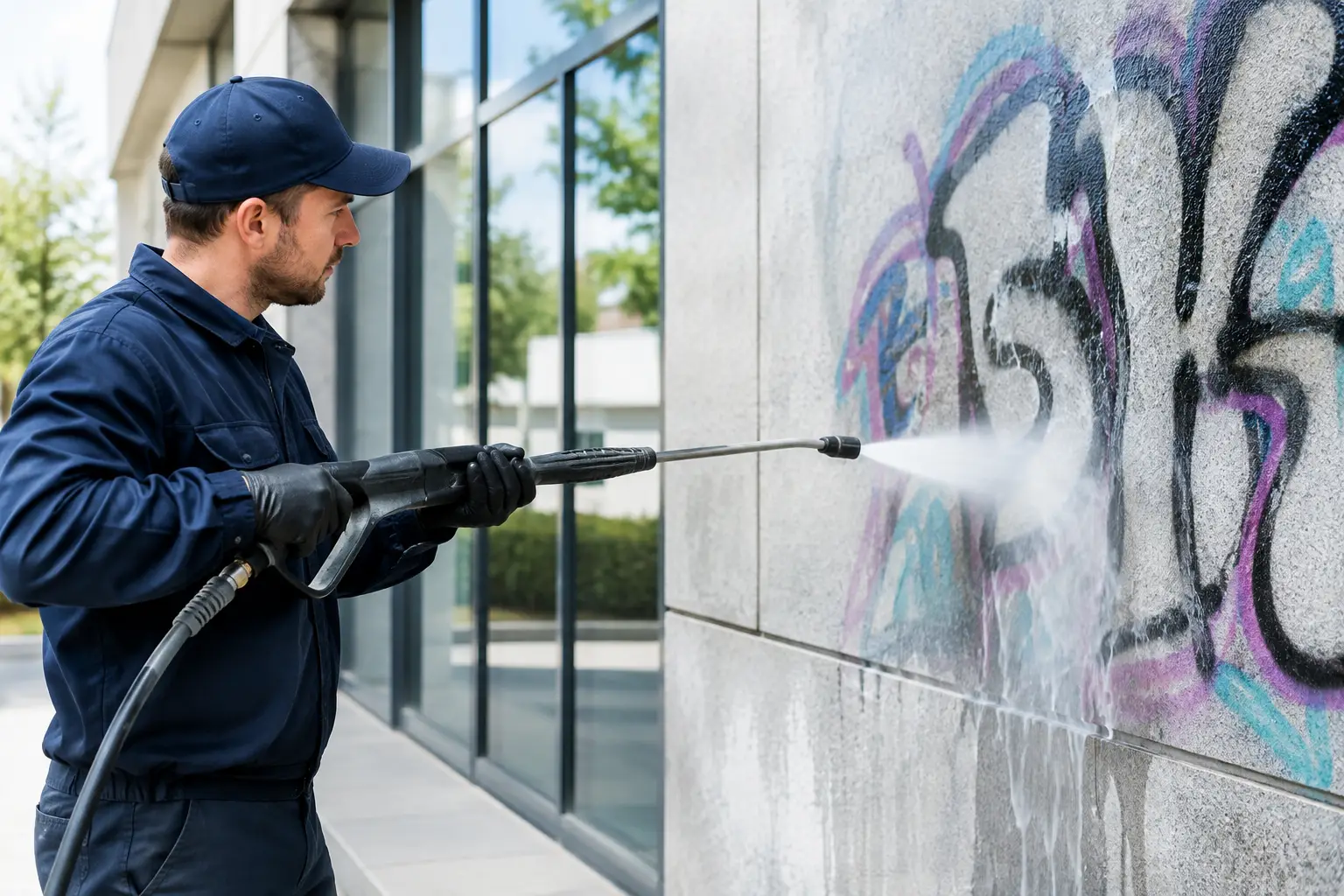
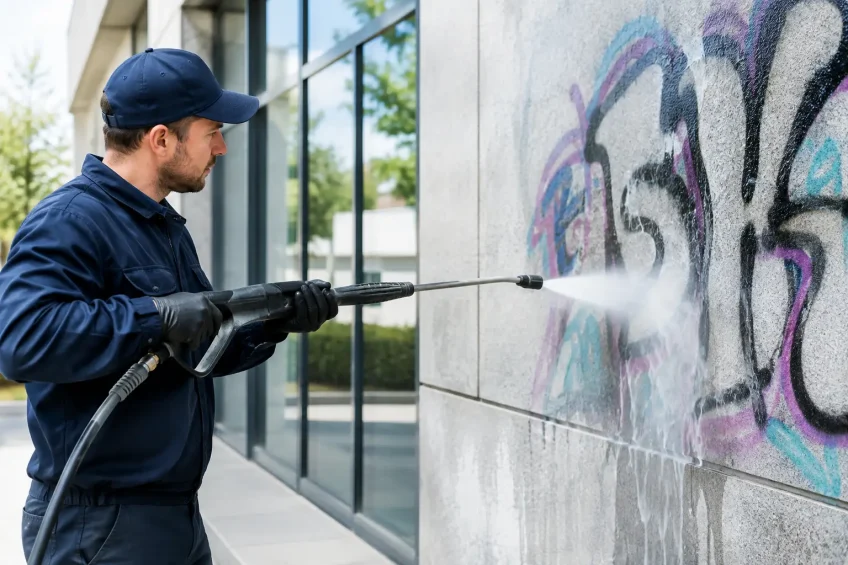
Speed matters, but so does judgement. Attempting to remove paint with a general-purpose solvent, abrasive pad or high-pressure washer can drive pigment deeper into porous materials, strip protective finishes or leave a visibly lighter patch. On natural stone, rendered façades, painted metalwork and glazed surfaces, an incorrect method can create a larger and more expensive restoration issue than the original tag.
A professional service begins by assessing the location, substrate and contamination. This allows the cleaning team to select a method that removes the marking while preserving the surface beneath it. It also supports safe working practices where access equipment, chemical controls or public-facing areas are involved.
Graffiti removal methods must suit the surface
There is no single technique that is right for every property. The most appropriate approach balances removal performance with the need to protect the building material, surrounding finishes and nearby landscaping.
Brick, stone and concrete
Porous surfaces are among the most challenging because paint can penetrate beyond the surface layer. Specialist graffiti removers may be applied and allowed to dwell before the area is carefully rinsed or agitated at a controlled pressure. The process may need repeating, particularly where several paint colours have been used.
Stone requires particular care. Aggressive products or pressure can erode the face of the material and alter its appearance. A site assessment should identify whether the stone is natural, reconstructed or previously sealed, as each may require a different treatment. In heritage-sensitive or high-profile locations, testing a discreet area first is a sensible safeguard.
Metal shutters, doors and cladding
Shutters, entrance doors, bins and service-yard gates are frequent targets. These surfaces can often be cleaned effectively, but the finish must be considered. Powder-coated metal, painted steel and aluminium cladding can react differently to chemical products.
The aim is to lift the graffiti without dulling the coating or exposing the substrate to corrosion. Where the original coating is already compromised, removal may need to be followed by a repair or protective treatment to maintain a consistent appearance.
Glass, signage and polished surfaces
Graffiti on glass can include paint, marker pen, adhesive residues or acid etching. Paint and marker can often be removed with the correct specialist products and non-scratching tools. Acid-etched graffiti is different: it physically damages the glass and may require restoration work or replacement depending on its depth and visibility.
Signage also needs a careful approach. Strong chemicals can affect vinyl lettering, printed finishes and protective laminates. Cleaning teams should identify the material before treatment rather than assume the same method used on a window will be suitable.
Render, painted walls and timber
On painted render or timber, complete removal is not always possible without affecting the underlying colour. In these cases, controlled cleaning may reduce the marking, followed by localised repainting where required. This can be the better option when maintaining a consistent finish matters more than pursuing removal at any cost.
What a safe graffiti removal process looks like
Reliable delivery starts with clear information. Facilities teams benefit from recording the exact location, photographs, access restrictions, opening hours and any nearby sensitive areas such as planted spaces, pedestrian routes or vehicle entrances. This enables the service provider to arrive prepared and reduces delays on site.
Before work begins, operatives should assess the risks associated with the task. These can include working at height, traffic movement, slip hazards from rinsing, chemical use and public access. Appropriate controls, signage and personal protective equipment help keep the work area safe and maintain compliance with site procedures.
Products should be selected and used in line with COSHH requirements. This means considering safe storage, dilution, application, dwell times and disposal of residues. It also means preventing wash-off from entering drains where this could create an environmental risk. A responsible contractor will not simply prioritise speed over proper containment and surface protection.
Once cleaning is complete, the area should be inspected in suitable light. The question is not only whether the tag has gone, but whether the cleaned section sits acceptably alongside the surrounding surface. Clear completion records and before-and-after photographs give property and facilities managers confidence that the issue has been addressed to the agreed standard.
Preventing repeat graffiti on your premises
No property can eliminate the risk of vandalism entirely, particularly in busy commercial districts. However, visible upkeep and a coordinated response can make a meaningful difference. Graffiti left in place for long periods can encourage further tagging, while prompt removal sends a clear signal that the property is actively managed.
For recurring locations, anti-graffiti coatings may be worth considering. These protective systems can make future removal easier by reducing paint adhesion to the underlying surface. They are not a universal answer: some coatings may alter the appearance or breathability of certain materials, especially older stone and masonry. A suitable product should be chosen after considering the façade, its condition and any conservation requirements.
Operational measures also play a role. Good exterior lighting, maintained boundary areas, secure service-yard access and regular inspections can help identify problems early. For multi-tenant buildings, a simple reporting route ensures reception teams, security staff and occupiers know who to notify when graffiti appears.
Building graffiti removal into facilities maintenance
Graffiti incidents are unpredictable, but the response does not need to be improvised. Including graffiti removal within a wider maintenance plan gives managers a defined escalation route, approved site information and a service partner that understands the building.
This is particularly valuable for offices and mixed-use commercial premises where appearance, access and continuity must all be protected. Work can be scheduled around footfall and trading hours, with careful consideration for prominent entranceways, customer-facing façades and shared spaces. Where necessary, specialist cleaning can be coordinated alongside window cleaning, stone care or hard-floor maintenance so that the overall standard of the site remains consistent.
EDM Cleaning approaches specialist cleaning as a practical extension of facilities support. Trained operatives, appropriate equipment and documented quality control help managers resolve visible issues without creating unnecessary administrative burden or risking damage to building surfaces.
A well-maintained property communicates attention to detail long before a meeting starts. When graffiti appears, a measured and professionally managed response helps keep that standard intact.