Server Room Sanitation for Reliable IT Operations
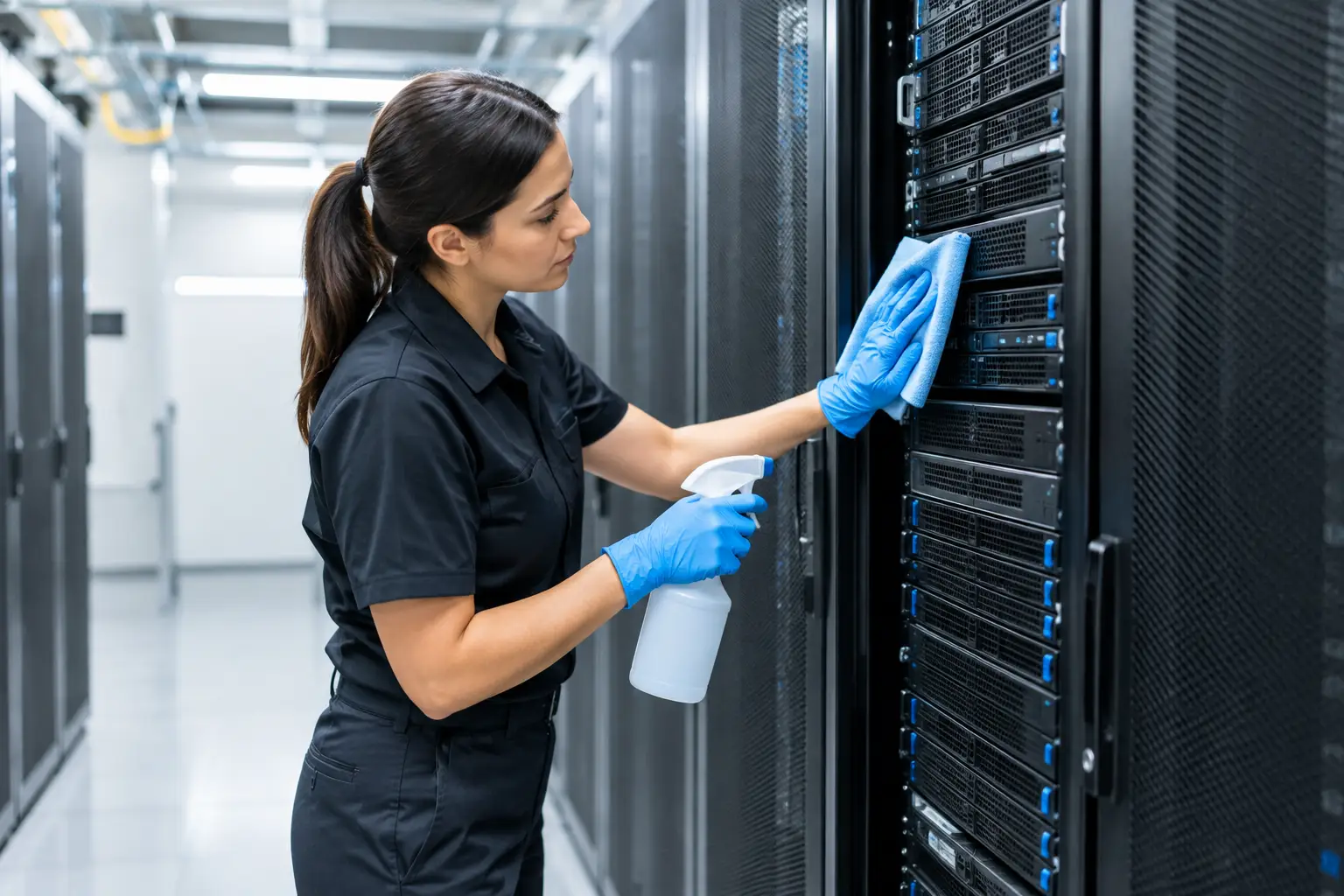
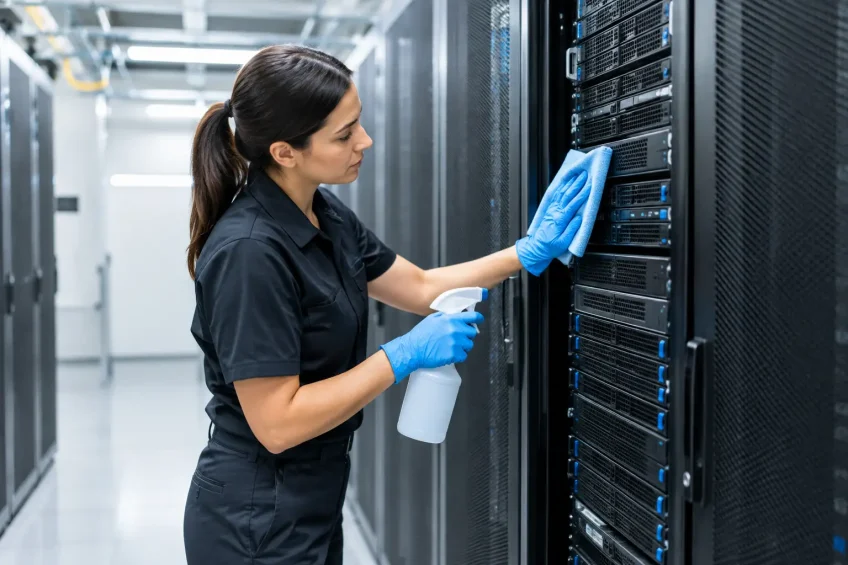
A server room can look clean while still holding the dust, fibres and airborne contaminants that threaten equipment performance. Server room sanitation is therefore not a cosmetic exercise or an extension of routine office cleaning. It is a controlled facilities task designed to protect critical IT assets, maintain airflow and support business continuity without introducing moisture, static or avoidable disruption.
For facilities and operations teams, the challenge is balancing hygiene requirements with the sensitivity of live infrastructure. The right approach depends on the room layout, equipment density, cooling design, access controls and the organisation’s own IT procedures. What should not vary is the standard of planning, training and accountability behind the work.
Why server room sanitation matters
Servers, switches, storage systems and cooling units continuously draw air through their components. With that air comes dust, paper fibres, skin particles and other debris from the surrounding building. Over time, contamination can collect around vents, cable runs, raised floors and cooling equipment, restricting airflow and contributing to heat build-up.
Excess dust also creates a more difficult environment for planned maintenance. It can obscure labels, collect in inaccessible areas and make it harder for technicians to identify the condition of equipment. In a high-availability environment, small housekeeping issues can become operational distractions at exactly the wrong moment.
Sanitation also has a health and safety dimension. A well-maintained technical space supports clear walkways, reduces trip hazards around cabling and helps prevent loose packaging or stored items from accumulating where they do not belong. For organisations operating from busy Central London offices, where space is often at a premium, protecting the intended purpose of the server room is particularly valuable.
Server room sanitation is different from office cleaning
The products and methods used in a standard workplace cleaning programme are not automatically suitable for an IT environment. Sprays, wet mops, fragranced products and ordinary domestic-style vacuum cleaners may introduce risks that are unnecessary in a room containing live electrical equipment.
A specialist service begins by understanding what is in the room and what must remain untouched. This includes identifying server racks, power distribution units, UPS systems, cooling units, fire suppression controls, underfloor voids and sensitive cable routes. Access arrangements, escort requirements and approved working times should be agreed before any cleaning begins.
The distinction matters because sanitation in this setting is controlled cleaning, rather than disinfection by default. Disinfection may be appropriate for door handles, access panels and other agreed touchpoints, particularly where site hygiene requirements call for it. However, it must be carried out with compatible materials, minimal moisture and clear separation from sensitive hardware.
The risks of an unsuitable approach
Using the wrong equipment can create several avoidable problems. High-powered, unfiltered vacuuming may redistribute fine particles. Excess liquid can affect electrical components or floor systems. Poor handling around racks can disturb connections, while untrained operatives may not recognise equipment that must never be moved or switched off.
There is also a static electricity risk. Appropriate anti-static procedures and specialist equipment help reduce the possibility of electrostatic discharge around sensitive components. This is why server room work should be completed by trained operatives following a site-specific method statement, not added casually to a general cleaning checklist.
What a controlled cleaning programme should cover
The scope of server room sanitation should be tailored to the room, rather than based on a generic schedule. In most cases, the focus is on removing dust safely from surfaces and surrounding infrastructure while preserving the operating condition of the environment.
A typical programme may include careful cleaning of accessible external rack surfaces, cabinets, door frames, floors, skirting, approved touchpoints and visible cable-management areas. Where raised flooring is present, planned cleaning may extend to accessible void areas, subject to authorisation and an agreed process for lifting tiles. Air vents and cooling-unit exteriors also need consideration, as these are common points for dust accumulation.
The work should not involve opening server chassis, disconnecting equipment or cleaning internal components unless this has been expressly arranged with the IT team and completed by appropriately qualified personnel. Facilities teams should be wary of any provider that treats all parts of a server room as ordinary cleanable surfaces.
A clear scope should define four practical points:
- the areas and equipment that can be cleaned;
- the approved tools, materials and cleaning method;
- the personnel, access process and working window; and
- the areas that are excluded or require an IT representative to be present.
This level of clarity protects both the client and the cleaning team. It also makes quality inspections more meaningful, because the expected result has been defined in advance.
Planning sanitation around uptime and access
In many workplaces, the best time to clean a server room is not simply when the building is quiet. The timing must work around IT support cover, security access, planned maintenance and any change-control process. A room may be physically accessible after hours but still unsuitable for work if no responsible technical contact is available to authorise entry or respond to an unexpected issue.
Before work starts, the cleaning provider should confirm the access route, sign-in procedure, emergency contacts and any restrictions on equipment, clothing or personal items. Operatives should understand whether photographs are prohibited, whether escorting is required and where cleaning materials can be stored during the visit.
Communication is equally important once the task is complete. A concise service record can confirm attendance, areas cleaned, observations raised and any exclusions. For a facilities manager, this creates a useful audit trail and avoids relying on informal handovers between shifts or suppliers.
Frequency depends on the environment
There is no single sanitation frequency that suits every server room. A sealed, low-traffic room with effective filtration may require a different programme from a technical room close to a loading area, construction works or a busy office floor. Nearby refurbishment, carpet replacement and post-build activity can significantly increase airborne dust and may justify an additional specialist clean.
Routine visual inspections are helpful between scheduled visits. Look for dust at vents and floor edges, packaging or unused equipment being stored in the room, blocked access routes, and signs that the room is becoming a general storage area. These observations can inform a proportionate cleaning plan before a minor issue affects the operating environment.
Compliance, quality control and responsible working
Specialist cleaning should sit within the same disciplined framework as the rest of a facilities operation. Risk assessments, method statements, COSHH controls and training records all matter, especially where electrical equipment and restricted-access areas are involved.
Quality control should be more than a signed sheet at the end of a visit. It should include clear supervision, site feedback and a process for resolving concerns quickly. Providers working to recognised management standards such as ISO 9001, ISO 14001 and ISO 45001 can demonstrate a structured approach to quality, environmental management and occupational health and safety. The practical value is consistency: the team knows what standard is required, how it is checked and who is accountable.
Environmental responsibility also needs a sensible interpretation in technical spaces. The aim is to use only the products and materials needed for the task, select compatible low-impact options where appropriate, and avoid wasteful practices. A product is not suitable simply because it is marketed as green; it must also be safe for the surface, environment and equipment concerned.
Making server room care part of facilities planning
The most effective approach is to include the server room within the wider building maintenance plan while recognising its specialist requirements. Facilities, IT, security and cleaning teams each have a role. IT defines equipment and operational restrictions, security manages authorised access, and the cleaning team delivers the agreed method with care and consistency.
EDM Cleaning can support this process through a tailored server room cleaning plan, trained operatives and documented quality control. The objective is straightforward: provide dependable support without creating additional work for the people responsible for the site.
A clean server room will not replace resilient infrastructure, monitoring or a well-managed IT strategy. It does, however, remove an avoidable source of risk. When sanitation is planned, controlled and recorded, it becomes a quiet but worthwhile investment in equipment protection, workplace readiness and operational confidence.