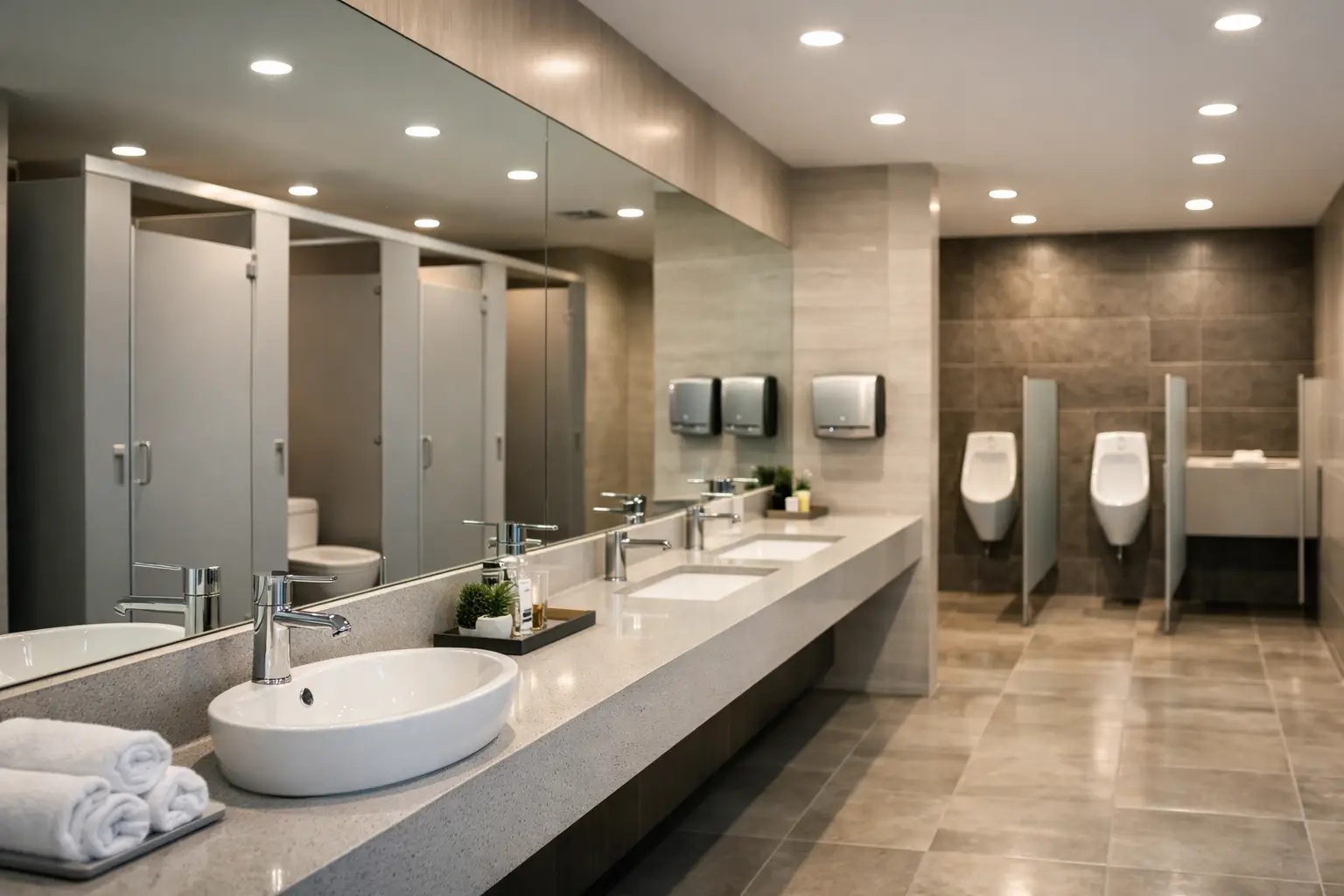
Washroom Standards Guide for Commercial Offices
A poorly managed washroom is noticed before a reception desk, meeting room or new carpet. Empty soap dispensers, damp floors, unpleasant odours and overflowing bins quickly affect how employees and visitors judge the wider workplace. This washroom standards guide sets out the practical controls facilities managers can use to maintain hygiene, safety and presentation throughout the working day.
For commercial offices, washroom management is not simply a cleaning task. It is a visible part of workplace readiness, employee wellbeing and compliance. The right standard depends on occupancy, opening hours, building layout and the nature of the people using the facilities, but the expectation is consistent: washrooms should be clean, supplied, safe and ready whenever they are needed.
Start with the legal and operational baseline
Employers and those responsible for premises have duties under the Workplace (Health, Safety and Welfare) Regulations 1992 to provide suitable, sufficient and readily accessible sanitary conveniences and washing facilities. In practical terms, this means facilities must be maintained in an efficient state, kept clean, adequately ventilated and supplied with the essentials for effective hand hygiene.
A compliant washroom is the starting point, not the finish line. A busy multi-tenant office near Bank may need several daytime service checks, while a smaller office with controlled attendance may need a different schedule. The standard should reflect actual use rather than a fixed cleaning rota that looks adequate on paper but fails at peak times.
Facilities managers should also consider accessibility, privacy, lighting, ventilation, waste arrangements and the safe storage of cleaning products. Any cleaning chemicals used on site must be subject to appropriate COSHH assessment, with operatives trained in dilution, application, storage and emergency procedures.
Define what good looks like at every visit
Clear service specifications remove ambiguity for cleaning teams and make inspections more meaningful. Rather than asking an operative to “clean the washrooms”, define the expected condition of each surface, fixture and consumable.
Toilets, urinals, basins, taps, flush plates, door handles and baby-changing equipment where provided should be visibly clean and hygienically maintained. Mirrors should be smear-free, floors should be dry and free from debris, and cubicles should be checked for damage, graffiti or missing fittings. Bins need emptying before they become unsightly or create a hygiene concern, not only at the end of a shift.
The consumables standard matters just as much. Soap, toilet tissue, hand towels or hand-drying provision, sanitary disposal units and air freshening systems should be checked against usage patterns. A washroom can be freshly cleaned and still fail the user experience if there is no soap or toilet tissue at the point of need.
It helps to agree an escalation process for issues that cannot be resolved during routine servicing. A leaking cistern, loose grab rail, blocked drain or faulty extractor fan is a maintenance matter with hygiene and safety implications. The cleaning team should be able to report it promptly, record the issue and ensure it reaches the appropriate building contact.
Build a schedule around footfall, not assumptions
The frequency of cleaning and checks should follow occupancy and timing. Most office washrooms experience pressure points before the working day, around lunch, after large meetings and towards the end of the afternoon. Event spaces, client-facing floors and shared facilities may have further peaks.
A practical programme often combines a full daily clean with daytime attendant checks or planned touchpoint services. The full clean addresses toilets, urinals, basins, floors, mirrors, partitions and waste. Daytime checks focus on presentation, replenishment, spot cleaning, spill response and early identification of faults.
There is a trade-off to manage. Very frequent visible cleaning can reassure users, but it can also disrupt access in small washrooms or at busy times. Planned visits should be timed intelligently, with urgent response arrangements for spills, blockages and unexpected high use. Where a washroom must be closed temporarily, clear signage and prompt communication help protect both safety and the workplace experience.
Use inspection records that lead to action
Washroom check sheets are useful only when they provide accountability. A record should show the time of the visit, the tasks completed, stock replenished, defects found and any escalation made. Digital reporting can give facilities teams a clearer view of recurring problems, particularly across larger or multi-floor premises.
Inspection records also help identify root causes. Repeated shortages may indicate that dispenser capacity is too low, stock levels are not matched to occupancy, or servicing is scheduled at the wrong times. Recurring odours may point to drainage, ventilation or maintenance issues rather than inadequate cleaning.
Control hygiene beyond visible cleanliness
Users often judge hygiene by what they can see, but effective washroom standards must also address less obvious contamination risks. High-touch points need particular attention: flush controls, taps, door plates, cubicle locks, hand dryers, dispensers and accessible rails can all receive heavy use during a normal working day.
Cleaning methods should be structured to avoid cross-contamination. This includes colour-coded equipment, separate cloths and mop heads for washroom use, correct chemical contact times and disciplined hand hygiene by operatives. Equipment should be cleaned, maintained and stored correctly between shifts.
Odour control deserves a measured approach. Fragrance can improve perception, but it should not be used to mask a cleaning, drainage or ventilation failure. Persistent odours require investigation. The cause may be an infrequently used outlet, a blocked trap, faulty extraction, waste build-up or a plumbing issue. Addressing the source is more dependable than increasing fragrance intensity.
Protect users during cleaning activity
Wet floors are one of the most immediate washroom hazards. Cleaning teams should use suitable warning signage, select methods that minimise drying time and return to remove signs once the area is safe. Excess water around basins, entrances and hand-drying points should be dealt with promptly.
Accessibility is equally important. Accessible washrooms must not become storage spaces for consumables, equipment or cleaning trolleys. Grab rails, alarms, clear transfer space and emergency pull cords should be checked as part of routine inspection, with faults escalated without delay.
Specify consumables for reliability and waste reduction
Consumable choices affect hygiene, user satisfaction and the workload required to keep facilities ready. The best option is not always the highest-capacity dispenser or the most heavily fragranced product. It is the combination that suits the building, its users and the available servicing model.
High-footfall locations may benefit from controlled-dispensing systems that reduce unnecessary consumption and make stock levels easier to monitor. In smaller executive suites, presentation and finish may carry greater weight. For all settings, soap and hand-drying provision should be easy to use, consistently available and positioned to support proper handwashing.
Sustainability should be considered as part of the specification, not added afterwards. Concentrated chemicals, measured dispensing, recyclable packaging and responsible waste streams can reduce environmental impact. However, environmentally preferable products still need to perform effectively and be compatible with the surfaces, dispensers and cleaning processes on site.
Make washroom quality part of facilities governance
The strongest standards are supported by regular review rather than left to occasional complaint handling. Facilities managers should inspect washrooms at varying times of day, speak to users where appropriate and review service records with their cleaning provider. This creates a more accurate picture than a single inspection immediately after a scheduled clean.
Key measures can include completed service visits, response times for reported issues, consumable availability, recurring defects, audit scores and user feedback. The goal is not to create unnecessary administration. It is to ensure that the service responds when occupancy changes, a floor is refurbished, new tenants arrive or workplace attendance increases.
A quality-led cleaning partner should provide trained operatives, clear supervisory support and a documented process for reporting and resolving concerns. At EDM Cleaning, washroom services are planned around the building’s specific requirements, with quality controls designed to give facilities teams confidence that standards are being maintained consistently.
A washroom standards guide should stay live
Washrooms are among the most frequently used shared spaces in an office, and their condition can change within hours. Review standards after changes in headcount, occupancy patterns, layout or building use, rather than waiting for complaints to reveal a gap.
A clear specification, responsive service schedule and reliable reporting process give facilities managers control without adding unnecessary daily burden. When washrooms remain clean, stocked and safe, they quietly support the professional, well-managed workplace that employees and visitors expect.