When Should Carpets Be Cleaned in Offices?
A carpet can look serviceable from a distance while holding a substantial amount of dry soil, tracked-in moisture and fine debris below the surface. For facilities teams, deciding when should carpets be cleaned is not simply a visual judgement. It affects workplace presentation, indoor hygiene, asset life and whether a space is ready for staff and visitors each day.
Commercial carpet cleaning works best as a planned part of building maintenance, rather than a response to an obvious stain or a forthcoming client meeting. The right frequency depends on how a building is used, the type of flooring installed and the standard expected across the site.
When Should Carpets Be Cleaned in Offices?
There is no single timetable that suits every workplace. A quiet executive suite and a busy reception area may use the same carpet tile, but the latter will need more frequent attention because it receives far more footfall, grit and moisture.
As a practical starting point, high-traffic entranceways, receptions, lift lobbies and main corridors should receive a professional clean every three to six months. General open-plan offices and meeting rooms commonly benefit from a deeper clean every six to twelve months. Low-use boardrooms, private offices and back-of-house areas may need annual cleaning, provided routine vacuuming and prompt spot treatment are in place.
The following factors should determine the final programme:
- Footfall and access points: Buildings near busy streets, transport hubs or construction activity can bring in more soil than expected, particularly during wet weather.
- The nature of the workplace: Client-facing offices, showrooms and shared workspaces generally require a higher presentation standard than areas with limited public access.
- The carpet specification: Fibre type, pile construction, colour and manufacturer guidance all affect the most suitable method and frequency.
- Existing maintenance routines: Regular vacuuming, entrance matting and rapid spill response slow down soiling and help professional cleaning deliver better results.
For many London offices, a zoned programme is the most efficient approach. It gives high-use areas the attention they need without treating every square metre of carpet to the same schedule.
Do Not Wait for Visible Dirt
Visible soiling is usually a late warning sign. Much of the abrasive material that causes wear sits within the pile, where it is less noticeable but repeatedly ground into the carpet by shoes, chair castors and daily movement. Over time, this can flatten the pile, dull the colour and leave traffic lanes that are difficult to improve.
Odours are another indicator. A persistent musty or stale smell may point to absorbed moisture, food residue or incomplete spill treatment. Cleaning should be arranged promptly if a carpet has been affected by a leak, flood, damaged plant equipment or repeated wet-weather traffic. In these circumstances, the priority is not only appearance but drying, contamination control and avoiding conditions that could lead to microbial growth.
Stains should also be treated as soon as possible. Coffee, tea, ink, food and oily residues become harder to remove as they dry or are repeatedly walked over. Professional spot treatment can often prevent a small incident becoming a permanent mark, but it cannot guarantee complete removal where dyes or bleaching agents have altered the fibre.
Build Carpet Care Into the Cleaning Plan
A reliable carpet maintenance programme has several layers. Daily or regular vacuuming removes dry particulate soil before it settles deeply into the pile. This is especially important around entrances, desk banks, breakout areas and routes between lifts, washrooms and kitchens.
Spot cleaning should follow quickly after spills and be carried out using appropriate products and methods. Using the wrong chemical can set a stain, leave a sticky residue that attracts more soil, or affect the carpet’s colour. Site teams should know who is responsible for reporting spills and how cleaning operatives can be contacted when urgent support is needed.
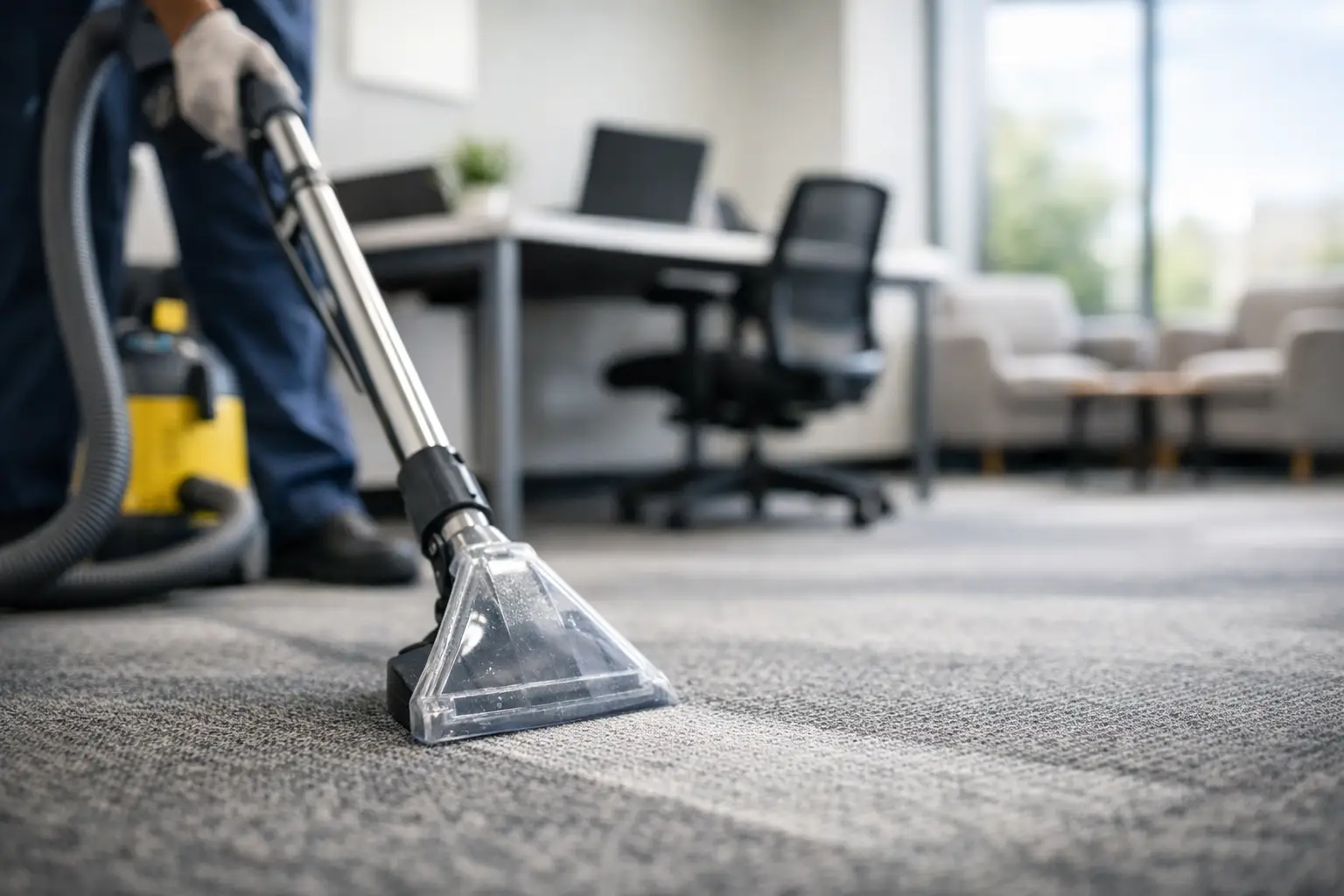
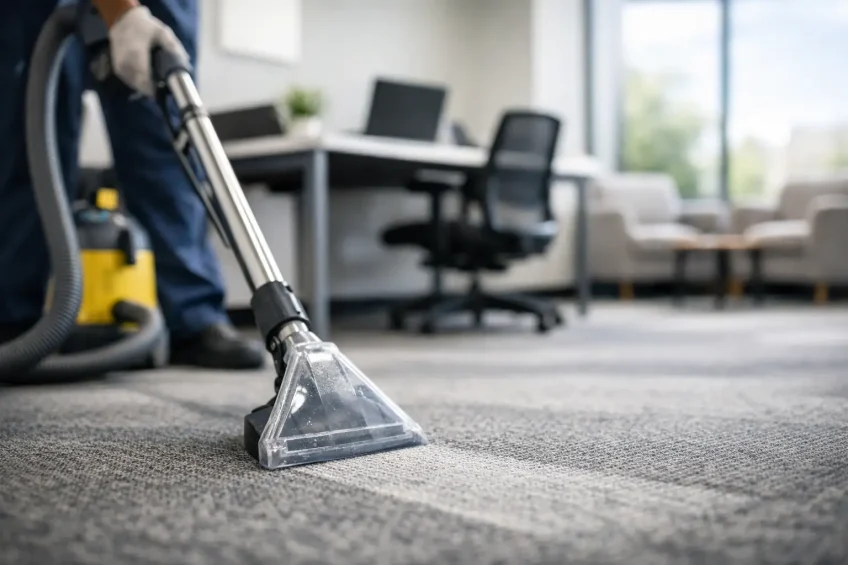
Periodic intermediate cleaning helps maintain appearance between deeper services. Depending on the carpet and operational requirements, this may involve low-moisture cleaning methods that allow areas to return to use quickly. A scheduled deep clean then removes embedded soil and refreshes the carpet across the wider area.
This layered approach is more effective than relying on an annual intensive clean alone. It also gives facilities managers a clearer record of what has been completed, where problem areas are developing and when the next service is due.
Plan Around the Working Day
The timing of carpet cleaning matters as much as the frequency. A meeting room may be available during the evening, while a 24-hour workplace needs sections cleaned in stages to maintain access and minimise disruption. Occupancy patterns, security arrangements and drying time should all be considered before work begins.
Hot water extraction can provide a thorough clean for suitable carpet types, but it requires adequate drying conditions. Low-moisture methods can be a strong option where rapid return to service is essential. The best choice depends on the carpet specification, degree of soiling and the building’s ventilation and climate control.
A competent provider will assess these factors rather than applying the same process across every floor. They should also carry out work with suitable risk assessments, COSHH controls and clear communication with the building team.
Areas That Often Need More Frequent Attention
Reception carpets create an immediate impression of a workplace and are exposed to the heaviest outside contamination. Entrance matting is valuable, but it must be maintained properly to continue capturing soil before it reaches the main carpet.
Breakout spaces and kitchen approaches need close attention because food and drink spills are more likely. Meeting rooms can be deceptive: they may receive modest daily use but become highly visible before presentations, interviews or visitor events. Cleaning schedules should reflect these moments, not only weekly footfall figures.
Under desks and around workstation clusters can accumulate dust, paper debris and food particles, particularly in busy offices. Moving furniture is sometimes required for a complete clean, so this should be agreed in advance. Facilities managers can reduce last-minute disruption by planning carpet maintenance alongside desk moves, IT refreshes, fit-out work or quieter occupancy periods.
Following building works, carpet cleaning may be necessary even where the flooring has been protected. Fine construction dust can travel through a workplace and settle in carpet fibres. A post-build inspection can establish whether vacuuming is sufficient or whether specialist treatment is required before the area is handed back for use.
Protect the Asset, Not Just the Appearance
Commercial carpet is a significant part of a workplace fit-out. Replacing it prematurely because of wear, staining or ingrained soil is disruptive as well as avoidable in many cases. Planned cleaning protects the carpet’s intended appearance and supports the service life expected from the installation.
It is worth checking the manufacturer’s maintenance guidance, particularly for new carpets or specialist finishes. Some warranties specify approved cleaning methods or regular professional maintenance. A cleaning programme that conflicts with those instructions can create unnecessary risk.
Quality control also matters. After a service, the result should be checked against agreed standards, including stain treatment, edges, access routes and drying condition. Any areas that require further attention should be recorded and addressed promptly. This is particularly useful across multi-floor offices, managed properties and sites with several stakeholders.
A Practical Review Schedule for Facilities Teams
Rather than setting a carpet-cleaning frequency and forgetting it, review the programme at least twice a year. Walk key areas with the cleaning provider, compare their condition against the expected workplace standard and identify changes in occupancy, layout or building use.
A new tenant floor, a return-to-office increase or a wetter-than-usual winter may justify more frequent cleaning. Conversely, an area that has become lightly used can be moved to a less intensive cycle. This flexibility keeps the programme aligned with real conditions while maintaining consistent standards.
EDM Cleaning supports commercial sites with tailored carpet cleaning plans that consider footfall, operational hours, flooring type and required presentation standards. With trained operatives and formal quality-control processes, the focus is on making carpet maintenance dependable and straightforward for the people responsible for the building.
The most effective time to clean a carpet is before its condition begins to affect the workplace. A clear, site-specific programme gives facilities teams confidence that floors will remain presentable, hygienic and ready for the next working day.