Can Cleaning Prevent Workplace Illness at Work?
A meeting room can look presentable at 9am and still carry the residue of a busy previous day: hands on door handles, shared screens, kitchen surfaces and washroom fittings. So, can cleaning prevent workplace illness? Cleaning cannot stop every cold, virus or infection entering a building, but a planned, properly managed cleaning programme can reduce the environmental routes through which germs spread and help keep a workplace safer, more reliable and ready for use.
For facilities and operations teams, the issue is not simply whether a site appears clean. It is whether cleaning activity is targeted at the risks that affect people, business continuity and confidence in the premises.
Can cleaning prevent workplace illness?
Cleaning is one part of infection control, not a substitute for it. Illness can spread through close contact, airborne particles, contaminated hands, food handling and shared objects. The relative importance of each route changes according to the illness, the building layout, occupancy levels and the activities taking place.
Regular cleaning removes dirt, dust, food residue and a proportion of microorganisms from surfaces. This matters because soiling can support contamination and make disinfectants less effective. Disinfection is a separate process, using an appropriate product and contact time to reduce microorganisms on a cleaned surface.
In practical terms, an office cleaning programme can lower the chance of indirect transmission from frequently touched surfaces. It can also support good hand hygiene by maintaining clean washrooms, stocked consumables and usable handwashing facilities. However, it cannot compensate for poor ventilation, employees attending while unwell, inadequate handwashing, or a lack of sensible workplace health policies.
The strongest approach combines cleaning with clear operational controls. That may include ventilation checks, accessible hand sanitiser where appropriate, prompt reporting of illness, sensible absence arrangements and clear communication during periods of increased respiratory or gastrointestinal illness.
The surfaces that deserve most attention
A uniform cleaning schedule is rarely the most effective one. A reception area used by visitors all day requires a different level of attention from a lightly used archive room. The cleaning plan should reflect how people actually move through the premises.
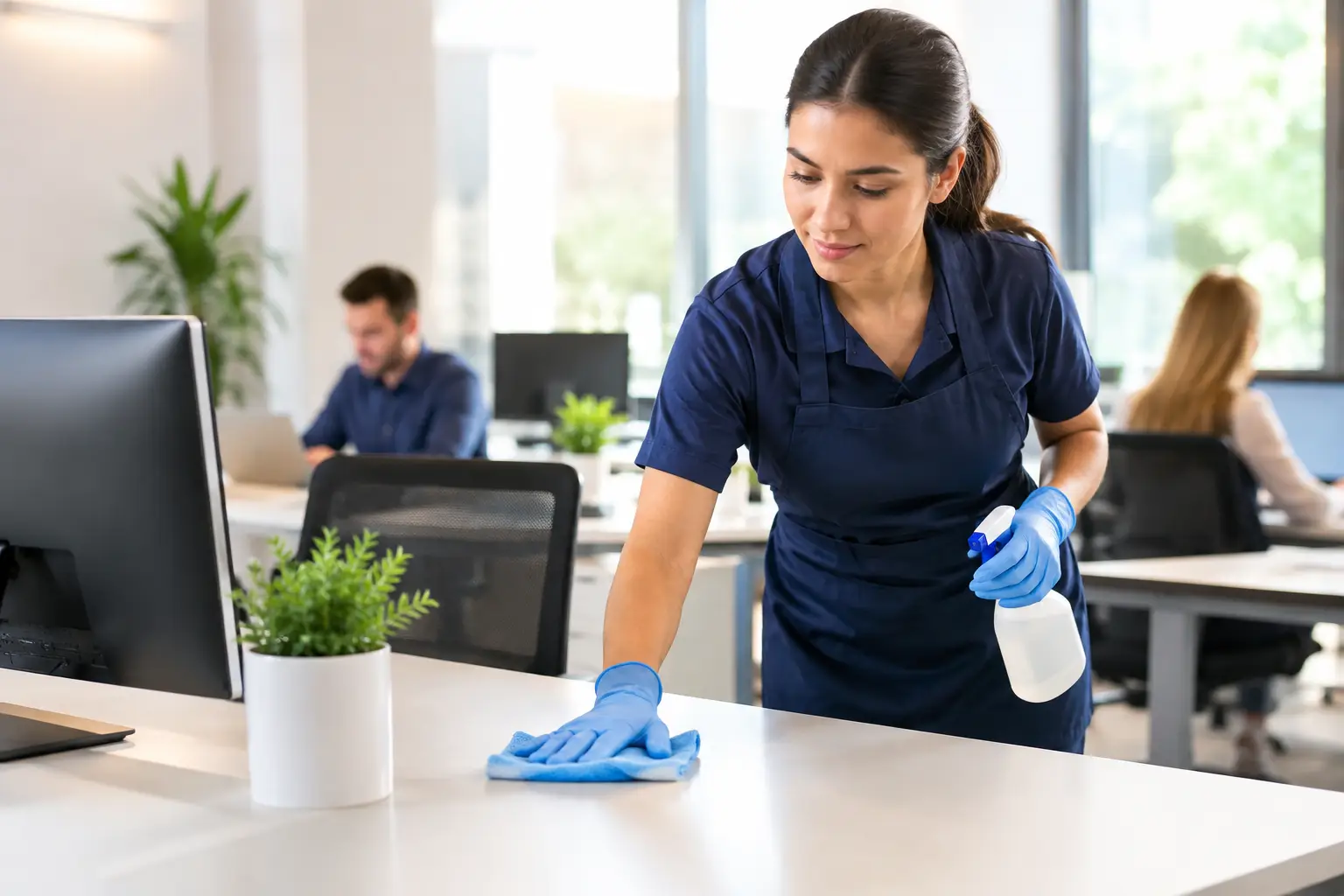
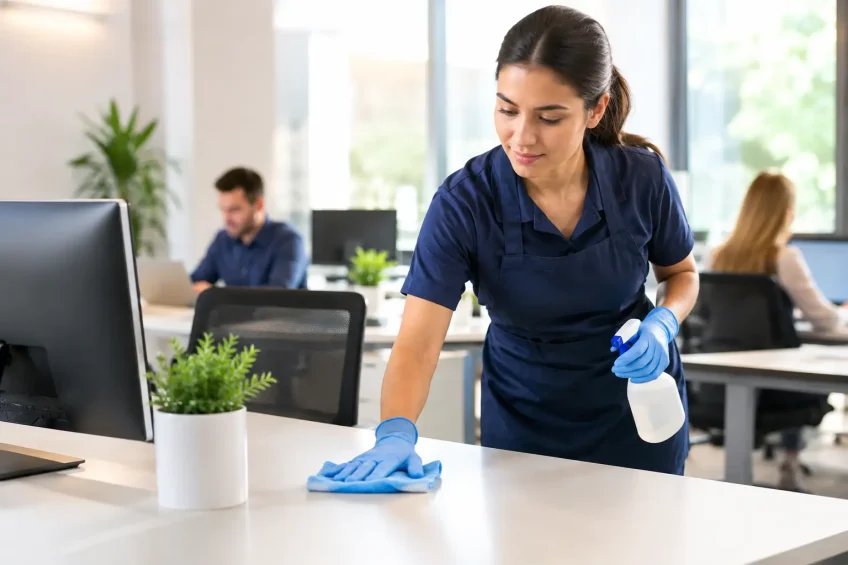
High-touch points are a sensible priority because many different hands use them between cleans. Door plates and handles, lift buttons, handrails, shared printers, light switches, taps, flush plates, fridge handles and kettle handles all warrant regular attention. In offices with hot-desking or shared devices, desk surfaces, telephones, keyboards and mice also need a considered process.
This does not mean applying disinfectant to every surface continuously. Over-cleaning can waste resources, cause disruption and, if products are selected or used incorrectly, affect sensitive finishes or equipment. It is better to use a risk-based frequency that considers footfall, shared use, the presence of vulnerable occupants and any known incident at the site.
Shared technology needs specialist care
Computer and IT equipment are often overlooked because they are not visibly dirty, yet they are handled repeatedly. Standard wet cleaning methods can damage screens, keyboards, cables and connections. A trained cleaning team should use suitable low-moisture techniques and products, following the equipment manufacturer’s guidance and site rules.
This is particularly relevant in server rooms and technical spaces. Hygiene must be balanced with dust control, static-risk awareness, controlled access and the need to avoid introducing moisture or residue around critical infrastructure. The objective is a clean, well-maintained environment without compromising operations.
Why washrooms and kitchens carry greater risk
Washrooms and communal kitchens have different contamination risks from general office areas and should not be treated as routine cosmetic spaces. They require clear task separation, correct colour-coded equipment where used, effective cleaning sequences and careful replenishment of soap, paper products and sanitary supplies.
In washrooms, cleaning should focus on touchpoints as well as toilets, basins and floors. A clean basin is of limited value if soap dispensers are empty or taps and door handles are neglected. In kitchens, attention should be paid to food-contact and shared surfaces, waste areas, appliance handles and refrigerator handles, while encouraging occupiers to clear personal food and crockery.
When an outbreak of vomiting or diarrhoea is suspected, standard cleaning routines may not be sufficient. Facilities managers should have an escalation process that isolates affected areas where necessary, uses appropriately trained operatives and applies products suited to the identified risk. Speed, correct procedure and clear communication are more valuable than a rushed visual clean.
Planned cleaning supports attendance and continuity
Workplace illness has a cost beyond individual absence. It can reduce team capacity, interrupt client meetings, create additional work for managers and affect how employees and visitors perceive the organisation. A consistently clean workplace will not guarantee attendance, but it signals that the building is being managed responsibly and supports the conditions in which people can work with confidence.
The benefit is especially clear in high-occupancy offices, multi-let buildings and spaces with frequent visitors. In Central London, where commuting, shared lifts and closely used communal areas can increase daily contact, cleaning plans need to respond to real patterns of use rather than a generic checklist.
A reliable commercial cleaning partner can also reduce the administrative burden on the in-house team. Documented schedules, site-specific instructions, trained operatives and regular quality checks make it easier to demonstrate that agreed standards are being met. If occupancy changes, an event is planned or a health concern arises, the service should be able to adapt without losing control of routine work.
Cleaning, disinfection and electrostatic treatment
These terms are sometimes used interchangeably, but they serve different purposes. Routine cleaning removes visible soil and reduces contamination. Targeted disinfection is appropriate for high-touch areas, known contamination risks or periods when illness is circulating more widely. Deep cleaning may address accumulated dirt and inaccessible areas that are beyond the scope of a normal daily service.
Electrostatic disinfection can be useful in selected environments because it applies a charged mist designed to reach complex surfaces. It is not a replacement for physical cleaning. If a surface is visibly soiled, it should be cleaned first. Nor is electrostatic treatment automatically necessary after every suspected illness case. Its use should follow a site assessment, product instructions and a clear understanding of what the treatment is intended to achieve.
The same principle applies to specialist products. Stronger is not always better. Products must be suitable for the surface, used at the correct dilution and left for the required contact time. Teams should work in line with COSHH assessments and safe systems of work, protecting both building users and cleaning operatives.
What a practical illness-reduction plan looks like
A useful plan begins with a site walk-through, not a standard specification. Review entrances, receptions, washrooms, kitchens, meeting rooms, shared equipment, waste points and any specialist areas. Then identify which spaces are high-touch, high-traffic or operationally sensitive.
From there, set cleaning frequencies that match the risk. Daily service may be enough for some areas, while washroom checks, touchpoint cleaning or consumable replenishment may need to happen more often. Specify responsibilities clearly, including what occupiers are expected to do between cleans and who reports shortages, spills or illness-related incidents.
Quality control should be visible and meaningful. Periodic inspections, clear records, supervisor visits and responsive issue reporting help prevent small failures becoming recurring problems. A cleaner who is familiar with the building can also spot concerns early, such as an empty soap dispenser, overflowing waste, damaged flooring or a change in how a space is being used.
Training is equally central. Operatives need to understand cross-contamination control, correct product use, safe waste handling, infection-response procedures and the particular requirements of the client site. Well-supported staff are more likely to deliver consistent outcomes, especially when schedules change or an urgent request arises.
A cleaner workplace is a managed workplace
The question is not whether cleaning alone can eliminate workplace illness. It cannot. The better question is whether cleaning is being used as a controlled, evidence-led part of the wider facilities strategy. When it is, it reduces avoidable hygiene risks, supports employee confidence and helps protect the smooth running of the workplace.
The most useful next step is to review the places people touch, share and rely on every day, then make sure the cleaning plan reflects how the building truly operates – not simply how it looks after hours.