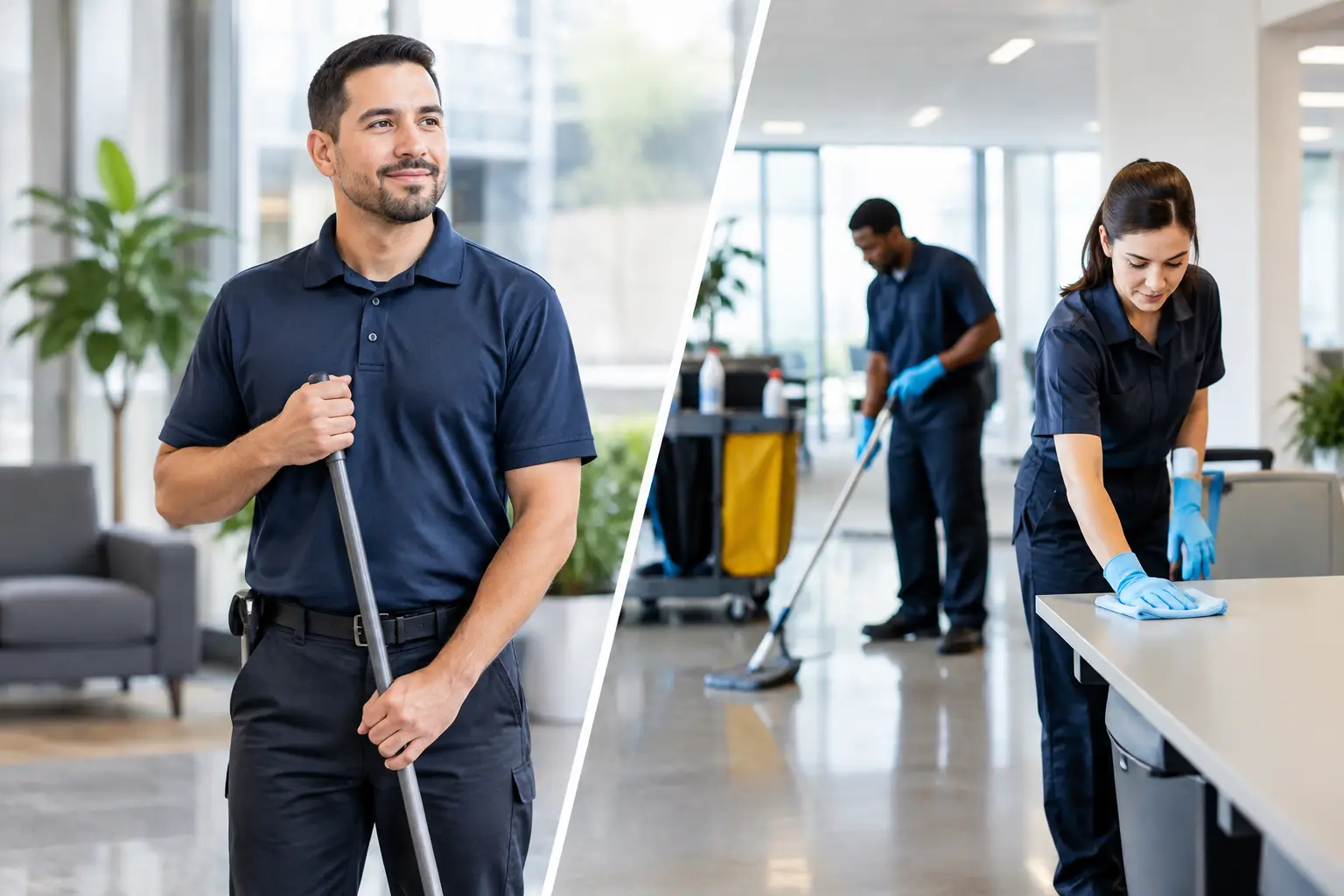
Day Porter Versus Cleaning Team: Which Fits?
The choice between a day porter versus cleaning team is not simply a question of who cleans more often. It is a decision about how your building operates between opening and closing, how quickly issues are resolved, and the standard employees and visitors experience throughout the day. For busy London offices, both services can be valuable, but they solve different operational problems.
A well-planned cleaning arrangement should protect workplace readiness without adding unnecessary management burden. Understanding the distinction helps facilities and operations managers specify the right support, set clear expectations and maintain consistent quality across the premises.
Day porter versus cleaning team: the core difference
A day porter is an on-site operative who supports the presentation, hygiene and day-to-day running of a workplace during occupied hours. Their work is responsive as well as planned. They may refresh washrooms, clear spills, tidy meeting rooms after use, manage waste and recycling, replenish consumables, inspect high-traffic areas and report issues that require further attention.
A cleaning team is usually deployed for planned cleaning shifts, commonly before staff arrive, after they leave or at another agreed time. The team completes a defined schedule covering tasks such as desk-area cleaning, vacuuming, mopping, kitchen cleaning, washroom sanitation and waste removal. This approach is designed to restore the workplace to a clean, ready standard for the next working period.
Put simply, a day porter maintains standards while the building is in use. A cleaning team carries out the more comprehensive, scheduled work that resets the environment. The best choice depends on occupancy, visitor activity, building layout and the level of service expected during the day.
When a day porter adds operational value
A day porter is particularly useful where the workplace has a visible front-of-house function or a high volume of movement during the day. Reception areas, shared kitchens, client meeting suites, washrooms and collaborative spaces can lose their presentation quickly, even when they were cleaned thoroughly the previous evening.
The value lies in responsiveness. A spillage near reception, a washroom consumable running low or a meeting room left untidy shortly before an external appointment should not have to wait until the next scheduled clean. An attentive porter can deal with these matters promptly and discreetly, helping the workplace remain safe, presentable and ready for use.
This role also creates useful oversight. Because the porter sees the site in operation, they can identify recurring issues such as a waste area becoming overloaded, unusually heavy washroom use or a floor surface that needs specialist maintenance. Clear reporting allows the facilities manager and cleaning provider to adjust the plan before small concerns become service failures.
Day porter duties should be agreed carefully. They are not a substitute for every facilities role, nor should the operative be expected to leave critical cleaning tasks unfinished to deal with unrelated requests. A clear scope, backed by a site induction and escalation process, keeps the role productive and accountable.
Where a cleaning team is the stronger option
For many offices, a scheduled cleaning team remains the foundation of effective cleaning provision. Working outside peak occupancy allows operatives to clean thoroughly with less disruption, particularly in open-plan workspaces, kitchen areas and washrooms. It also means floors can be serviced, waste can be removed and cleaning equipment can be used without interrupting meetings or creating avoidable hazards.
A team is generally better suited to work that requires sustained attention across a larger footprint. Thorough vacuuming, damp mopping, detailed washroom cleaning, desk-area servicing and kitchen hygiene are more efficiently completed as part of a structured shift. The work can be quality-checked against an agreed specification, with supervisors reviewing standards and addressing any gaps.
This model works especially well for offices with predictable occupancy, limited daytime visitors and a requirement for a consistently clean start each morning. It can also be adapted around hybrid working patterns, with cleaning frequencies and focus areas adjusted to reflect how the building is actually being used.
A scheduled team should not be viewed as a basic out-of-hours service. Its effectiveness depends on trained operatives, suitable equipment, safe working methods and a specification that reflects the site. High-touch surfaces, washroom hygiene, waste streams, hard floors, carpets and specialist spaces all need the right method and frequency.
The case for combining both services
For larger corporate premises, the question is often not day porter or cleaning team, but how the two should work together. The cleaning team provides the planned, detailed work. The day porter protects that standard as employees, guests and contractors use the building.
This combined approach is useful when service expectations are high throughout the working day. A head office receiving clients, a multi-floor workplace with busy shared amenities or a building with frequent internal events may need more than an evening clean to remain consistently presentable.
The handover between services matters. The cleaning team should leave clear records of completed work, identified defects and consumable levels. The day porter should be able to see priorities for the day and report items requiring follow-up. This creates continuity rather than two separate services working in isolation.
For example, an evening team may identify that a carpeted meeting suite needs spot treatment or that a hard floor requires periodic machine maintenance. The porter can help protect the area during the day, monitor traffic and ensure the right specialist work is scheduled at an appropriate time. This is a practical form of facilities support, not simply a cleaner being present in the building.
Factors to consider before choosing
A service plan should be built around the building’s real operating pattern rather than a generic cleaning schedule. Begin with occupancy: how many people use the premises, when are the busiest periods and which areas receive the heaviest traffic? An office with fluctuating attendance may need flexible cleaning frequencies, while a consistently busy site may benefit from continuous daytime support.
Next, consider visibility. If visitors arrive throughout the day, reception, meeting rooms and washrooms become an immediate reflection of the organisation. A day porter can help maintain those spaces between formal cleans. If most work occurs behind secure access and visitors are infrequent, an experienced cleaning team on a well-designed schedule may meet the requirement.
Risk and compliance also influence the decision. Spill response, washroom hygiene, safe waste handling and COSHH-aware cleaning practices need to be managed properly. In sites with server rooms, IT equipment, sensitive hard surfaces or specialist flooring, the cleaning plan should also identify what must be handled by trained operatives using appropriate methods.
Finally, assess management capacity. A cleaning service should reduce the number of daily issues that land with the facilities or office manager. Defined responsibilities, regular quality checks, accessible reporting and a responsive contract structure make a material difference to how easy the service is to manage.
Building an accountable cleaning specification
Whether you appoint a day porter, a cleaning team or both, a useful specification should state the required outcome as well as the tasks. “Keep washrooms presentable throughout the day” is an operational outcome. It should then be supported by practical requirements covering inspections, cleaning methods, consumable replenishment and escalation where standards cannot be maintained.
The specification should also distinguish between routine tasks and periodic work. Daily cleaning keeps the workplace functional, but carpets, hard floors, internal glass, upholstery and high-level areas require planned attention at different intervals. Separating these requirements prevents specialist maintenance from being overlooked because it does not fit into a standard shift.
Quality control should be visible. Regular site reviews, supervisor inspections and a simple process for reporting concerns give managers confidence that standards are being checked, not assumed. Where requirements change, the cleaning plan should be capable of changing with them.
Make the service fit the workplace
The right choice is the one that supports the way your premises are used, protects hygiene and presentation, and gives your team confidence that problems will be handled without delay. A dependable cleaning partner will take the time to understand the site, define responsibilities clearly and provide trained people who take pride in maintaining your workplace.
When cleaning is planned as part of everyday facilities support, it becomes easier to maintain a workplace that is ready for employees, visitors and the next demanding day.